Ep 12 | Dennis Meadows
Dennis Meadows: “Limits to Growth turns 50 – Checking In”
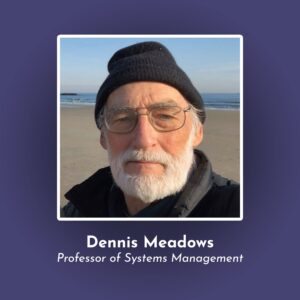
On this episode, we meet with Professor Emeritus of Systems Management and author, Dennis Meadows.
Meadows revisits Limits to Growth 50 years after it was published. Looking back, how does Meadows view the book? How much of the response to his description of overshoot was based in fear?
Meadows offers advice to current leaders based on the models he developed in Limits to Growth. Why is it important to develop success indicators, and how can they be clearly communicated to the public?
Further, Meadows explores the available leverage points to avoid the worst types of collapse at our current stage of crises.
About Dennis Meadows
Dennis Meadows is the Emeritus Professor of Systems Management at MIT and the co-author of Limits to Growth and Beyond the Limits.
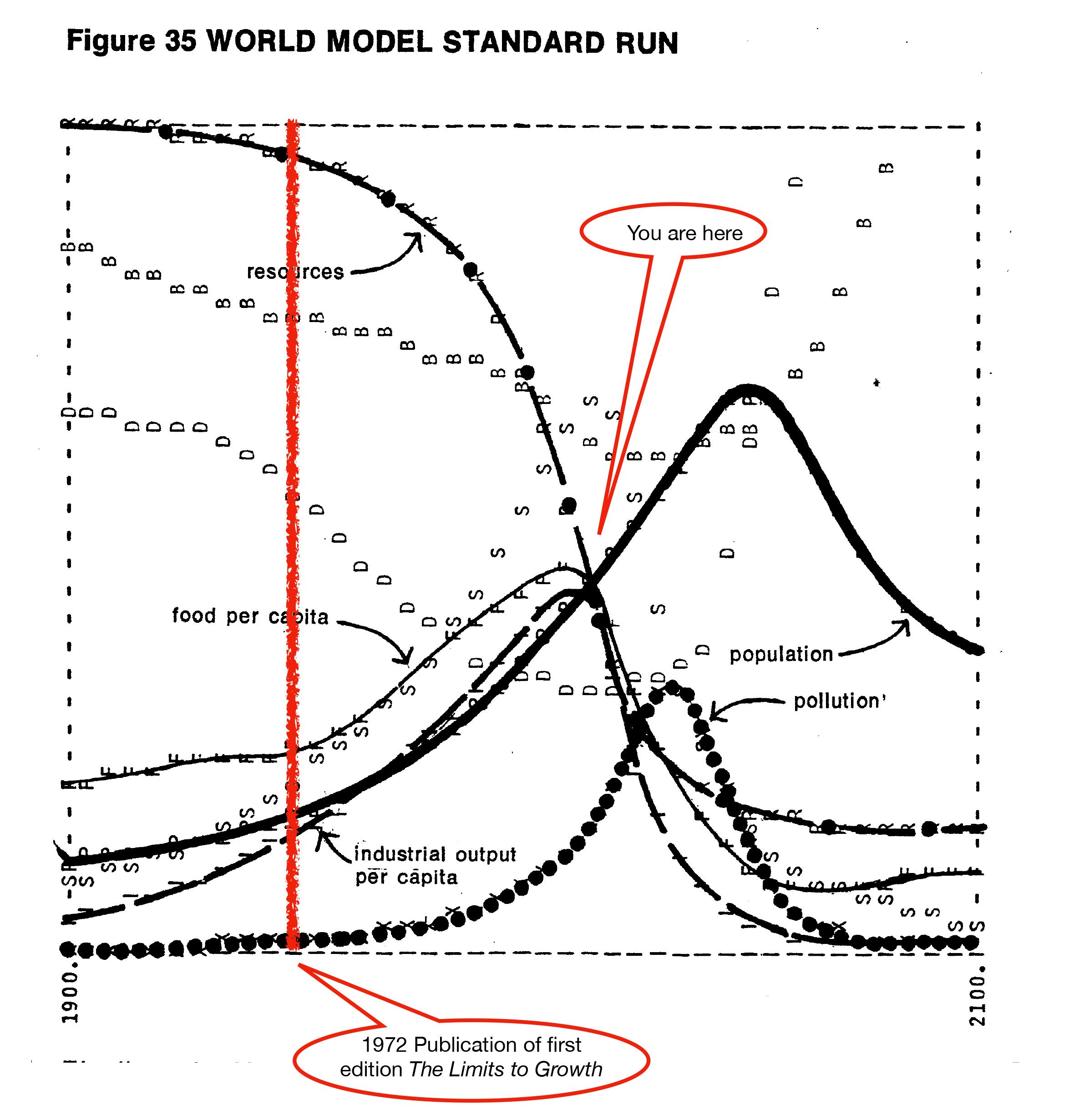
He has received numerous awards and is the recipient of four honorary doctorates for his contributions to environmental education. He co-authored the pioneering 1972 book The Limits to Growth, which analyzed the long-term consequences of unconstrained resource consumption driven by population and economic growth on a finite planet.
Show Notes & Links to Learn More
Download transcriptResilience: Cassandra’s Curse: How limits to growth was demonized
Update to limits to growth: Comparing the World3 model with empirical data
00:45: Dennis Meadows info, Limits to Growth, 50 Year Anniversary of Limits to Growth
02:05 – Peak Oil
03:16 – Club of Rome
07:42 – Ecological overshoot
07:45 – Kaibab plateau case study
10:26 – Systems dynamics models
11:08 – Systems thinking
13:45 – Cognitive dissonance
14:51 – Importance of soil
20:08 – Computer modeling
20:17 – Systems games
21:03 – Stratagem
25:26 – Paul Ehrlich
25:28 – Rex Weyler
25:07 – Growth cannot continue forever
26:36 – Energy blind
28:28 – Food systems
28:55 – Development of batteries
29:40 – Nate on Technology
30:10 – Link between GDP and Energy Figure 2
30:37 – Fossil army of 500 billion human workers
30:40 – Energy is Merely a Commodity 29:35 timestamp from Earth and Humanity
30:44 – Fossil carbon use growing at 2% per year throughout the last 50 years
31:00 – Our efficiency saves us 1% energy per year
32:20 – Energy stocks are declining
30:35 – Energy return on investment is declining
32:55 – Energy now and slaves in ancient Rome
33:44 – Net Energy
33:56 – Credit and energy
34:14 – Complexity
35:32 – Cassandra legend
37:50 – Integrative assessment reports IPCC
41:55 – Biological feedback systems
42:58 – Methane emissions
44:48 – Last time CO2 was at today’s levels
45:09 – Arctic Ice melting to raise sea levels 190 feet
45:12 – History of sea levels
47:53 – Current society centers around growth
49:16 – US energy use has tripled since the 1950s
50:16 – Shrinking Population Economics Matsutani Akihiko
51:06 – Short term time horizon
52:57 – Advance Policy (Password: advance)
53:18 – How Are We
54:27 – For most of human history there was no economic growth
56:52 – The Phoenicians
57:22 – We are more globally intertwined than ever
59:10 – The ozone layer
49:40 – Dupont CFCs alternative
1:01:07 – Nuclear winter
1:03:24 – Spatial Horizon
1:06:55 – Maslow’s Hierarchy
1:07:28 – Scott Barry Kaufman Maslow Analysis
1:11:03 – Social networks make you healthier
1:13:29 – Paul Ehrlich Population Bomb