Ep 202 | Samantha Sweetwater
Reimagining Ourselves at the End of Our World: Kinship, Interconnection, and Spirituality in the Metacrisis
Description
Over the past decade, the world has become increasingly chaotic and uncertain – and so, too, has our cultural vision for the future. While the events we face now may feel unprecedented, they are rooted in much deeper patterns, which humanity has been playing out for millennia. If we take the time to understand past trends, we can also employ practices and philosophies that might counteract them – such as focusing on kinship, intimacy, and resilience – to help pave the way for a better future. How might we nurture the foundations of a different kind of society, even while the end of our current civilization plays out around us?
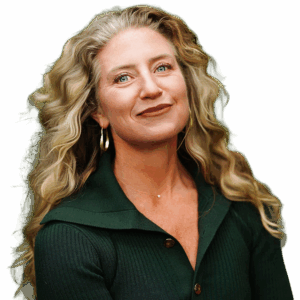
In this episode, Nate is joined by guide and author Samantha Sweetwater to explore how separation is at the root of the metacrisis and how nurturing interconnection, relationships, and ecological maturity act as foundational components for systems change. Samantha delves into the distinction between power of life and power over life, emphasizing the need for personal transformation that aligns with collective evolution. She also describes how we could shift our cultural focus from the hero’s journey to a kinship journey through the practices of remembering, reconnection, and tending to collective emergence.
How might we reimagine humanity’s ecological role as that of stewards, rather than domination? Could focusing on reconnection, rather than separation, help us bridge the polarizing divides that currently prevent many of us from working together? And how might this work of remembering, which begins with ourselves, ripple out into stronger connections with our loved ones, communities, and ultimately to humanity and life as a whole?
About Samantha Sweetwater
Samantha Sweetwater is a wisdom guide, author, and founder of One Life Circle—a ministry of remembering. She works at the fertile nexus where unraveling systems make way for emerging forms of kinship, leadership, and value. For over three decades, she has facilitated individuals and organizations across five continents through journeys of personal, cultural, ecological, and spiritual emergence. She mentors leaders in business, technology, and finance, helping them to navigate awakening, develop systemic wisdom, and align impact with regenerative futures.
Founder of Dancing Freedom and Peacebody Japan, she sparked a global movement of embodied awakening and has trained hundreds of facilitators. She has also been a seed farmer—a practice that taught her the rigors of tending the real. She holds an MA in Wisdom Studies, a BA in Social Theory and Dance, and has been initiated into indigenous lineages of Africa, Latin America, and Turtle Island.
Show Notes & Links to Learn More
Download transcriptThe TGS team puts together these brief references and show notes for the learning and convenience of our listeners. However, most of the points made in episodes hold more nuance than one link can address, and we encourage you to dig deeper into any of these topics and come to your own informed conclusions.
00:00 – Samantha Sweetwater
- True Human: Reimagining Ourselves at the End of the World
- One Life Circle
- Previous TGS episode: “Life at the Center”
03:42 – Metacrisis
04:16 – Polycrisis
09:23 – Whales and dolphins often have bigger brains than humans
11:01 – Daniel Schmachtenberger on TGS discussing the age of separation
11:09 – Development of agriculture, Fiat currency
12:30 – 1790 census showed 9 in 10 Americans lived on farms, Today farming makes up 1.2% of U.S. employment
12:55 – Many youth are not knowledgeable about where their food comes from
13:16 – Anthropocene
13:24 – Ecozoic, Symbiocene
13:50 – Manifest Destiny
14:10 – Evolution is not a hierarchy with humans at the “top”, Additional info
14:30 – Monocropping
14:43 – We could feed more people if we had smaller, more diversified farms
15:38 – Interdependence (ecology), Interbeing
16:25 – Co-regulation
16:51 – Thích Nhất Hạnh
18:10 – Game theory
21:28 – Patriarchy and racism as ways of organizing power
22:47 – Hockey stick economics
23:15 – Soul ecology
23:55 – Complexity of Fin Whale song in North Atlantic
25:12 – Song Sparrow
26:40 – David Bohm – Wholeness and the Implicate Order
27:19 – Greek concept of cosmos
27:43 – Implicate and explicate order
29:15 – Arthur Koestler, Holons
29:23 – Nature is a system of systems
29:44 – Matryoshka dolls (Russian nesting dolls)
33:52 – Economic superorganism
34:04 – Frankly #108 The Influence of Psychopaths: Why Humans Are Better Than We Think
34:59 – Maximum power principle
36:33 – Daniel Schmachtenberger – “existential tech” is omni-lose
37:02 – Dark triad personality traits, TGS Episode + Frankly Episode
38:24 – The Light Phone
42:02 – Iroquois Confederacy and its influence on current systems of democratic governance
43:28 – Pol.is (Audrey Tang TGS Episode)
45:40 – Diatoms, Winnemem Wintu’s relationship with salmon
48:20 – The three bricklayers story
49:55 – Dr. Dan Siegel, Dr. Siegel discussing Mwe, Dr. Siegel – IntraConnected: MWe (Me + We) as the Integration of Self, Identity, and Belonging
50:38 – Hero’s journey, Kinship
52:34 – David Sloan Wilson and Edward O. Wilson – Rethinking the Theoretical Foundation of Sociobiology, TGS Episode with David Sloan Wilson, Chicken experiment, Frankly #104 Ducks and Blueberries
54:28 – Project Interdependence
1:05:21 – About holotropic experiences, Stanistlov Grof, Transpersonal psychology
1:06:49 – Holotropic breathwork
1:07:20 – Being in awe has the same self-transcendent brain effect as being on psychedelics, Dacher Keltner and the science of awe, Dacher Keltner – Awe: The New Science of Everyday Wonder and How It Can Transform Your Life
1:09:45 – Psychedelics as a non-specific amplifier
1:10:12 – Role of mindset and setting with psychedelics
1:10:40 – Psychedelics can help with accessing deep memories, a deeper state of empathy
1:13:30 – Joanna Macy’s framework of systems change, TGS Episode on The Work That Reconnects
1:19:00 – Dave Snowden – As through a glass darkly: a complex systems approach to futures
1:21:47 – Nora Bateson (TGS Episode #10, #20, RR #2, RR#10, RR #20), Warm data
1:22:24 – Citizen science
1:22:53 – Increasing satellites
1:24:27 – Shimbhala Warrior Prophecy, Joanna Macy on the Shambhala Warrior Prophecy,
1:28:03 – Wendell Barry – “Be joyful though you have considered all the facts.”
1:30:23 – The tradition of the Bwiti people is to “be a student of life”
1:31:40 – David Sloan Wilson (TGS Episode), Daniel Schmachtenberger (TGS Episodes Playlist, RR#10), Luke Kemp (TGS Episode #153, #194)