
#129 | Frankly
A Guide to Staying Human (Part 1): Desperately Seeking Agency

Description
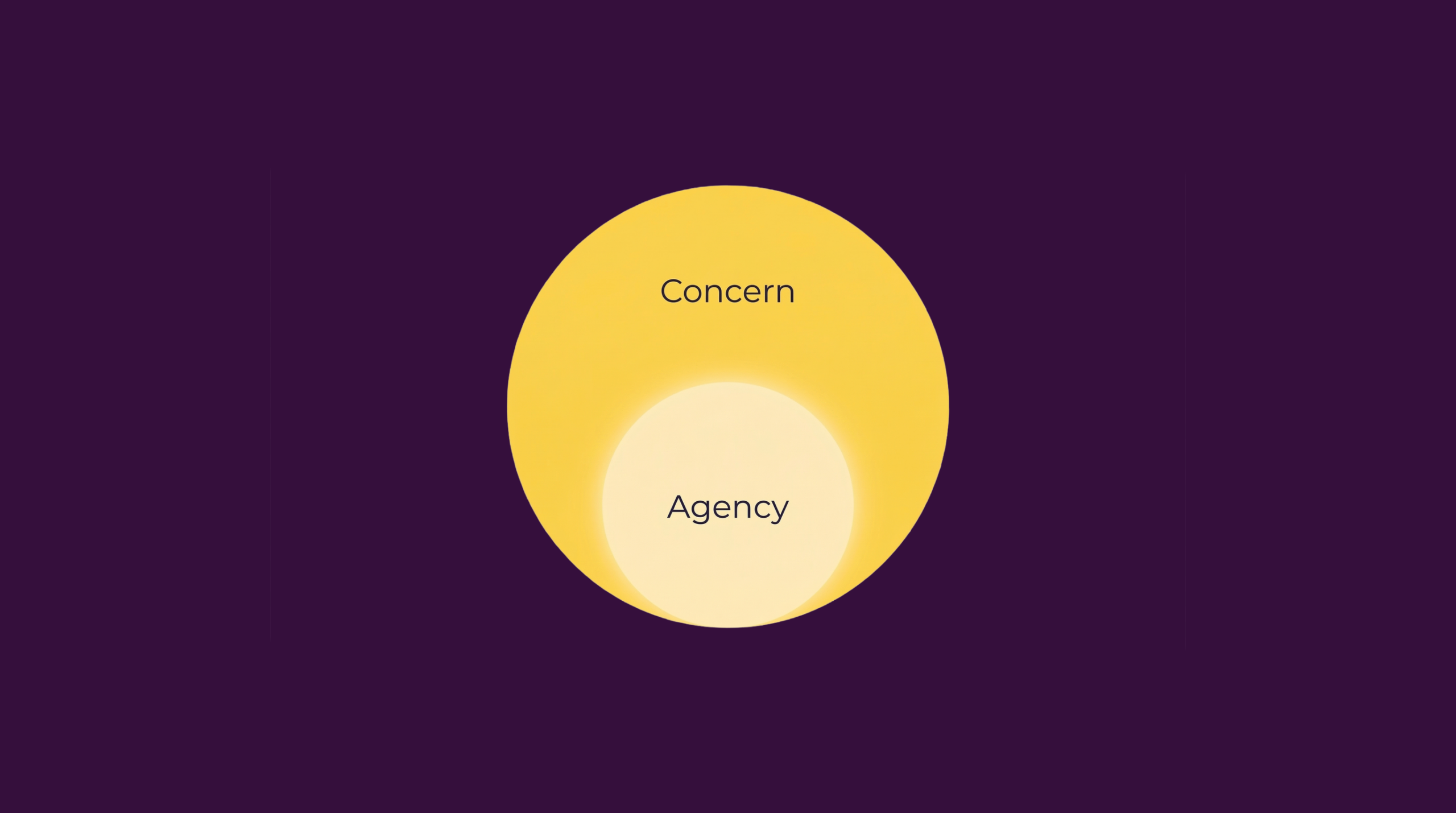
In this week’s Frankly, Nate begins a new series called “Staying Human,” which focuses on what he sees as a precondition for everything else: recovering a sense of personal agency. He opens against the backdrop of Operation Epic Fury and the broader turbulence of 2026, but rather than offering geopolitical analysis, he turns inward toward a question that has been reshaping his theory of change: why does growing awareness of the more-than-human predicament so often produce paralysis rather than action?
Nate traces the gap between awareness and agency through several layers. He draws on the science of learned helplessness and self-efficacy research to explain how nervous systems learn whether effort leads to outcomes, and how a digital environment designed to fragment attention can train people to stop investing in their own follow-through. He frames this not as a personal failing but as a predictable consequence of living inside a Superorganism that advertises choice while eroding the conditions for it. Rather than prescribing a program, Nate shares practices he is experimenting with himself: voluntary speed bumps before reaching for a screen, small kept promises that rebuild self-trust, and protecting even one hour of intentional time. He argues that reclaiming agency at the individual level is not sufficient to address our entire predicament, but it is a precondition for the community-level and institutional work required to make the future better than the default.
Where in your life has awareness of the world’s problems triggered overwhelm or even paralysis? What is one kept promise, however small, that might begin to rebuild your sense of traction? And if agency is a precondition for everything that comes next, what would it look like to treat it as something you practice rather than something you wait to feel?
Show Notes & Links to Learn More
Download transcriptThe TGS team puts together these brief references and show notes for the learning and convenience of our listeners. However, most of the points made in episodes hold more nuance than one link can address, and we encourage you to dig deeper into any of these topics and come to your own informed conclusions.
00:00 – A Guide to Staying Human Series, Essay version of this Frankly
00:10 – Operation Epic Fury, 2026 Iran war
00:25 – Strait of Hormuz,Strait of Hormuz practical closure, What it means for oil and gas prices, Which countries will be hit the most
- TGS Frankly #61 The Strait of Hormuz and ‘the Spice’,
- TGS Frankly #127 Wide Boundary News 2/23/26: Biodiversity Depletion, Iran & the Straight of Hormuz, and the Green Wedge
00:45 – Error bar
00:53 – Wide Boundary News playlist, Wide-boundary perspective
01:45 – The Twilight Zone TV Series
03:15 – Communicating a problem without solutions can be ineffective, Stress hormones
04:20 – Agency (Self-leadership)
05:10 – The Meaning Crisis, Increase in chronic fatigue, directionlessness, inattention
06:00 – Metacrisis, Daniel Schmachtenberger – an introduction to the Metacrisis (Human predicament)
06:30 – Nate’s Reality 101 course (now accessible online), Reality 101 Textbooks:
06:45 – Theory of change
06:55 – Economic superorganism (with a metabolism)
07:15 – Do sharks really die if they stop swimming?
07:45 – Increase in surveillence
08:45 – Check your Voter Registration (U.S.)
09:25 – The Information Age
09:50: – Inability to change, negative emotions, and reactions to such:
- Compensatory control: Achieving order through the mind, our institutions, and the heavens. (Kay et al.)
- Emotional Reasoning and Psychopathology (Gangemi et al.)
10:50 – Freeze response, Nervous system overwhelm, Conditions that make humans more persuadable
11:05 – Feudalism
11:30 – Orwellian
12:25 – As an evolutionary adaptation, our brains are constantly estimating the controllability of our environment:
- A Reward-Based Framework of Perceived Control (Ly et al.)
- How perception of control shapes decision making (Wang et al.)
- Stress-sensitive inference of task controllability (Ligneul et al.)
- Developmental shifts in computations used to detect environmental controllability (Raab et al.)
13:19 – Learned helplessness
13:45 – Self-efficacy
14:07 – Mastery experiences, See also Albert Bandura’s work:
- Self-efficacy: The exercise of control (pg 80),
- Self-efficacy: Toward a unifying theory of behavioral change
14:33 – Tiny Habits by BJ Fogg
15:06 – How to tolerate discomfort and stick with something (successful habit formation)
15:55 – Biophysical macroeconomics (More info)
16:30 – Self-trust is key to agency
17:45 – Ecological decay, Global heating, Global debt
18:35 – Human tendency to rationalize, Neocortex, Time blindness
19:35 – Elephant path meditation
21:40 – Inertia
26:05 – The social nature of mitochondria,




: Desperately Seeking Agency&p[url]=https://www.thegreatsimplification.com/frankly-original/129-a-guide-to-staying-human-part-1&p[images[0]=https://www.thegreatsimplification.com/wp-content/uploads/2026/03/Frankly-126-Podcast-Thumbnail-Final-BG-scaled.png)