#130 | Frankly
Wide Boundary News: The Iranian War, Rising Gas Prices, and the Single Point Failure

Description
This week’s Frankly is another edition of Nate’s Wide Boundary News series, where he invites listeners to view the constant churn of headlines through a wider-boundary lens. In this installment, Nate addresses the U.S. and Israeli military offensive against Iran and traces the reverberating effects that extend far beyond the conflict itself, starting with what the closure of the Strait of Hormuz means for a civilization that routes a massive share of its physical economy through a single maritime corridor.
Nate begins with the core misperception that oil registers as roughly 3% of GDP by cost, when in reality it underpins 100% of economic activity. Building off of that, he outlines a series of second- and third-order effects that rarely appear in headline coverage, including hidden dependencies on sulfur, liquefied natural gas, and nitrogen fertilizer that connect the Strait of Hormuz to mining operations, European energy security, and global food systems. He also explains the stock-and-flow imbalance between expensive missile interceptors and cheap drone warfare, and the difficult choices facing aging Middle Eastern oil fields if production is forced to shut in. Finally, Nate considers the religious narratives on all three sides of the conflict, where Christian, Jewish, and Shia Islamic end-times frameworks each cast the war as prophetic fulfillment, short-circuiting the feedback loops that normally slow escalation.
What does the exposure of a single shipping corridor reveal about the deep energy dependencies of modern civilization? How might the second- and third-order effects of this conflict, from fertilizer to metals to food prices, reshape the global economy in ways that outlast the war itself? And when all parties in a conflict believe they are fulfilling divine prophecy, where do the off-ramps for de-escalation appear?
Show Notes & Links to Learn More
Download transcriptThe TGS team puts together these brief references and show notes for the learning and convenience of our listeners. However, most of the points made in episodes hold more nuance than one link can address, and we encourage you to dig deeper into any of these topics and come to your own informed conclusions.
00:00 – Wide Boundary News playlist, Wide-boundary perspective
00:15 – Oil fell over $30/barrel on 9 March 2026
00:18 – President Trump’s press conference on 9 March 2026, News on the press conference
00:48 – The Great Simplification
00:59 – Strait of Hormuz,
- TGS Frankly #61 The Strait of Hormuz and ‘the Spice’,
- TGS Frankly #127 Wide Boundary News 2/23/26: Biodiversity Depletion, Iran & the Straight of Hormuz, and the Green Wedge
01:04 – “The spice” (Dune)
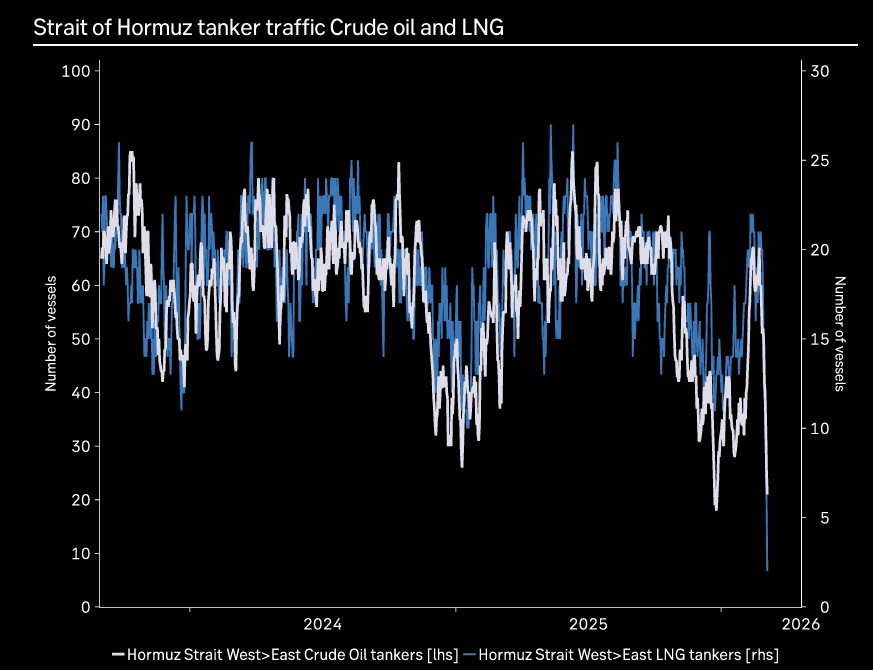
01:16 – Strait of Hormuz tanker traffic Crude oil and LNG figure (Macrobound)
01:17 – 2026 Iran war
01:41 – Nth-order effects
02:11 – Operation Epic Fury
02:16 – Strait of Hormuz practical closure, though a few Chinese and Iranian ships are being let through (More info)
02:26 – Qatar declared force majeure and halted LNG shipments (Force majeure definition)
02:31 – Oil price spike $55/barrel a few weeks ago to over $90/barrel Sunday Mar 8th, Spiked to nearly $120 overnight (Graph), Average gas price in U.S. up almost 50 cents per gallon
02:54 – U.S. demanded unconditional surrender, Iran refused
02:58 – Attacks on water desalination plants and refineries, Black rain in Tehran
03:11 – ~20% of of global oil consumption passes through the Strait of Hormuz
03:21 – Oil* is ~3% of global GDP by cost
03:41 – Correlation between energy consumption and GDP, GDP per unit of energy use (Raw data), More info from Nate’s Economics for the Future: Beyond the Superorganism paper
04:21 – Fossil fuels in the food system:
- Fuel to Fork: What will it take to get fossil fuels out of our food systems? (pg 7)
- The Role of Fossil Fuels in the U.S. Food System and the American Diet
04:43 – Fossil fuels provide the equivalent of 500 billion human workers
04:59: – Ukraine war’s effects on Europe
05:05 – Energy blindness
05:58 – Sour crude oil (high sulfur content) and its sulfur by-product
06:03 – Majority of crude oil that passes through Hormuz is classified as sour crude
06:16 – Current war is pulling nearly 17 million barrels of oil every day off the market
06:26 – Sulfuric acid used to retrieve copper and cobalt
06:36 – DRC and Zambia supply roughly 17% of global copper (pg 3) (Graph source) and more than 70% of global cobalt (Source)
06:53 – Copper and cobalt’s usage in electrification
07:21 – Six-continent supply chain
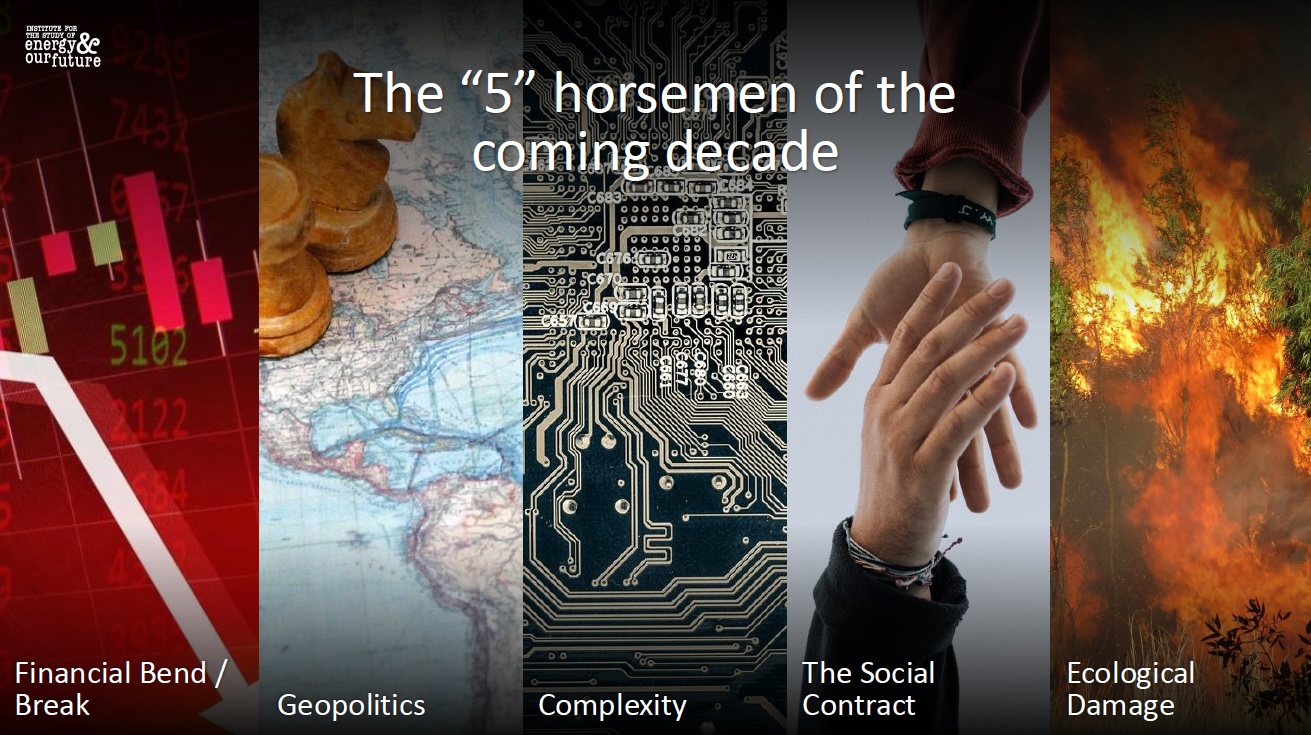
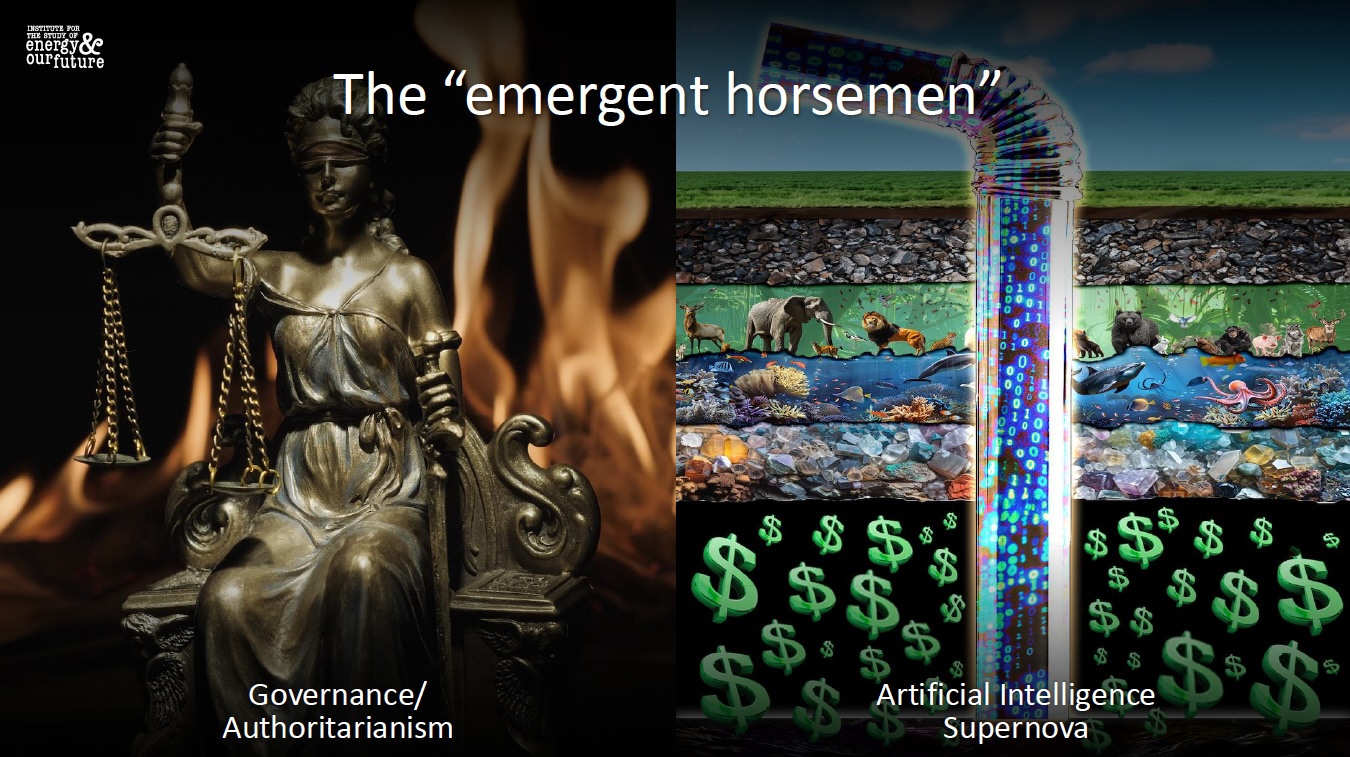
07:26 – The 5 Horsemen of the 2020s + Emergent Horsemen, Nate explaining the original 4 Horsemen of the 2020s
07:34 – Qatar is responsible for roughly 20% of all globally traded LNG (EIA Source)
07:41 – How Europe’s energy systems has changed since the war in Ukraine
07:56 – *There is an overland alternative for LNG, but it is not as accessible as oil overland transportation
08:04 – Price shocks hitting European importers with the Iran war
08:11 – 40-50% of internationally traded nitrogen fertilizers originate from or pass through the Strait
08:21 – Nitrogen fertilizer creation
08:44 – Import-dependent nations with thin fiscal reserves – Egypt, Pakistan, Turkey
08:58 – Craig Tindale, A Globalized Arab Spring,
- Reality Roundtable #12 Could the West Lose the Resource Wars? AI, Rare Earths, and Economic Statecraft
- TGS Ep #207 Why the West Can’t Defend Itself: How Material Scarcity Is Reshaping Global Power
09:09 – Oil is a precursor for nearly 6,000 distinct products
09:40 – Maximum power principle
10:04 – Stock and flow
10:18 – The slurping sound
10:35 – United States’ military might, Shock and awe
10:47 – U.S. interceptor missile stocks risk running low (More info), Manufacturing cost of interceptor missiles
11:02 – PAC-3 interceptor cost, Shahed drones and their cost
11:43 – Secretary of War Hegseth suggesting the Iranian war may go on for months
11:54 – America’s dangerous short war fixation
12:12 – No one really knows what Iran’s stockpiles or launcher capacity is or will be
12:26 – Polymarket: Betting on war (Figure), Disallowing nuclear bomb detonation betting (Figure)
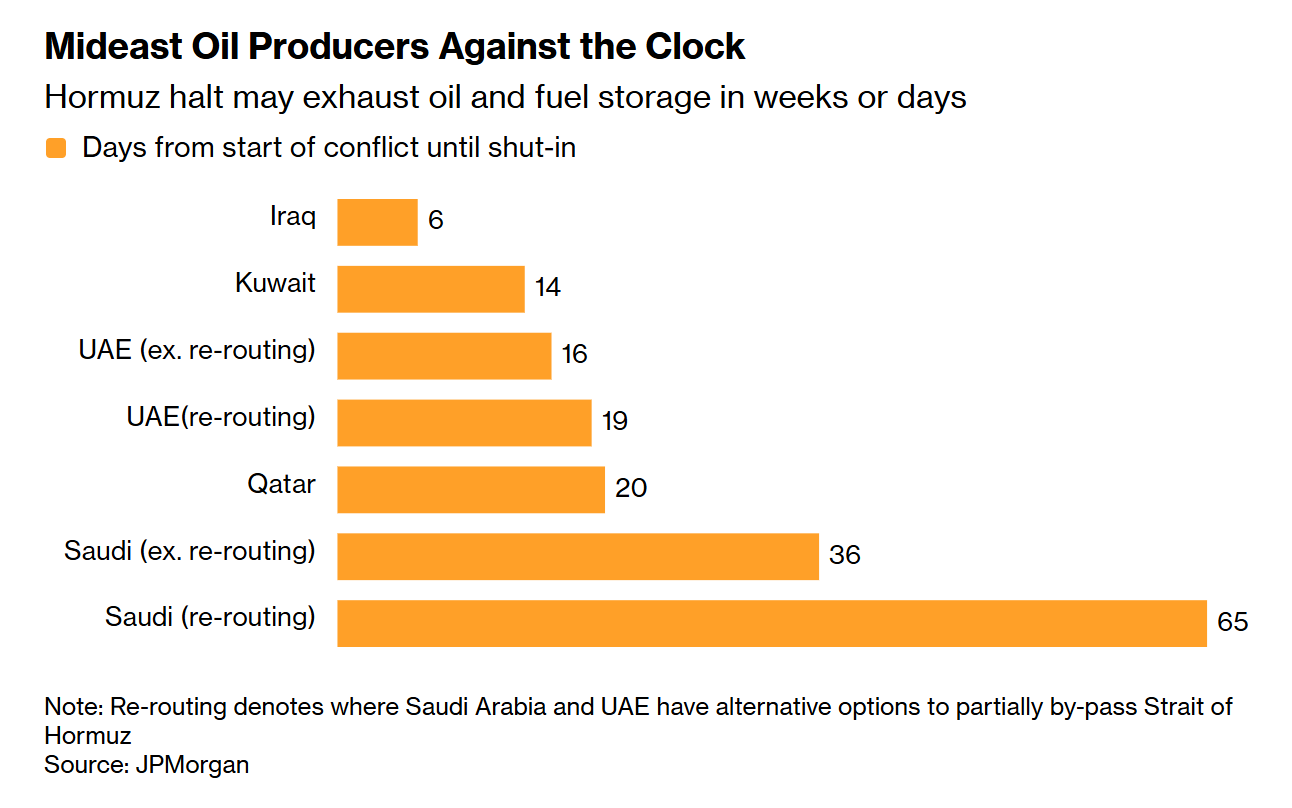
13:08 – Energy in the Middle East, Middle Eastern oil producers graph
13:31 – JPMorgan analysis showing that many Middle Eastern oil producers are approaching full storage
13:42 – “Shut-in” oil production (How it affects performance), Kuwait and UAE reporting to be shutting in production, Iraq oil output plummeting
13:54 – March 2020 when oil prices turned negative
14:12 – Iraq’s major oil fields are old
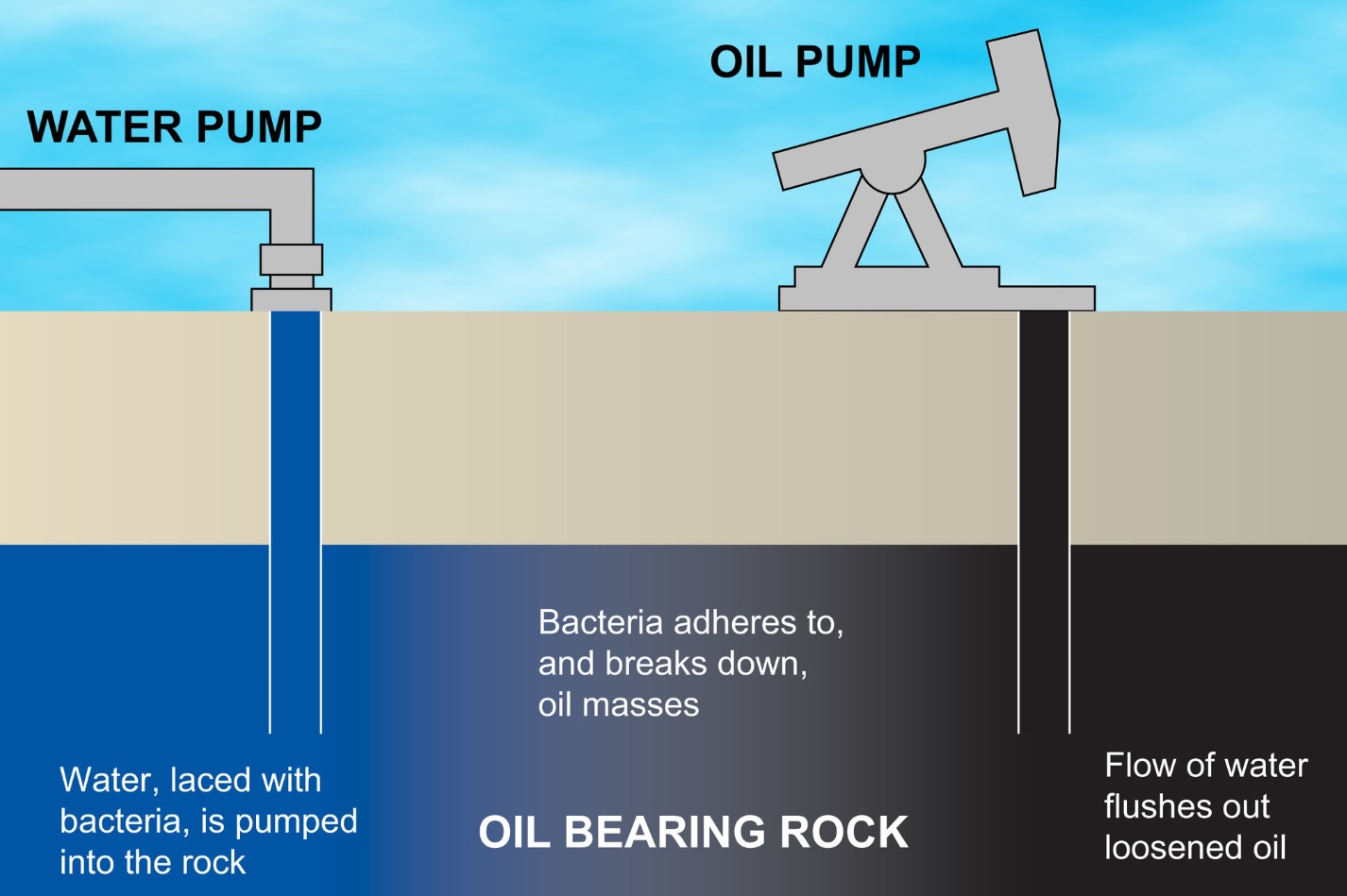
14:16 – Water injection in oil fields (Diagram)
14:33 – Reservoir shut-ins can alter pressure gradients, shift fluid contacts, and cause gas exsolution that may reduce rock permeability
14:58 – Shutting in a well could cause severe reservoir damage
15:33 – Iraq has reduced* flaring, Emergency oil disposal: Flaring and Dumping
16:20 – Ecological impacts from oil [dumping] spills
16:53 – Iraq’s oil storage is close to full, 2nd-largest crude oil producer in OPEC
17:10 – President Trump’s State of the Union address and mention of gas prices
18:26 – Oil depletion (IEA Report: The Implications of Oil and Gas Field Decline Rates),(Reality Blind’s take)
20:26 – According to the Military Religious Freedom Foundation, since the strikes began on Iran, over 200 complaints have been filed from troops across more than 30 military installations (More info), Second coming of Jesus prophecy
20:59 – Jerusalem Post article connecting Iran war to Ezekiel prophecy on arrival of Mashiach
21:31 – Ali Khamenei killing, Religious martyrdom and the IRGC, Arrival of Mahdi prophecy
21:54 – Twelver Shi’ism is the dominant faith of Iran’s ruling class, The Twelfth Imam
22:16 – Mahdist ideology and the U.S.-Iran Conflict, IRGC wants to eradicate Israel
24:13 – War of 1812, Burning of Washington
25:21- Persian Gulf region
25:31 – World reorganizing away from U.S.-centered trade and finance
26:26 – The Great Simplification
26:44 – Rocks in the river, Cultural mitochondria