Ep 219 | Tad Patzek
Why Each American Lives Like a 40-Ton Whale: Power, Overshoot, and Climate

Description
Many of us were taught that humans have been the dominant force shaping the modern world through sheer grit, ingenuity, and innovation. While true to an extent, there are also deep, embedded laws of energy that have both constrained and enabled human cleverness and our influence over our surroundings. What exactly are these laws, and what happened in the past few centuries that allowed for an explosion of technology and consumption? Perhaps more importantly, how can that knowledge help us understand how the decades and centuries ahead might be different?
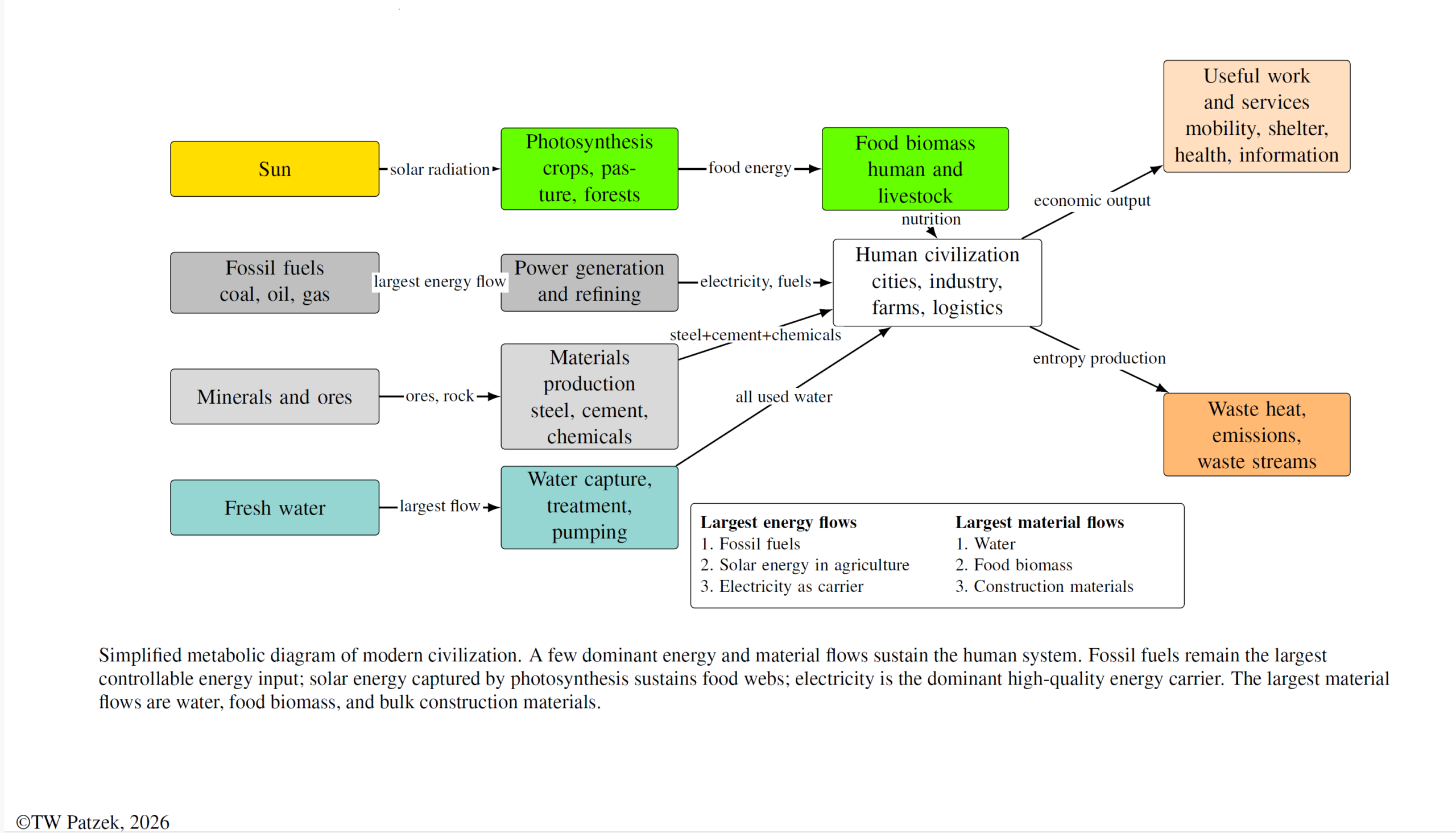
In this episode, Nate is joined by earth scientist and thermodynamicist Tad Patzek for a deep dive into the mathematics and physics driving humanity’s energetic and material predicament. Tad walks us through the six great flows of power and materials that keep civilization running, and explains why our public conversation about all of them is dangerously detached from physical reality. He argues that planetary breakdown is not merely a side effect of an economic system built on growing these flows – it is a direct mathematical consequence of overshoot. He rounds out this picture by pointing out that every energy transition in history has been additive, not subtractive – increasing total power in the system – and the current push toward renewables is no exception.
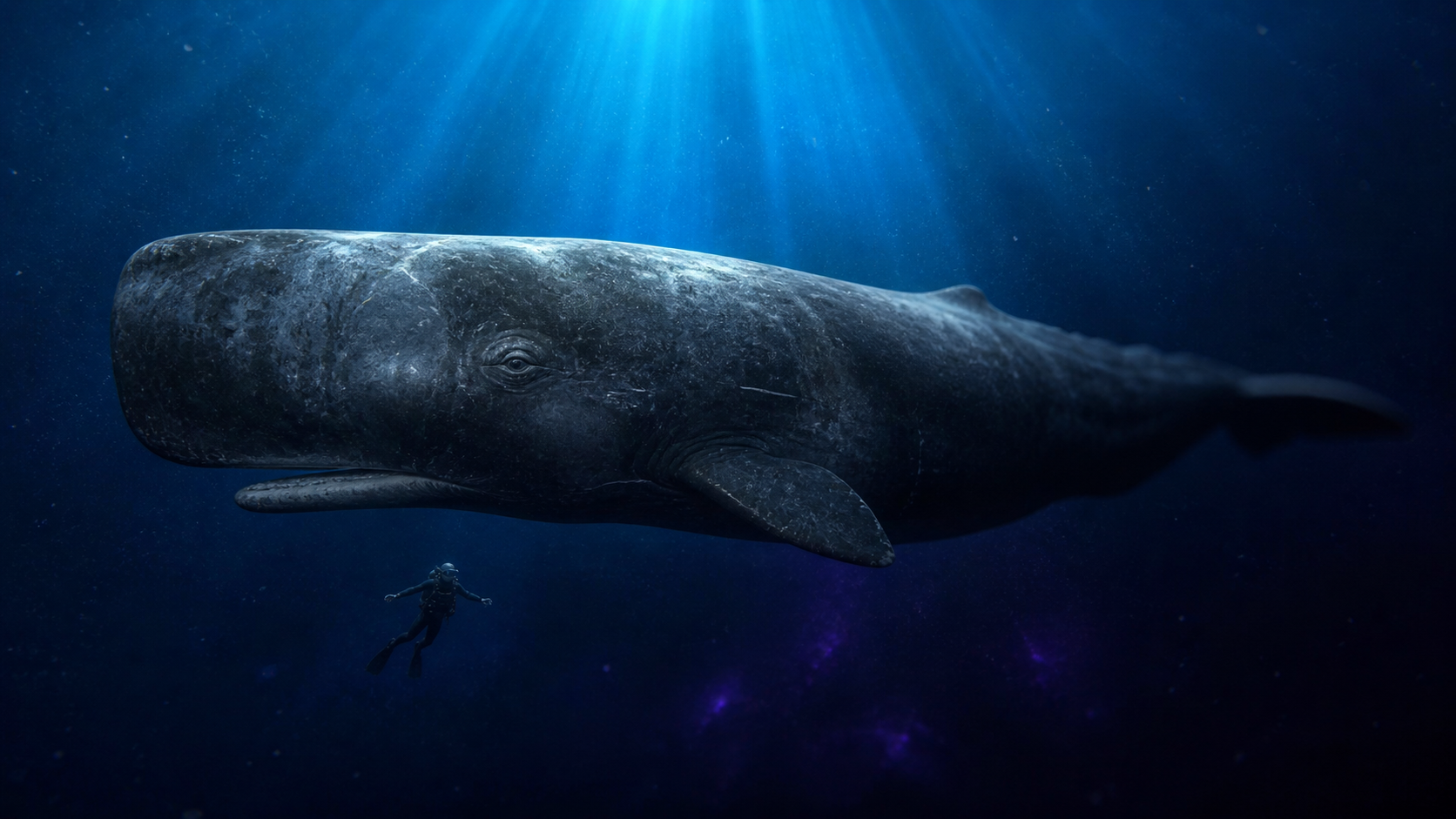
What if we were to truly see ourselves through the lens of all the energy we consume – for Americans, the equivalent of a 40-ton whale – would that change how we live? How do technology, population, and per capita energy consumption amplify each other, creating an exponential demand for power? And if we were to acknowledge the inseparability of our ecological crises and our energy blindness, would it help us change our behavior in accordance with the kind of world we’d want our grandchildren to inherit?
About Tad Patzek
Tad Patzek is Professor Emeritus of Petroleum and Chemical Engineering at the Earth Sciences Division and Director of the Ali I. Al-Naimi Petroleum Engineering Center in KAUST, Saudi Arabia. Formerly, he was the Lois K. and Richard D. Folger Leadership Professor and Chairman of the Petroleum and Geosystems Engineering Department at The University of Texas at Austin. Additionally, he was previously a Professor of Geoengineering at the University of California, Berkeley. Prior to joining Berkeley, he was a researcher at Shell Development, a research company managed for 20 years by M. King Hubbert. He is also a full Presidential Professor in Poland, which is the highest honor, and also served as a member of the DOI Macondo Well Advisory Committee.
Patzek’s current research involves mathematical and numerical modeling of earth systems with emphasis on fluid flow in soils and rocks that can be hydrofractured. He is working on the thermodynamics and ecology of human survival, and food and energy supply for humanity. His current emphasis is the use of unconventional natural gas as a fuel bridge to the possible new energy supply schemes for the world. Patzek is a coauthor of over 400 papers and reports, and most recently, he has cumulated his research into his upcoming book Thermal Power and Climate Change: A Data-Driven Analysis of Cause and Effect, 1800-2100 (Preprint available now)
Show Notes & Links to Learn More
Download transcriptThe TGS team puts together these brief references and show notes for the learning and convenience of our listeners. However, most of the points made in episodes hold more nuance than one link can address, and we encourage you to dig deeper into any of these topics and come to your own informed conclusions.
00:00 – Tad Patzek, Works, Blog: Life Itself, Books:
- Tad’s recent book referenced in the episode: Thermal Power and Climate Change: A Data-Driven Analysis of Cause and Effect
Insert in video interview: Energy and Material Flows
03:15 – Pimentel and Patzek ethanol production paper
03:45 – Thermal Power and Climate Change: A Data-Driven Analysis of Cause and Effect
04:37 – Energy vs. Power
04:50 – Climate change, Overpopulation, etc. comes from surplus energy available to humanity
05:01 – Human energy output is ~100 watts and the brain consumes ~20 of those watts
05:19 – Average American ~10,000 watts of continuous power (More info on pg 6)
05:55 – 40-ton sperm whale metabolic equivalent (More info on Tad’s blog)
08:20 – Advanced societies are those with surplus power
08:54 – Collapse of Complex Societies
09:07 – Joseph Tainter (TGS Episode), Drilling Down (Patzek and Tainter)
10:00 – Roman Empire geographical area
10:25 – English Industrial Revolution and coal
11:15 – England as dependent on coal in 1800s as the U.S. was dependent of fossil fuels in 2010
11:37 – Exosomatic energy (More info)
11:50 – Power output difference between fossil fuels and renewables (see pg 4)
12:03 – Renewables better termed “Rebuildables”
12:30 – Dispatchable vs. non-dispatchable power
13:15 – Fossil amoeba / Economics for the Future: Beyond the Superorganism
13:23 – Insert in video interview: Energy and Material Flows
13:50 – Coal, oil, and natural gas (80–85% of global primary power)
14:26 – Global primary power (~15–18 terawatts)
15:11 – 19 Terawatt economy, Energy consumption by source
15:21 – Photosynthesis as a planetary power flow
16:07 – Human appropriation of net primary production (HANPP)
16:30 – Agriculture efficiency in sequestering solar light
16:59 – Solar photovoltaic efficiency
17:10 – The cost and lifespan of renewable energy components
17:34 – Electricity as the purest form of energy
17:54 – Global electricity generation (~3.4 terawatts), By source
18:25 – Thermal power sources (coal, natural gas, nuclear)
18:40 – Hydropower
20:37 – Energy blindness
21:55 – Number 1 material flux in human economy: Global freshwater withdrawals (~4,000 km³/yr)
23:00 – Irrigation uses 70-75% of total freshwater usage
23:17 – Conflict in the Middle East – Iran War 2026
23:26 – Gulf Cooperation Council (GCC)
23:41 – Seawater desalination in the Middle East, Amount of desalinated in Middle East per year
24:32 – Escalation in the Middle East since recording date: March 12, 2026
24:52 – Global food biomass (~10–12 Gt/yr)
25:17 – Sand, gravel, cement, and steel (~50 Gt/yr)
25:47 – Concrete and global infrastructure
27:59 – Every energy transition has been additive, not subtractive
28:39 – Renewable energy infrastructure built on fossil fuels
29:35 – Mining infrastructure behind renewables
29:44 – Fragile food supply chains
30:14 – Energy inputs to food you eat before it arrives at the grocery (pg 11)
30:34 – Aquifer depletion, Other factors that can limit water supply
31:25 – Economics as a claim on future physical production, We think finance systems substitute physical reality
33:15 – Technology increases efficiency, but increases throughput even more (Jevons paradox)
33:36 – Human economic superorganism paper (Hagens)
34:03 – Ecological overshoot
34:22 – Carrying capacity
35:10 – Human overpopulation, TGS Episodes on such: #136, #9
35:25 – Current climate breakdown is a direct consequence of human overshoot
35:47 – Ecological overshoot scaling with the cube of primary power
35:55 – I=PAT equation (Ehrlich and Holdren)
37:03 – William E. Rees (TGS Episode), Our Ecological Footprint
37:24 – Free energy (Gibbs) vs. Non-free energy aka heat
37:45 – Laws of thermodynamics
38:10 – Ore grade and concentration of free energy
38:35 – We use the best resources first and only once
38:45 – 70% of primary power rejected as waste heat when using fossil fuels to generate electricity
39:29 – Climate change / Global heating
39:59 – Climate change intensifies extremes, Climate change and the water cycle, Climate extremes: intensification of frequency and magnitude
41:10 – Statistics of extremes (Appendix D in Tad’s book on pg 325)
41:38 – Gaussian / bell curve, Fat-tailed distributions
42:25 – Climate impacts on global agriculture
42:44 – Ocean warming and Overfishing disrupt fisheries, Coral reef die-off, TGS Episodes on such: #197, #179
42:57 – Fish is a primary protein source for hundreds of millions of people
43:10 – Freshwater storage in snowpacks and glaciers, Rapid melting in spring causes water shortages in summer and fall
43:45 – Himalayan glacial melt lakes and rivers drying up
45:00 – Solar insolation ~240 W/m², Balanced by outgoing infrared radiation
45:45 – Earth’s energy imbalance (~1 W/m²)
46:55 – Energy imbalance totals ~300–500 terawatts (20x human economy)
47:40 – Nine planetary boundaries, Johan Rockström (TGS Episode)
48:32 – Paul and Anne Ehrlich role in planetary boundaries framework development (Paul Ehrlich TGS Episode)
49:10 – Habitat degradation globally
49:30 – Aquifer depletion
49:48 – Nitrogen and phosphorus cycles overwhelmed because of fertilizers
50:08 – Gulf of Mexico dead zone
50:23 – Ocean acidification
50:38 – Atmospheric aerosol loading
50:53 – Stratospheric ozone depletion, Why we need the ozone layer
51:40 – Climate breakdown and cumulative CO₂ emissions
52:10 – Atmospheric CO₂ at ~430 ppm and projections
53:19 – Tad’s scenarios vs. IPCC RCP scenarios (pg 145)
53:40 – Economic collapse is a matter of time
54:18 – Climate change and monsoon patterns, El niños, and AMOC
55:20 – Land warms ~2x faster than ocean
55:49 – Current Gulf of Mexico temperature anomaly
56:04 – Recent Los Angeles heat wave
56:19 – Oceans absorb ~90% of excess planetary heat
57:04 – Earth’s albedo declining, Albedo definition
57:45 – Green house gases (GHGs)
58:04 – IMO 2020 low-sulfur fuel regulations for ships and cloud loss (therefore albedo loss)
58:29 – Dimethyl sulfide (DMS) and cloud condensation nuclei
58:30 – Small ocean life is producing less DMS, therefore cloud loss (CLAW hypothesis)
59:09 – Global heating and Arctic and Antarctic sea ice loss and reflectivity
1:00:35 – Home insurance withdrawing from climate-exposed markets
1:01:00 – Rising food prices from climate-disrupted agriculture
1:01:55 – Grid failure under heat load / EV charging
1:02:00 – Climate change and infrastructure damage
1:02:20 – Germany’s infrastructure ranking decline
1:03:56 – Rebuilding transportation around public transit
1:04:26 – Reducing beef and other meat consumption
1:05:41 – Logistic growth curve thought experiment (Tad’s book example in chapter 6, pg 114)
1:05:50 – Humans are not rational beings, Cognitive biases (More info)
1:06:00 – 1650-1920 population growth, Baby boom
1:06:51 – Life expectancy: 32 years (1900) vs. 72 years (2022)
1:07:38 – World GDP per capita, 1820 to 2022
1:08:50 – Energy slaves / fossil fuel labor equivalents
1:10:23 – Techno-optimism
1:12:05 – AI and energy demand, AI and efficiency, Tad’s book chapter on AI (pg 13)
1:13:11 – AI used by elites to obtain political power
1:14:10 – Just-in-time supply chains as single points of failure
1:15:46 – Embodied energy and materials going into AI-systems
1:16:00 – AI data centers consume 100-300 MW of electricity each and are affecting electricity utilities/grids
1:16:37 – Centralization of decision-making by AI
1:19:04 – Managed decarbonization transition
1:19:39 – Degrowth / absolute economic output decline
1:20:34 – Turbulent transition: resource competition and climate migration
1:21:30 – Fragmentation: geopolitical tensions and wars
1:22:37 – Nuclear fusion as a cornucopian promise
1:24:04 – Napa County agricultural and water reform
1:28:31 – Learn science for free online
1:29:05 – Human ability for abstract/fanciful thinking, False dichotomy
1:29:31 – Practical manual skills and making things
1:32:12 – Human inability to plan far in the future & Time blindness (More info), Deep time
1:33:07 – Free hyperlinked PDF of Tad’s the book