Ep 220 | Art Berman
A World On the Precipice: The Last Oil Tanker From the Strait of Hormuz has Arrived – Now What?

Description
The last pre-war shipments of oil products from the Strait of Hormuz have arrived at their destinations as of early May, meaning the promise of an energy crisis as a result of the Iran war is fast approaching. Leading experts are now forecasting energy disruptions ranging from rationing to severe shortages in import-dependent economies, with roughly 11% of global oil supply already offline. This leaves us with the question: even if this war were to end today, what sort of system-wide effects are locked in given the current loss in production, and what will be required of us to cope with the fallout?
In this episode, Nate welcomes back petroleum geologist Art Berman to break down the timeline of the looming oil shortages stemming from the Strait of Hormuz crisis and just how severe they could become within a tightly coupled, complex global system. Art explains why, even if the war were to end today, the inherent lags in our industrial supply chains mean shortfalls are already baked into the coming months. The resulting rise in energy prices will reach far beyond the pump, rippling out into the cost of virtually everything and confronting much of the world with conditions not seen in over five decades. Ultimately, Art sees this as a forcing mechanism that could compress decades of needed adjustment into months. The outcome will rely less on policy than on whether societies can absorb the shock without breaking.
Amid all the speculation about oil prices in the wake of the Iranian conflict, what do these numbers actually mean in physical terms? If this conflict signals the beginning of a long-term decline in energy availability, are we already past the peak of the global material economy, with the financial layer not yet caught up to the physics? And if this conflict signals the beginning of a long-term decline in energy availability, what lessons from our deep past might help us find our way forward?
About Art Berman
Art Berman is a petroleum geologist with over 40 years of oil and gas industry experience. He is an expert on U.S. shale plays and is currently consulting for several E&P companies and capital groups in the energy sector.
Show Notes & Links to Learn More
Download transcriptThe TGS team puts together these brief references and show notes for the learning and convenience of our listeners. However, most of the points made in episodes hold more nuance than one link can address, and we encourage you to dig deeper into any of these topics and come to your own informed conclusions.
00:00 – Art Berman
- Presentation by Art for this episode: The Hormuz Crisis: A Systems Perspective
- Video inserts in this interview
- Previous TGS Episodes (YouTube Playlist)
- Reality Roundtable #16: The Mad Scramble for Power: Global Superpowers Strategies for Energy, Economics, and War
- Ep #101: Shale Oil and the Slurping Sound
- Ep #92: BRICS+, Strategic Petroleum Reserve & Metaphysics
- Reality Roundtable #1: Electric Vehicles
- Ep #54: Peak Oil – The Hedonic Adjustment
- Ep #3: Oil: It Was the Best of Fuels, It Was the Worst of Fuels
03:09 – Oil markets and the Iran War, Strait of Hormuz Crisis
03:27 – Oil price fluctuations since the Iran War
03:35 – Negotiations around a truce/ceasefire in early May
04:28 – History of war and oil in the Middle East
04:55 – Napoleon invasion of Russia in 1812
05:30 – Energy blindness, Nth-order effects (System implications)
05:57 – Ecological phase shifts, Frankly on such
06:35 – 21 million barrels/day of oil and refined products passed through the Strait of Hormuz
06:45 – U.S. consumes 20 million barrels of oil and refined products daily
07:00 – Liquefied natural gas that passes through the Strait of Hormuz
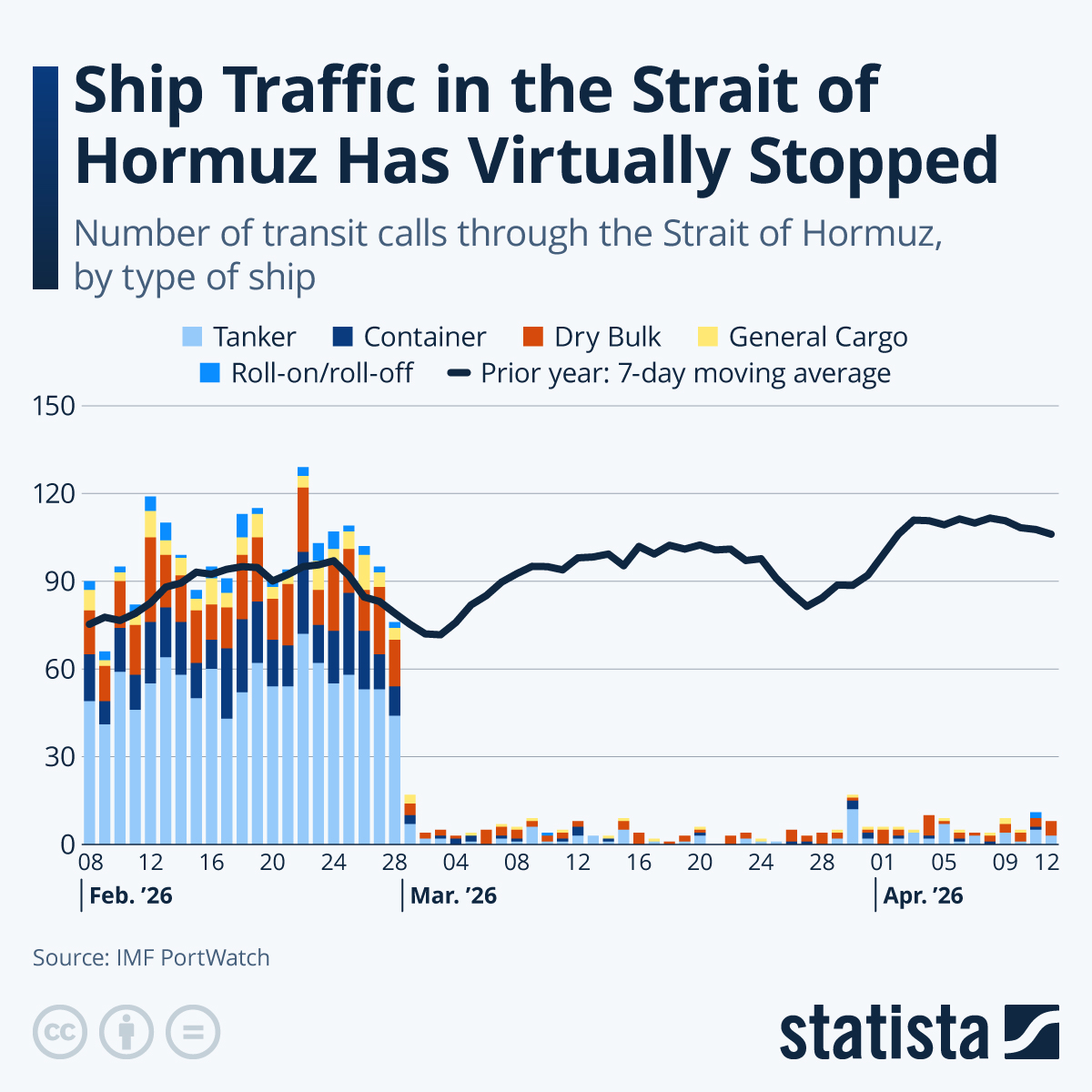
07:20 – Video Insert (1) Ship traffic in the Strait of Hormuz
07:22 – Close to 0 barrels of oil are passing through the Strait of Hormuz except some Iranian oil
07:40 – ~10 million barrels/day of oil is getting rerouted from Persian Gulf countries through pipelines
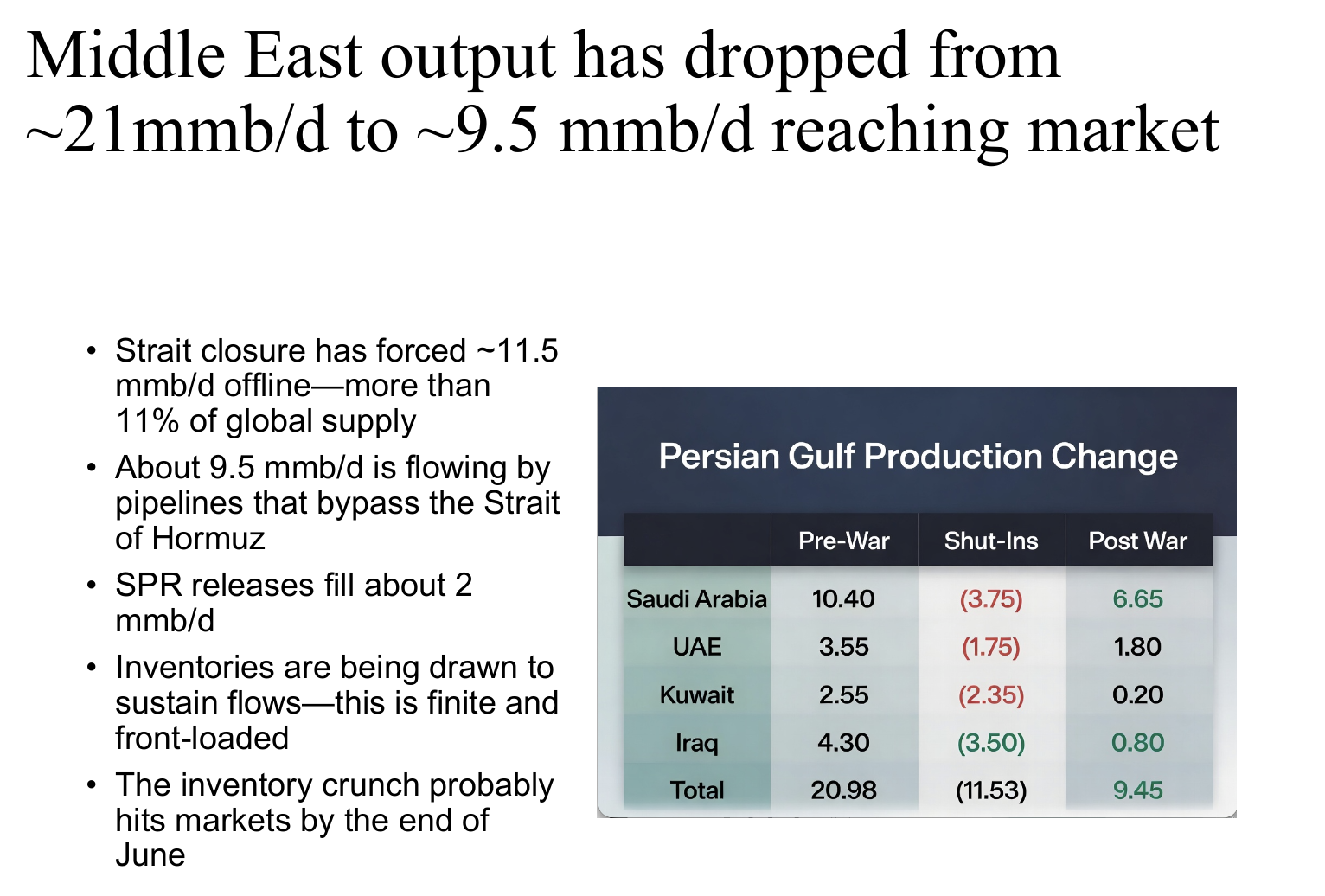
08:15 – Video Insert (2) Middle East oil output drop since the Strait of Hormuz Crisis
08:20 – ~11% of the global supply of oil is currently offline
08:42 – 1970s/80s oil shock, More oil consumption since then, Economic growth since then
10:00 – Iranian Revolution: 1978-1979 oil shock
10:20 – Effects of Iran War on Asia, Africa, and Europe
10:30 – Leads and lags in the oil market
10:44 – Arrival times of the last tankers to make it through the Strait of Hormuz before the war
11:20 – Oil production and reserves by country
11:38 – California gas prices due to the Iran War, U.S. gas price increases by state
12:05 – U.S. oil shortage projections this year
12:40 – Western OECD Strategic Reserve drawdown
13:33 – Analysts saying U.S. Strategic Reserves could be at 0 by end of summer:
- HFI Research: (WCTW) The Oil Market Breaking Point Is Here
- Giovanni Staunovo
- HFI Research: Oil Math Update – The Heavyweights Are In Agreement
15:02 – Oil tankers currently stuck inside the Strait of Hormuz
15:15 – Abbas Araghchi
15:35 – Logistics of getting the tanks out after the Strait of Hormuz opens
16:45 – Middle Eastern current oil production pause and oil well shut in
17:07 – Mines in the Strait of Hormuz and logistics of removing them
17:30 – Tanker insurance during the Strait of Hormuz Crisis
19:13 – Oil markets: Futures vs. Spot
20:05 – Brent oil prices
20:27 – Future discounting
21:00 – Products that come from a barrel of oil (6,000+)
21:20 – Understanding refinery margins
21:50 – The issues with reducing oil refinery production (similar to oil well shut-in)
23:40 – Peak oil
24:35 – Game theory
24:45 – Superorganism splitting in 2?
25:20 – Oil prices going up, leading to more drilling (1970s/80s)
25:55 – Not much oil exploration/discovery happening this century (pg 17)
26:07 – 1990s offshore drilling boom in Gulf of Mexico, West Africa, and Brazil, Price of offshore drilling (pg 5)
26:35 – Recent reserve discoveries by U.S. in Guyana and by Brazil, Namibia discoveries
27:15 – Time it takes to bring an oil field online from time of discovery
28:27 – AI has long been a part of oil discovery technology and won’t bring about great efficiency
29:05 – Wide-boundary perspective
30:00 – CO2 injection (Challenges and risks)
31:13 – Risk premia
31:30 – Project Freedom – Trump and Hegseth’s escort service through the Strait of Hormuz cut short
31:55 – Iran attacking UAE port Fujairah
32:40 – Iran’s ability to launch missiles and drones
32:50 – Suspected Karg Island oil slick via satellite imagery
33:35 – The Carbon Pulse, Possible future shapes of the Carbon Pulse, Future growth
scenarios
33:38 – Humanity’s metabolism (Economic Superorganism)
35:55 – The Great Simplification, Deglobalization
36:50 – U.S. is 50 cents away from all-time high gasoline prices
37:00 – Global South shocks already here
37:23 – U.S. government charts showing the U.S. setting record oil exports
38:17 – Crude oil vs. Refined oil products
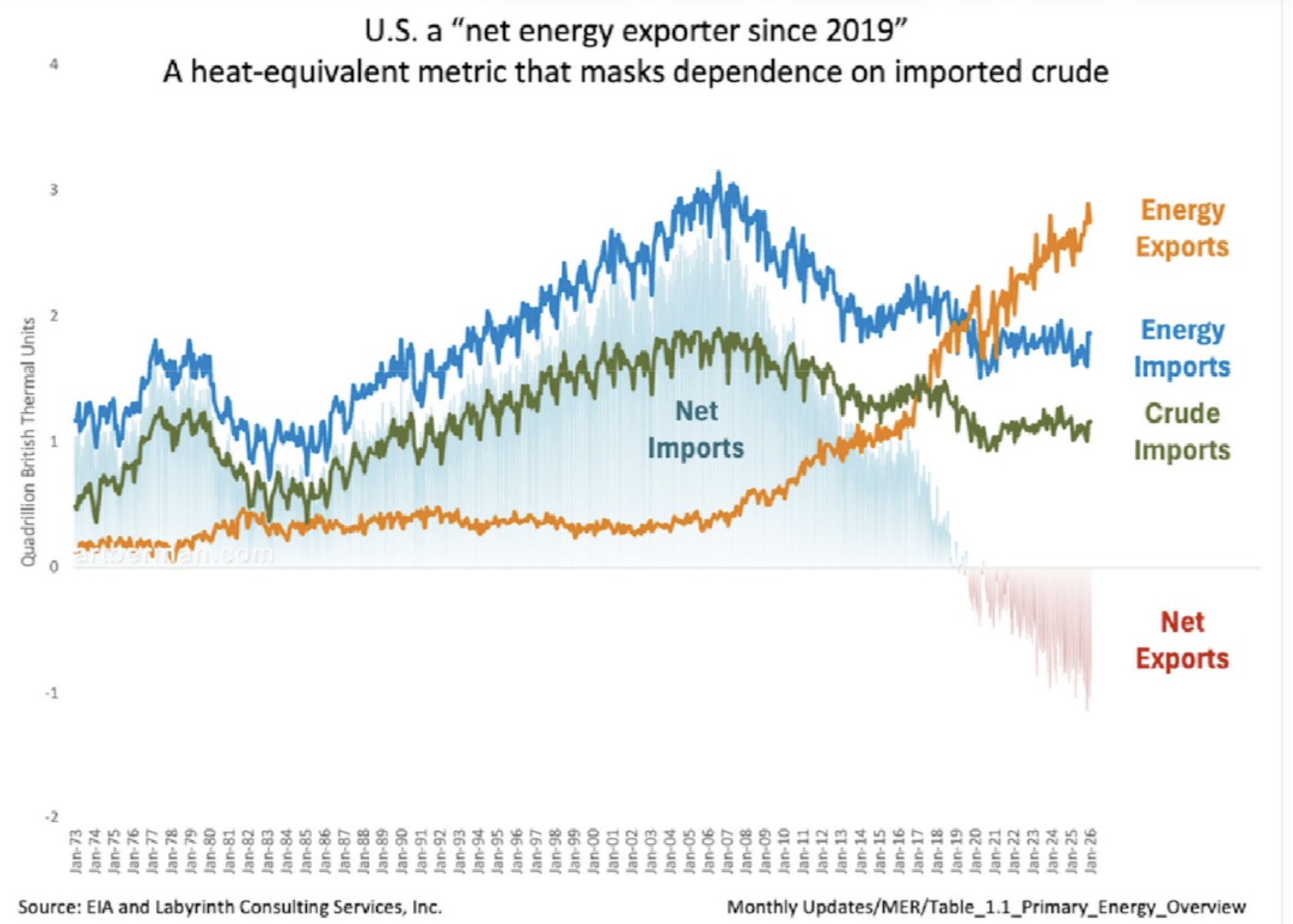
38:32 – Video Insert (3) U.S. is a net energy exporter
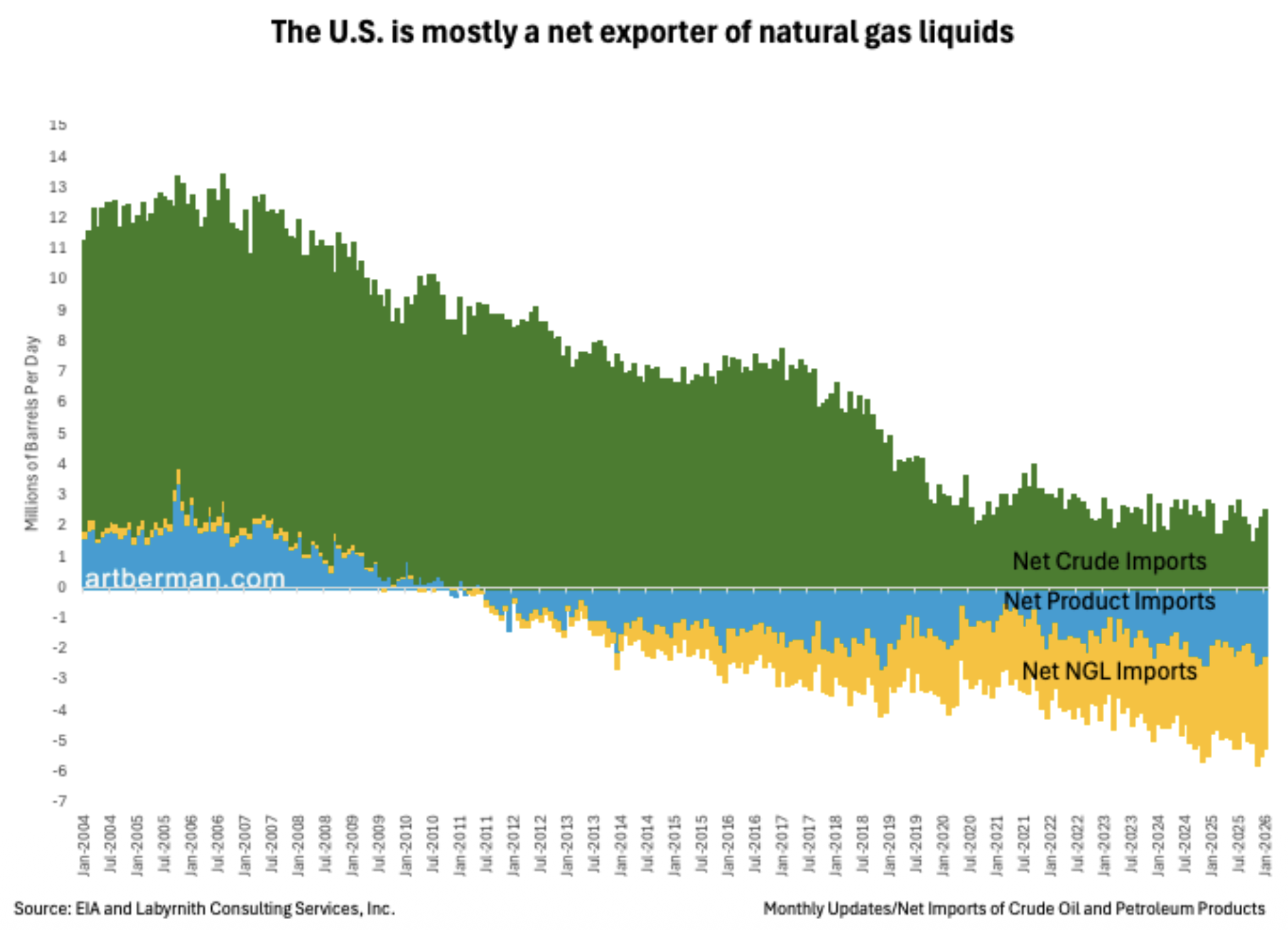
39:12 – Video Insert (4) U.S. is mostly a net exporter of natural gas liquids
39:25 – Not all forms of energy are equal
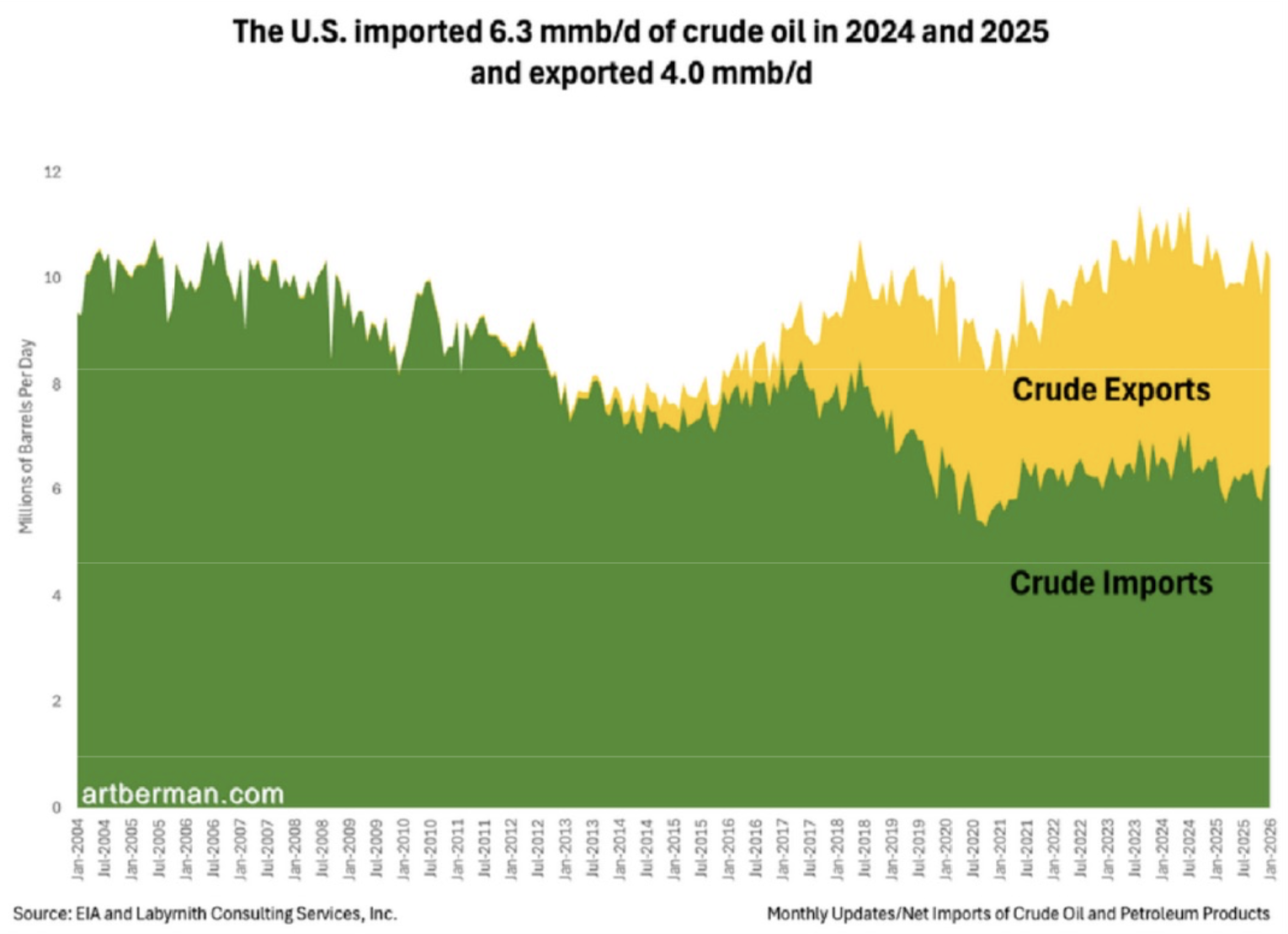
40:02 – Video Insert (5) U.S. crude oil imports vs. exports
40:12 – Oil has the highest energy density and is the easiest to move around physically
40:52 – Emissions from burning oil
41:07 – Correlation with oil usage and increase in global wealth
42:20 – U.S. decrease in oil imports and increase in oil exports in last few decades
42:45 – U.S. exports lighter crude and imports heavier crude
43:02 – U.S. Act that lifted the previous ban on exporting crude oil
43:39 – Shale oil boom in 2010s
43:59 – Light crude oil
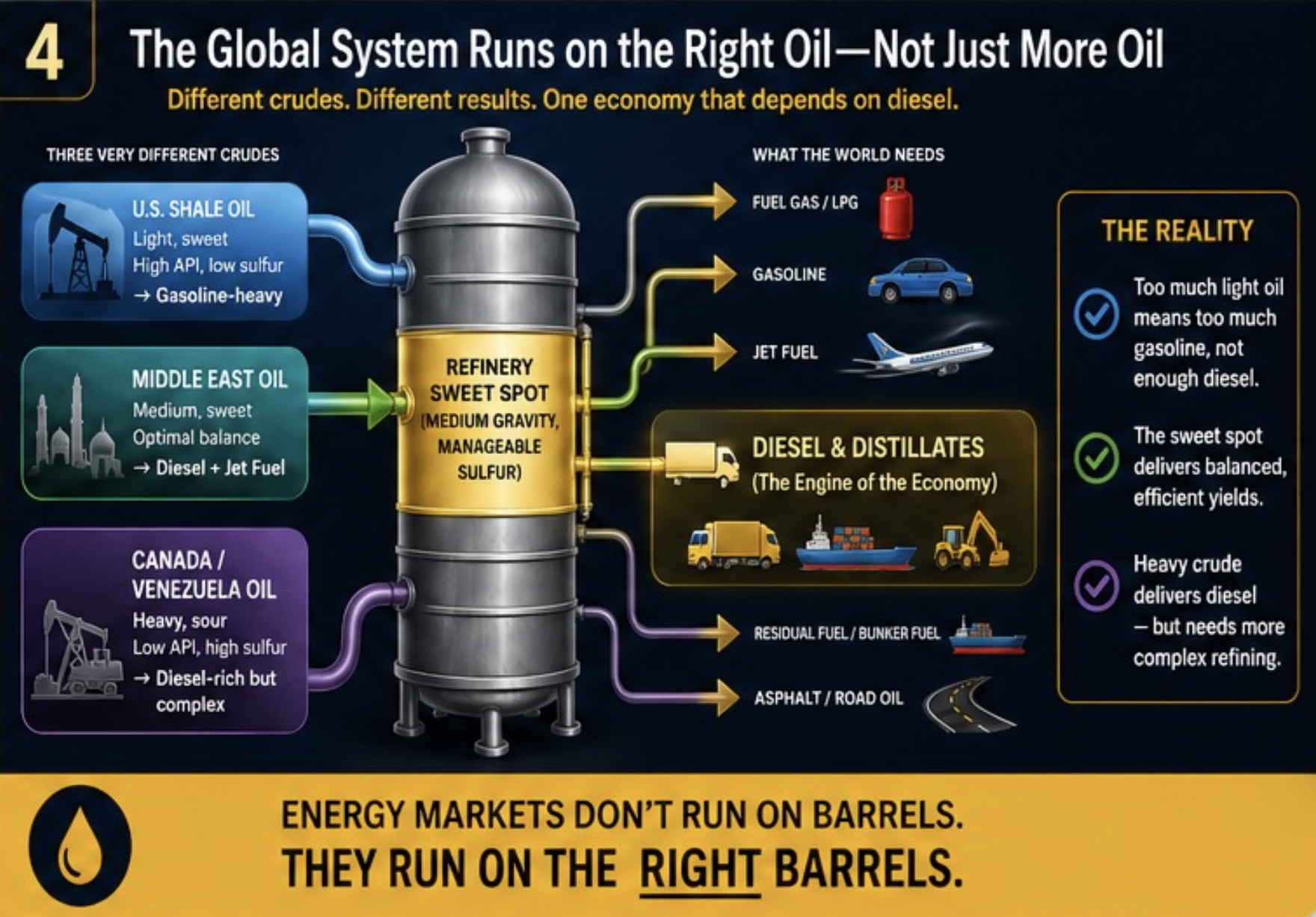
44:05 – Not all oil is the same – Middle East oil is the sweet spot between light/heavy and sweet/sour
44:55 – Video Insert (6) Different Kinds of Oil Infographic
45:20 – In the 1940s/50s, the U.S. was largely oil independent because mainly using gasoline
45:33 – The rise of diesel usage
46:01 – Propeller plane vs. Jet plane
47:03 – Nate’s Four horsemen of the 2020s
48:01 – “Complex refinery”, U.S. can mainly refine heavy crude
48:24 – Refining tower and how oil is refined into different products
48:50 – Bitumen, Hydrocoking
50:05 – Diesel can’t come from only light oil
50:22 – In 2024, 62% of all U.S. crude imports came from Canada, including 75% of all heavy crude imports
50:35 – Current U.S.-Canada relations
50:54 – Diesel is the main energy source of the economy we have today (More info)
51:20 – Ships, trains, trucks, and agricultural and mining equipment do not have scalable renewable substitutes, There Is No “Next Economy”
52:12 – East Asia already feeling the effects of less oil on the market
52:31 – Spot price for diesel in Singapore
52:53 – 42 gallons in a barrel of oil
57:18 – Rory Johnston (TGS Episode: #218)
57:21 – Strait of Hormuz Crisis has caused ~1 billion barrels of oil production loss
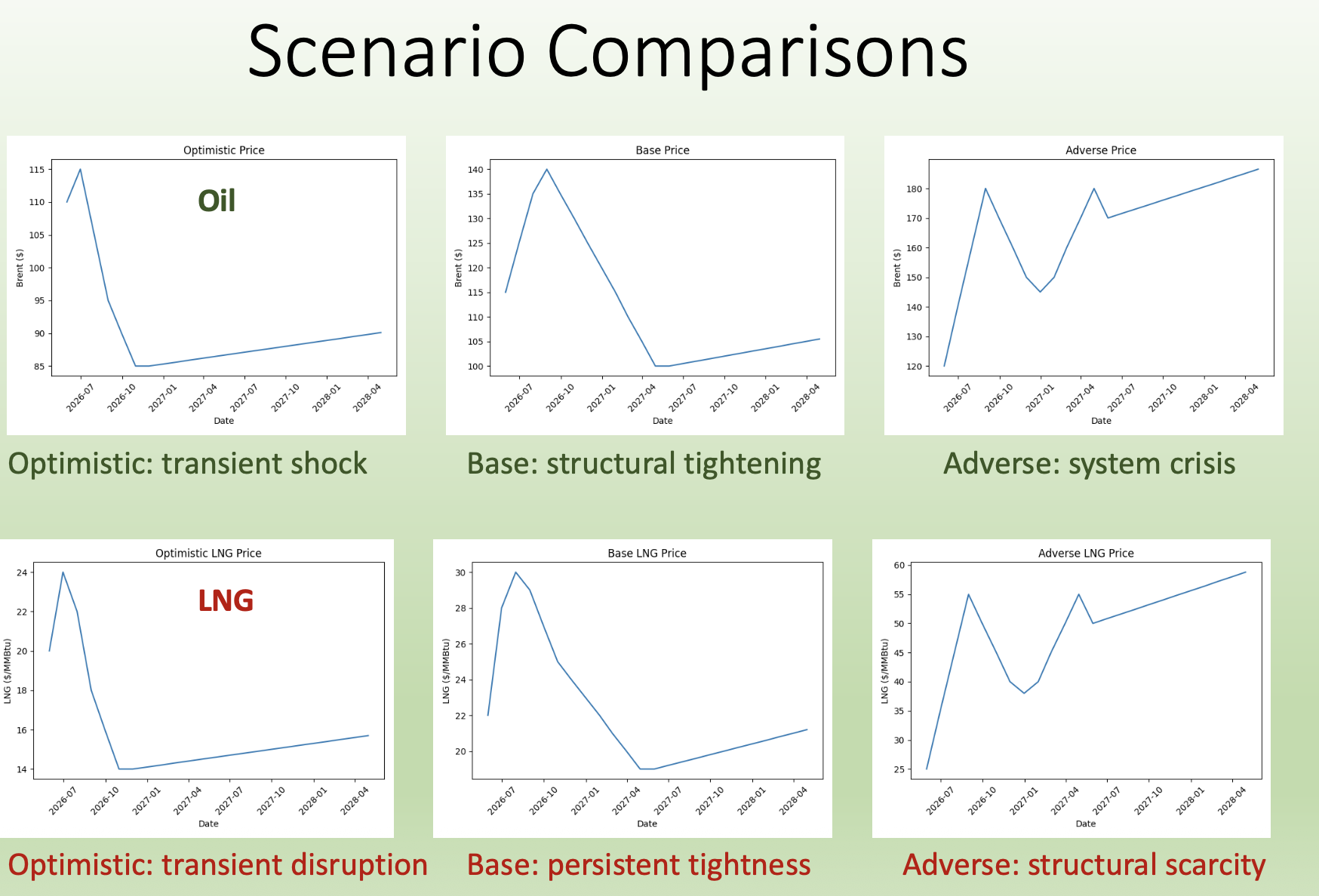
57:37 – Video Insert (7) Scenario Comparisons
58:13 – Probability distributions and Error bands
59:40: – Upcoming Trump-Xi 2026 Summit
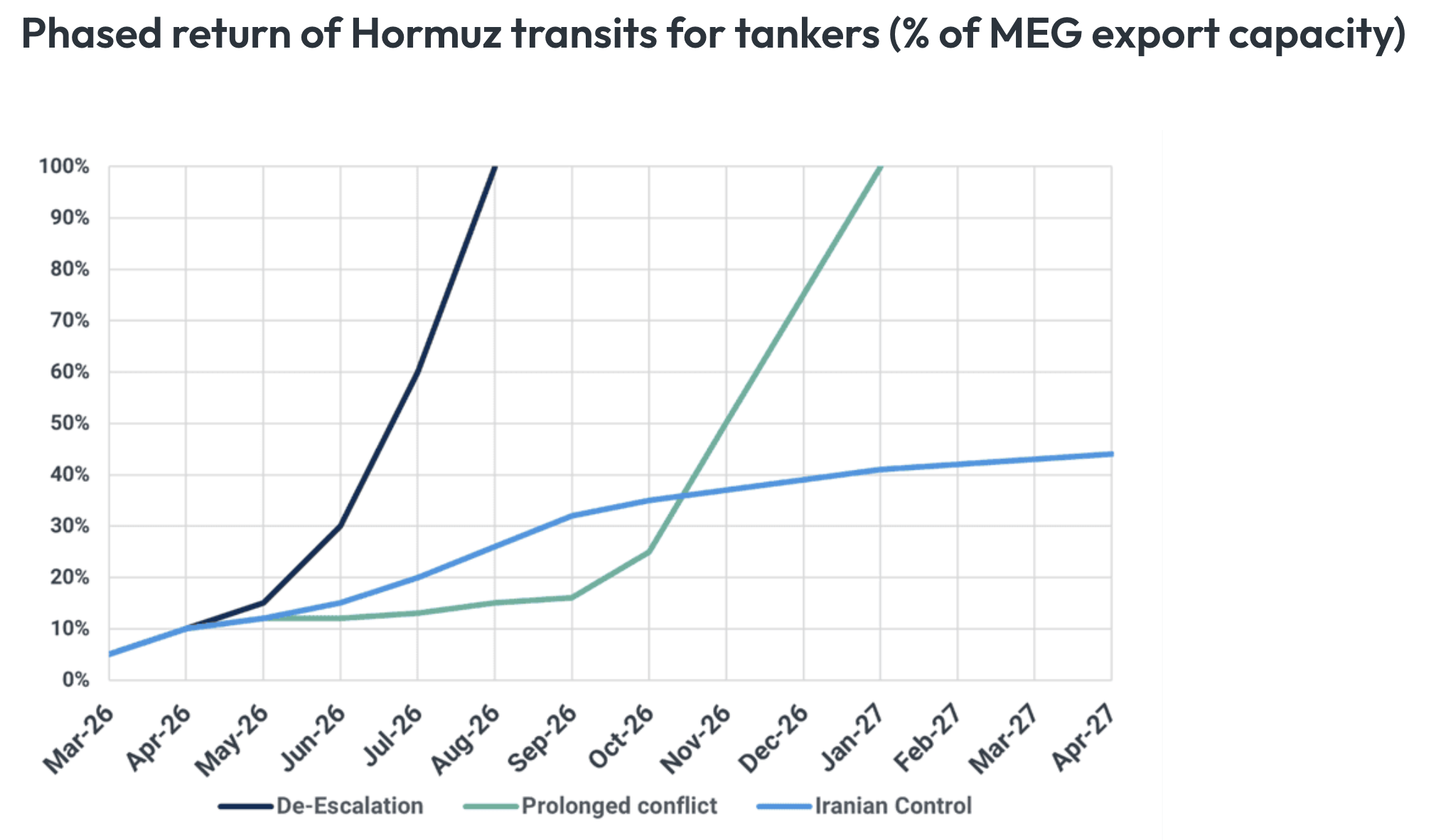
1:00:20 – Kpler: What if Iran maintains control?
1:00:55 – Video Insert (8) Kpler graph on Hormuz traffic
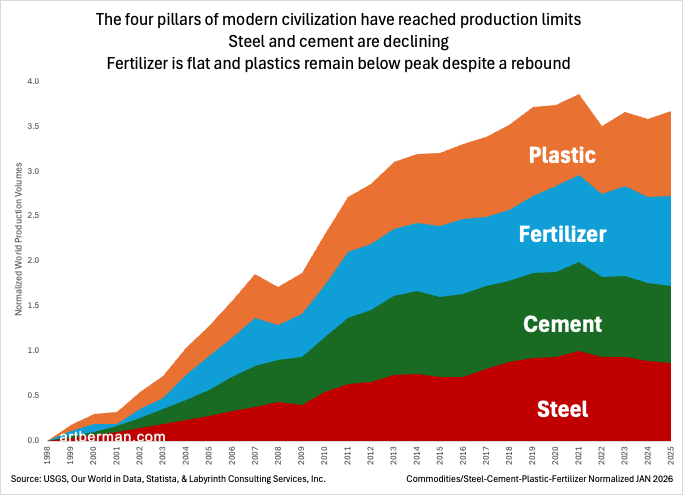
1:02:20 – Valclav Smil four pillar of civilization: cement, steel, plastics, ammonia
1:02:45 – Video Insert (9) Steel and cement are declining, fertilizer is flat, plastics below peak
1:03:53 – Smil’s analysis on such – Substantia
1:04:25 – Economic growth correlates with cement and steel stocks
1:04:47 – Cars are made up of mostly steel and plastic
1:05:13 – Medical industry is one of the leading consumers of plastic
1:05:28 – Can’t support 8.5 billion humans without fertilizer
1:06:00 – Renewables termed as “Rebuildables”
1:06:05 – Materials, Cost, and Lifespan of renewable energy systems
1:07:30 – Critical minerals needed for renewable energy systems, China’s control over some of those minerals
1:08:10 – Recent Wide Boundary News Frankly on Boundary Waters mining
1:08:40 – Quetico Provincial Park mining
1:09:33 – Superorganism
1:10:13 – How the Hormuz crisis is driving a biofuels boom
1:10:34 – AI and energy demand, Hyperscaler capex and capacity surge, Data centers and electric grid (U.S.)
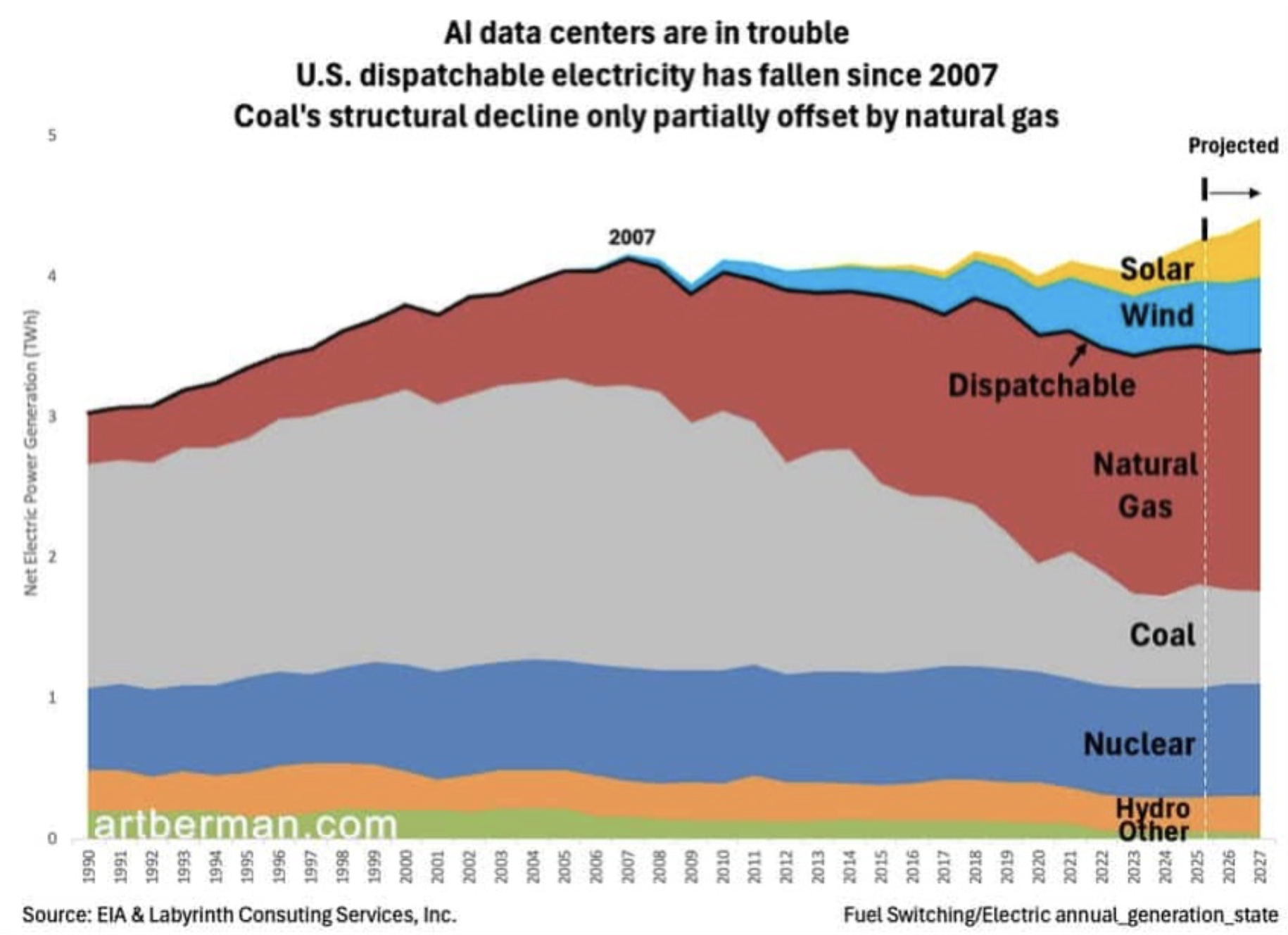
1:10:45 – U.S. electricity supply has grown, but the dispatchable amount has fallen
1:11:33 – Renewable energy is not dispatchable
1:11:58 – Video Insert (10) U.S. dispatchable electricity has fallen since 2007
1:12:15 – U.S. coal production has steeply declined, Trump has overseen larger coal decline than any other U.S. president
1:12:45 – Emissions and Health effects of coal
1:13:53 – Data centers are looking natural gas and batteries and nuclear as energy sources
1:14:13 – Natural gas turbines are in short supply
1:14:15 – Using jet engines as electricity turbines, EIA: Electricity generating potential from retired military aircraft
1:15:04 – Interconnection queues and starting an electric power plant
1:16:28 – Power vs. Energy, TGS Episode highlighting such
1:17:21 – Maximum Power Principle (More info) as a guide for a sustainable future
1:19:20 – Money, debt, and biophysical claims, Reality Blind chapter: Energy and Money
1:19:55 – 1930s: The Great Depression
1:20:02 – ~20 Terawatts of yearly global energy production, More information
1:21:50 – Degrowth vs. Post-growth
1:22:17 – All our wealth comes from nature yet it is being continually degraded
1:22:35 – Ecological tipping points
1:22:50 – Agricultural revolution → modern civilization story is more a story about war
1:24:50 – Peter Turchin (TGS Episode: #164) on war giving way to modern civilization
1:26:20 – Lives of most farmers many thousands of years ago was tough and risky
1:26:36 – Luke Kemp (TGS Episodes: #194 & #153), Lootable surplus
1:27:49 – Multilevel/Group selection (More info)
1:28:40 – Peter Turchin on cities coming together primarily for protection
1:28:54 – “Soft” Feudalism (Elements in contemporary society), Franklys discussing such: #129 & #139
1:29:50 – Dark triad traits, RR #19: Dark Triad Personality Traits, Frankly #108: The Influence of Psychopaths
1:30:30 – The Holocene, Stability of the Holocene era
1:31:20 – Military–industrial complex
1:31:33 – Europe is cutting flights because of lack of jet fuel imports
1:31:50 – AI is fundamentally a military tool (Surveillance and Weapons)
1:32:30 – Art’s map of data centers
1:33:15 – Drone warfare, AI arms/military race
1:33:50 – Anti-ship ballistic missile (ASBM)
1:34:08 – Continued attacks into Russia and anticipation of Putin’s response
1:34:53 – Alfred North Whitehead
1:34:55 – Iain McGilchrist (TGS Episodes: #217, #165, #85)
1:37:05 – Momentous inevitability* concept by Simon Sebag Montefiore
1:38:53 – Turchin’s elite overproduction