Show Summary
On this episode, ‘Superorganisms’ converge as Nate is joined by economist and anthropologist Lisi Krall to discuss the evolutionary origins of our current systemic predicament. Starting with the Agricultural Revolution, the evolutionary conditions of surplus and ultrasociality have combined to shape the way humans interact with their environment, ultimately leading to our current out of control global economy. Is this global system an inevitable emergent phenomenon of the human condition? Does surplus inherently breed inequality and hierarchy, such as the current capitalist system? What type of social evolution will we experience as we meet the limits of an expansionary system and move towards a Great Simplification?
About Lisi Krall
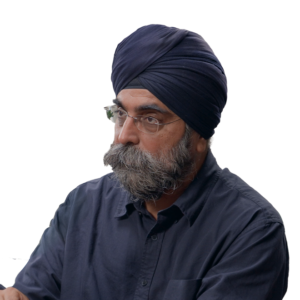
Lisi Krall is a professor of economics at State University of New York, Cortland. Dr. Krall engages a heterodox and transdisciplinary approach to understanding economic systems, their etiology, structure, dynamic, and the relationship between humans and the more-than-human world that is contextualized through them. She incorporates evolutionary biology, anthropology, history, heterodox economics, and deep materialism to understand how we arrived at this paradoxical moment where humans appear trapped in an economic system that functions as if it is not of this Earth at the same time it is clearly a material system. Her latest book, Bitter Harvest: An Inquiry into the War Between Economy and Earth, explores the formation and evolution of the economic system (the economic superorganism) that took hold beginning with the cultivation of annual grains and is now embodied in global capitalism.
Show Notes & Links to Learn More
Download transcript00:00 – Lisi Krall Works and Info, new book
02:36 – John Gowdy + TGS Episode
05:05 – Paul Shepard and Wes Jackson
05:29 – Karl Marx and Friedrich Engels
06:09 – Darwin, E.O. Wilson, David Sloan Wilson (TGS Episode)
07:23 – Ultrasociality
08:14 – Agricultural Revolution
09:55 – Ants and termites also practice agriculture
11:59 – Division of Labor
12:54 – Lisi on the Superorganism: The economic superorganism in the complexity of evolution
16:51 – Holocene warming, carbon in the soil from the Pleistocene
18:10 – Increase in human sedentary time correlates with increase in reproductive rate
23:11 – From surplus came hierarchy, and feeds back into itself
29:41 – Adam Smith
31:08 – Positive feedback loops
34:56 – Globalization and relocalization
43:25 – Limits of Renewables
43:30 – EROI
55:10 – Heisenberg Principle
57:10 – Nate’s Superorganism Paper: Economics for the future – Beyond the superorganism
57:14 – Ilya Prigogine
58:52 – Neoclassical Economics
1:03:07 – We can’t continue to have an expansionary dynamic without fossil fuels
1:10:45 – Conservation