Ep 244 | Yadvinder Malhi
Nature Resilience: The Overshadowed Sibling of Climate Action

Description
For many, understanding the impact of the natural world on human lives begins and ends with carbon. While an important measure, this only tells a fraction of the story. If we dug into all of the flows of energy and life that make up the complex ecosystems we live within, it may open our eyes to the possibilities for humanity and the rest of nature to heal and flourish – side by side.
In this episode, Nate is joined by ecosystem scientist Yadvinder Malhi to explore what it takes to move from documenting ecological decline to actively helping nature recover. Drawing on decades of fieldwork from the Amazon to the Andes, Yadvinder explains why forests can slow climate change but can’t save us on their own. He also warns against the “carbonization of ecology,” which takes a useful tool and turns it into a siloed worldview. He shares why ecosystem regeneration practices belong not only in distant nature preserves, but also in our own backyards, woven into the places we already live. Throughout, he argues that nature recovery begins not with data, but with an emotional connection to the living world.
If a warmer world is locked into the future, should we stop focusing on restoring to a past baseline, and focus on helping ecosystems adapt and diversify instead? What do we miss by only concentrating regeneration efforts on distant, wild lands far from human habitation? And if the information about ecological decline is already out there, what would it take to rekindle a love for the living world that turns knowledge into action?
About Yadvinder Malhi
Yadvinder Malhi is a British ecologist whose work focuses on ecosystems, particularly how the functioning of these systems is altered by factors like climate change, deforestation, and other forms of global environmental change. Yadvinder is the Director of the Leverhulme Centre for Nature Recovery. He is also a professor of Ecosystem Science at the University of Oxford, where he also leads the Ecosystems and Biodiversity Programme, and is a Jackson Senior Research Fellow at Oriel College. Across his career, Malhi has held prominent leadership positions, including serving as President of the Association for Tropical Biology and Conservation, and as President of the British Ecological Society.
Malhi has been instrumental in creating institutions and programs that allow for scientists and researchers to share research data and findings from respective sites around the world, such as the Amazon Forest Inventory Network and the Global Ecosystems Monitoring (GEM) network. In more recent years, his work has increasingly focused on biodiversity, ecosystem resilience, restoration, and the idea of “nature recovery,” which aims to move beyond understanding the effects of global change on ecosystems to actually effect changes that protect, restore, and sustain healthy ecosystems for the future.
Show Notes & Links to Learn More
Download transcriptThe TGS team puts together these brief references and show notes for the learning and convenience of our listeners. However, most of the points made in episodes hold more nuance than one link can address, and we encourage you to dig deeper into any of these topics and come to your own informed conclusions.
Guest:
Yadvinder Malhi: Professor of Ecosystem Science, University of Oxford, Director, Leverhulme Centre for Nature Recovery, Works
Books:
- Vibrant Earth: A Journey into the Planet’s Metabolism (Forthcoming 2028, Princeton University Press)
- Tropical Forests and Global Atmospheric Change (co-edited, 2005)
Grab-and-Go Resources:
New? Start here:
- Directional Advice for the (More Than) Human Predicament (Frankly #114)
- What to Do as the World Falls Apart: A Framework for Action (Frankly #132)
From the Archive:
- Ep 143: Suzanne Simard, Rooted in Connection: Exploring the Hidden Ties in Earth’s Forests
- Ep 239: Robin Wall Kimmerer, Earth’s Oldest Teachers: How to Live Well on Earth
- Ep 177: Thomas Crowther, No Economies Without Biodiversity: Why Our Markets Rely on the Complexity of Nature
Episode Foundations:
- What is nature recovery? by Yadvinder
- Logged tropical forests have amplified and diverse ecosystem energetics by Yadvinder et al.
- An aspirational approach to planetary futures, co-authored by Yadvinder
Next Steps:
Resources by Timestamp:
03:20 – Flux tower measurements over the Amazon in the mid-1990s, Amazon as a carbon sink
04:20 – Forest inventory plots tracking tree growth and death
05:07 – How eddy covariance measures forest–atmosphere exchange using a sonic anemometer and an infrared gas analyzer
06:01 – NASA visualization of Earth’s CO2 breathing through the seasons
08:03 – Natural capital accounting
08:16 – The risk of relying on forests in place of cutting emissions
08:32 – Tree planting as a climate fix
08:53 – The “carbonization of ecology” and what a focus on carbon can miss
09:27 – Forests and the water cycle
09:59 – Moisture recycled across the Amazon (flying rivers)
10:16 – Biotic pump hypothesis (The Great Simplification episode on such)
10:27 – Forests, cloud cover, and reflectivity
10:40 – Utilitarian vs. intrinsic value of nature
11:20 – Limits of nature-based solutions for cooling the planet
12:02 – Wide-boundary perspective
13:05 – Carbon tunnel vision
13:21 – How nature finance can prioritize financial returns over ecological outcomes
14:25 – Amazon forests shifting composition under climate change
14:50 – The Andes-to-Amazon research transect in Peru
15:02 – Andean and Amazonian trees not tracking climate warming
15:25 – Birds’ elevational ranges shifting upslope in Peru
15:48 – Upslope shifts and local losses of mountaintop birds in Peru (escalator to extinction)
15:58 – How mountain terrain creates climate refugia
16:53 – Amazon five degrees cooler in the ice ages, Andean plants descending into western Amazonia in glacial times, Evidence of glacial cooling and lower-elevation montane plants on the Andean flank of western Amazonia
17:11 – Metacrisis
17:28 – About 18% of the Amazon has been deforested
17:58 – Manu National Park, where Peru’s parks agency lists 1,030* bird species
18:30 – Cocha Cashu Biological Station, John Terborgh
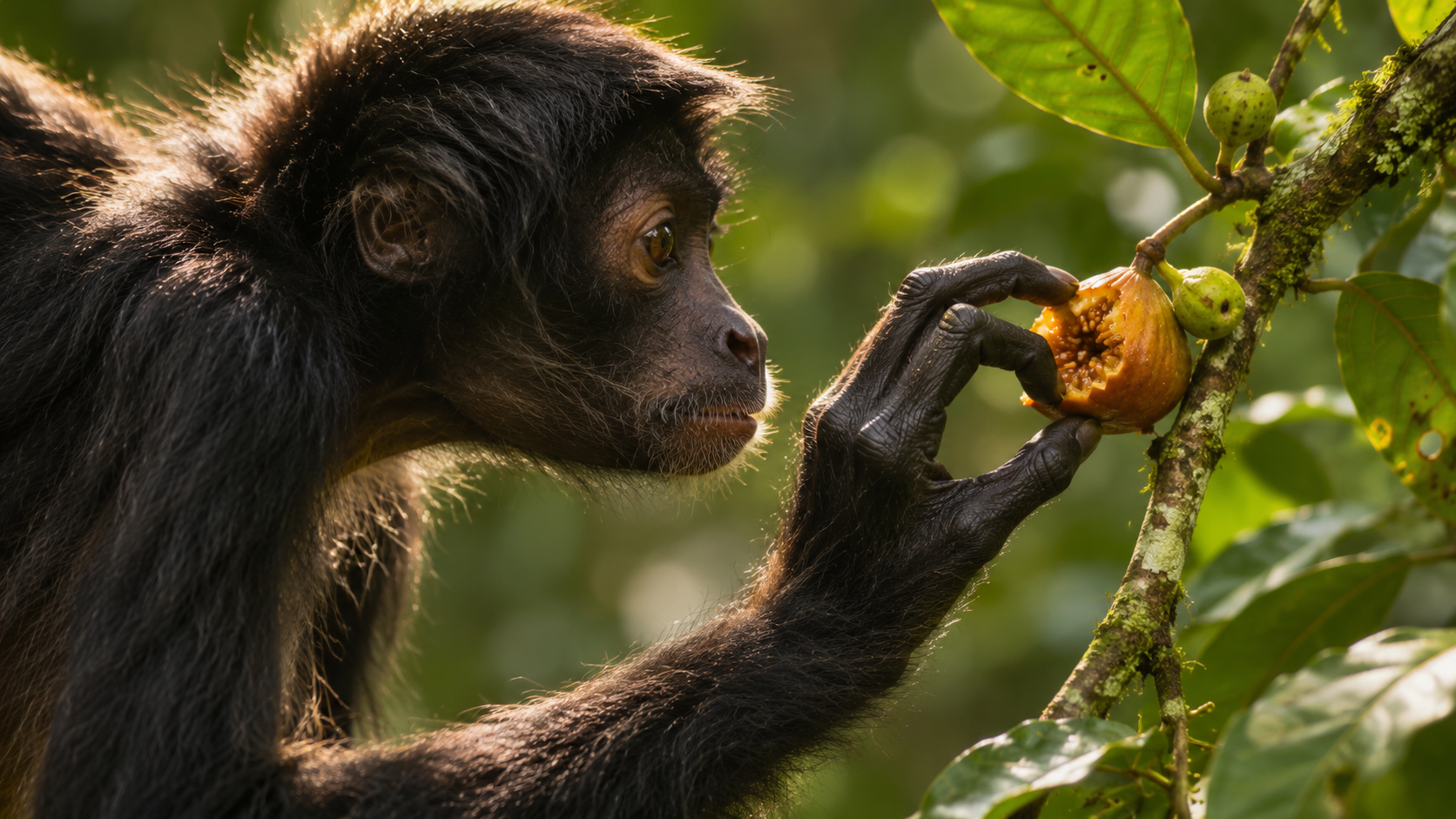
19:06 – Tree recruitment in an empty forest: monkeys as seed dispersers
19:53 – Cloud forests of Ecuador, Earthwatch
20:57 – *Long-term bird research at Wytham Woods, where the first nest boxes were installed in 1947
21:50 – The UK is one of Europe’s least forested countries
22:23 – Leverhulme Centre for Nature Recovery
22:41 – Nature recovery as an umbrella term: rewilding, regenerative farming, conservation
23:07 – Related research on the values behind nature’s decline
24:22 – Human embeddedness in the biosphere, not separate from nature
25:09 – Seed-dispersing frugivores enhancing forest recovery (Fruit-eating birds can help tropical forests recover carbon by dispersing seeds), wild boar rooting the soil, rodents spreading mycorrhizal fungi
26:21 – Ecosystem services
27:00 – Gund Institute for Ecological Economics
27:47 – Letting nature recover on its own
28:16 – Natural regeneration vs. tree planting
29:06 – Alternative stable states
29:19 – Invasive rats on tropical islands
29:30 – Tetiaroa, Marlon Brando
29:42 – Introduced ship rats, Polynesian rats, and former coconut plantations on Tetiaroa
29:54 – Coconut plantations for copra
30:10 – Rats eating seabird eggs, seabird guano fertilizing native forest, How invasive rats and coconut plantations affect seabirds and nutrient flows on tropical atolls
30:25 – Rat eradication and follow-up monitoring on Tetiaroa
31:17 – Carbon sequestration
31:25 – Nature-based solutions for climate adaptation
31:43 – Habitat connectivity and wildlife corridors
31:54 – Relaxing ideas of nativeness, assisted migration
32:49 – Malhi’s estimate of eventual warming is around 2.5 °C. For context, UNEP’s 2026 scenarios put 2100 warming at about 2.6 °C with full implementation of conditional pledges and 2.8 °C under current policies
34:00 – Forestry Commission guidance on choosing tree provenance from more southerly origins
34:34 – Protecting species in situ
35:05 – Advance policy
35:32 – UK Environment Agency climate adaptation
36:16 – *July 2026 was England’s driest July since records began in 1836, Summer rainfall was below average
37:14 – Feelings of powerlessness vs. local agency in nature recovery
37:37 – Wildlife gardening, community nature recovery
38:04 – Mosaics of landscape heterogeneity
38:17 – Nature connectedness
39:54 – Related research: Projected changes in human–wildlife overlap worldwide and large carnivores in a human-dominated landscape in India.
40:32 – Kodagu (Coorg), Western Ghats: elephants in its coffee plantations
40:55 – Project Tiger
41:09 – Related research on sacred groves and biodiversity in Kodagu
41:25 – Village shrines to the tiger deity Waghoba
41:36 – Human–wildlife conflict
42:21 – Wolves returning across Europe, the debate over reintroducing wolves to Scotland
43:40 – Convention on Biological Diversity
44:34 – Incentivizing farmers: England’s Sustainable Farming Incentive
45:28 – Oxford MSc courses: Biodiversity, Conservation and Nature Recovery, Environmental Change and Policy
47:23 – Parachute science
47:53 – Capacity sharing, not capacity building
48:41 – Funding gaps and Global South leadership in tropical ecology
49:14 – Global Ecosystems Monitoring network training exchanges led by students and field teams from Cusco, Peru, including work in Gabon and Malaysia
50:33 – Malhi’s past presidency of the British Ecological Society
51:33 – Co-producing knowledge with policymakers and media
52:16 – Information deficit model
52:36 – Natural history films raising species awareness
52:44 – David Attenborough, who celebrated his 100th birthday in May 2026
53:12 – Seven principles for engaging schools with nature (preprint)
54:24 – Experiential learning
54:48 – Natural History Museum, National Education Nature Park
55:15 – Recording butterflies and other wildlife on school grounds
56:22 – Emotional connection to nature as the starting point
57:13 – Charles Eisenstein (The Great Simplification appearance) on interbeing
57:42 – Related research on nature words fading from culture
58:36 – Energy flow in ecosystems, an idea from the 1940s
58:56 – Energy flows as a measure of ecosystem function
59:11 – Ecosystem vibrancy (The Energy of Nature project)
59:23 – Energy flow through birds in logged and old-growth forests
1:00:15 – Trophic cascades, energy flow through trophic levels (Nate and DJ’s book covering such)
1:00:27 – Energy flow through birds and mammals in Peru and Borneo
1:00:35 – Yadvinder’s TED talk on measuring the planet’s heartbeat
1:01:21 – Polycrisis
1:01:26 – Wellbeing and burnout among climate professionals
1:02:10 – Optimism as a state of action, not a state of being (Active Hope)
1:03:22 – Aspirational planetary futures over alarmism
1:04:03 – UN Human Development Report, Human Development Index
1:04:25 – Nature Relationship Index
1:05:34 – More-than-human world