#152 | Frankly
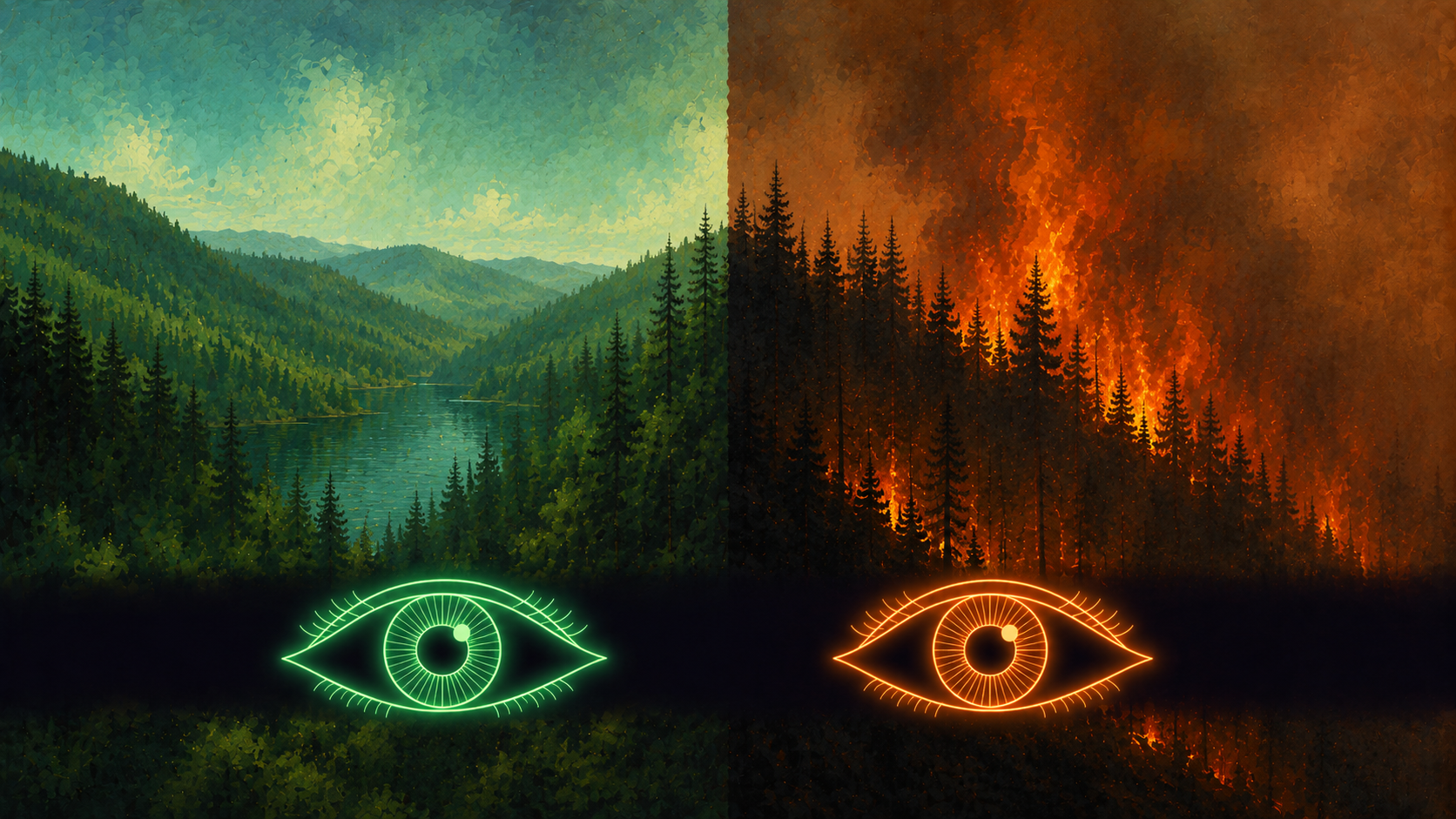
Watch With Both Eyes Open: The Beauty and the Horror of Our Moment

Description
In this week’s Frankly, Nate reflects on a week spent with a group of friends and peers who share his understanding of the world’s converging crises, and what it revealed about the deeply human need to be fully seen, without having to explain yourself first. Though the group rarely discussed climate, AI, or energy depletion, the shared awareness of these issues created space for humor, joy, and the reemergence of a version of himself that had quietly faded into the background over the years. He observes that most rooms he finds himself in either run either too hot – where people are overly fixated on systemic risk and its gory details – or too cold, where the state of the world goes unacknowledged entirely. This group served as the rare in-between: people who could hold both the beauty and the horror of our moment with both eyes open, and still show up each morning with presence, purpose, and laughter.
From there, Nate widens the lens to the role of community in an age of converging crises: our evolutionary wiring as social animals, the physiological nourishment of daily in-person connection that even the strongest online relationships cannot replicate, and the quiet loneliness of seeing the world differently than those around us. Many listeners of this platform might be in the same position: aware and engaged, yet locally alone. As The Great Simplification continues to unfold, Nate suggests that finding – or helping to build – local communities grounded in shared reality, mutual presence, and care may be among the most important no-regrets strategies available to us – and one this platform intends to help cultivate.
What changes when you no longer have to explain the world as you see it before you can simply be yourself? Why does in-person community meet needs that even meaningful online relationships cannot? And what first steps can we take toward the kinds of local communities that help us face an uncertain future with resilience, meaning, and joy?
Show Notes & Links to Learn More
Download transcriptThe TGS team puts together these brief references and show notes for the learning and convenience of our listeners. However, most of the points made in episodes hold more nuance than one link can address, and we encourage you to dig deeper into any of these topics and come to your own informed conclusions.
00:00 – Essay version of this Frankly
00:24 – The more-than-human predicament
00:50 – EROI
03:33 – Strait of Hormuz and the war in Iran
04:30 – Nate’s Frankly on being naive about community after India
04:52 – Oxytocin and serotonin
05:36 – Homo sapiens as ultrasocial animals evolved from small bands
06:12 – Paradoxically lonely despite large networks
06:22 – The Great Simplification online community
06:27 – Systems ecology
06:43 – Importance of in-person connection
08:04 – Tips on building community