#119 | Frankly
Technology and Wealth: The Straw, the Siphon, and the Sieve

Description
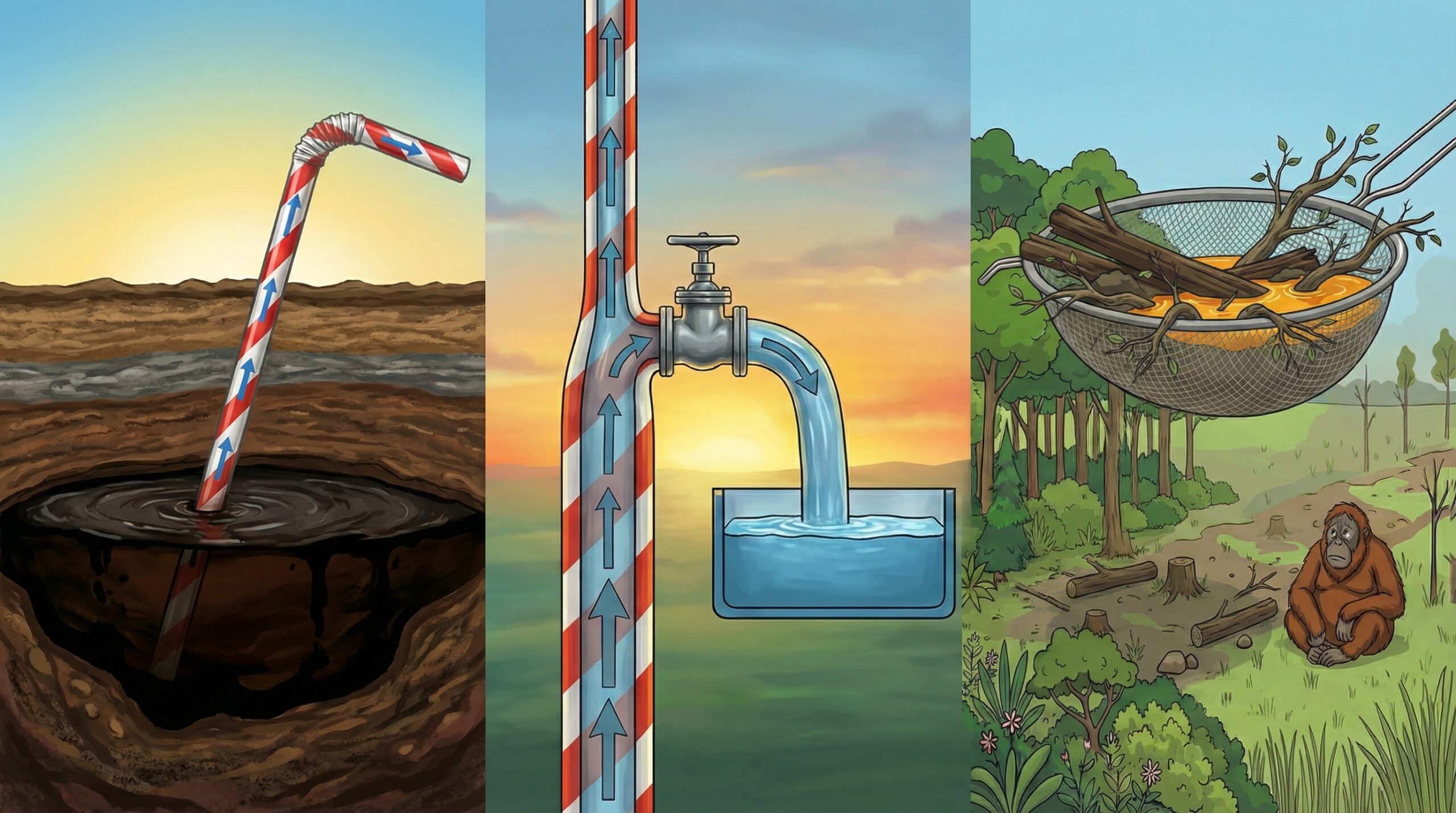
In this week’s Frankly, Nate explores the relationship between technology and wealth when viewed through a global biophysical lens. He uses the visualization of a straw, siphon, and sieve to describe how technology enables the acceleration of physical resource extraction and the concentration and filtering of resulting ‘wealth’ towards the human species. Running contrary to the commonly-held idea that technology automatically creates monetary wealth (and therefore prosperity), this episode asks listeners to view real wealth as the underlying stocks and flows that make life on Earth possible – whether in the form of forests, social trust, or entire functioning ecosystems.
Nate also discusses the ways that technologies have been deployed to rearrange natural systems around narrow, growth-centric priorities throughout much of human history. Utilizing examples regarding agriculture, finance, and artificial intelligence, he suggests that tools effective at small scales might behave very differently when applied globally – setting us on the path to overshoot that we find ourselves walking today.
If technology reflects human priorities, what does current innovation and development reveal about what we currently value? What would it mean to shift towards prioritizing life-giving flows within natural systems and away from accelerating the liquidation of Earth’s stocks? Finally, how can societies and individuals begin to distinguish between innovation that serves to borrow from our future versus genuine progress toward a more stable world?
Show Notes & Links to Learn More
Download transcriptThe TGS team puts together these brief references and show notes for the learning and convenience of our listeners. However, most of the points made in episodes hold more nuance than one link can address, and we encourage you to dig deeper into any of these topics and come to your own informed conclusions.
00:00 – Essay version of this Frankly
00:01 – Frankly #56: Peak Oil, AI, and the Straw, Frankly #113: 11 Discoveries That Changed My Worldview
03:45 – Money represents the real capital of the natural world
07:44 – Haber-Bosch process
08:09 – Today over 80%* of the nitrogen in our bodies originates from Haber-Bosch process
10:19 – Labor share of income
10:29 – Corporate profit as percent GDP, Market concentration in agricultural sector
10:45 – Top American companies in market capitalization
11:23 – Findings on how AI is affecting labor
14:42 – Human consumption of net primary production
14:58 – Biomass of humans and livestock surpasses that of wild mammals, Human-made mass exceeds all living biomass