Great simplification pulsing lines

#19 | Frankly

“Islands”

Check out this podcast

Frankly

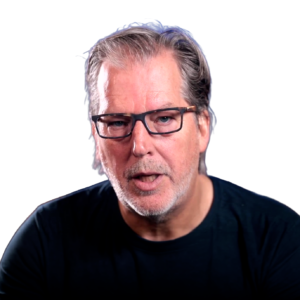
There are some pretty amazing things that can be tracked via analytics on Youtube and other podcast servers – including from where the people tuning into a podcast are watching. For whatever reason, there is a large number of people listening to The Great Simplification from the island countries of Australia and New Zealand – much larger than the population alone would predict. In this Frankly, Nate reflects on why this might be, and what it means to be on an island (geographic or other) during a massive cultural transition.

In French, we have a motto that says that a simple drawing is often better than a long explanation. Jean-Marc Jancovici Carbone 4 President

That’s very understandable because with left atmosphere thinking, one of the problems is that you see everything as a series of problems that must have solutions. Iain McGilchrist Neuroscientist and Philosopher

We can’t have hundreds and hundreds of real relationships that are healthy because that requires time and effort and full attention and awareness of being in real relationship and conversation with the other human. Nate Hagens Director of ISEOF

This is the crux of the whole problem. Individual parts of nature are more valuable than the biocomplexity of nature. Thomas Crowther Founder Restor

Show Notes & Links to Learn More

02:12 – New Zealand has a smaller population than Wisconsin or Minnesota

02:36 – Jason Momoa

06:25 – Daniel Schmachtenberger – TGS Episodes 1, 2, 3, and 4

06:48 – Cognitive Dissonance

Back to episodes
Frankly#116 | Sunk Cost and the Superorganism

In this week’s episode, Nate unpacks the pervasive behavioral pull of sunk cost as a force shaping our material reality, identities, and collective expectations about the future. Past investments – in careers, possessions, and cultural narratives – lock us into patterns of defending what might no longer actually serve us. This tendency becomes more and more relevant as the world shifts in ways that demand adaptability rather than stagnancy. Deep loyalty to former choices, even as we absorb new information about our lived environments, can limit our ability to make wiser, more future-oriented decisions.

Watch nowDec 12, 2025
Frankly#115 | Inflation, Deflation, & Simplification: The 8 Things That Influence Prices

In this week’s Frankly, Nate explores how the prices we encounter in our daily lives are influenced by not only how much money is in the system, but also by resource depletion, technology, affordability by 'the masses,' and trust within a complex global system.

Watch nowDec 5, 2025
Frankly#114 | Directional Advice for the (More Than) Human Predicament

In this week’s episode, Nate invites listeners into an exploration of what it means to navigate a growing predicament shaped by ecological limits, rapid technological changes, and shifting expectations of reality. Our complex world hosts an immense diversity of human (and non-human) circumstances, which demand responses that are adaptive, not static. Rather than offer misleadingly prescriptive answers, Nate lays out a set of “compass points” that serve to both challenge our assumptions, and to attune our values in the direction of 'better futures than the default.’

Watch nowNov 21, 2025

Subscribe to our Substack

The Institute for the Study of Energy and Our Future (ISEOF) is a 501(c)(3) non-profit corporation, founded in 2008, that conducts research and educates the public about energy issues and their impact on society.

Support our work
Get in touch
x