Ep 214 | Tristan Harris
Ending the AI Arms Race: Why Safer Futures Are Still Possible & What You Can Do to Help

Description
The conversation around artificial intelligence has been captured by two competing narratives – techno-abundance or civilizational collapse – both of which sidestep the question of who this technology is actually being built for. But if we consider that we are setting the initial conditions for everything that follows, we might realize that we are in a pivotal moment for AI development which demands a deeper cultural conversation about the type of future we actually want. What would it look like to design AI for the benefit of the 99%, and what are the necessary steps to make that possible?
In this episode, Nate welcomes back Tristan Harris, co-founder of the Center for Humane Technology, for a wide-ranging conversation on AI futures and safety. Tristan explains how his organization pivoted from social media to AI risks after insiders at AI labs warned him in early 2023 that a dangerous step-change in capabilities was coming – and with it, risks that are orders of magnitude larger. Tristan outlines the economic and psychological consequences already unfolding under AI’s race-to-the-bottom engagement incentives, as well as the major threat categories we face: including massive wealth concentration, government surveillance, and the very real risk that humanity loses meaningful control of AI systems in critical domains. He also shares about his involvement in the new documentary, The AI Doc: Or How I Became an Apocaloptimist, and ultimately highlights the highest-leverage areas in the movement toward safer AI development.
If we start seeing AI risks clearly without surrendering to despair, could we regain the power to steer toward safer technological futures? What would it mean to design AI around human wellbeing rather than engagement, attention, and profit? And can we cultivate the kind of shared cultural reckoning that makes collective action possible – before it’s too late?
About Tristan Harris
Tristan is the Co-Founder of the Center for Humane Technology (CHT), a nonprofit organization whose mission is to align technology with humanity’s best interests. He is also the co-host of the top-rated technology podcast Your Undivided Attention, where he, Aza Raskin, and Daniel Barclay explore the unprecedented power of emerging technologies and how they fit into both our lives and a humane future. Previously, Tristan was a Design Ethicist at Google, and today he studies how major technology platforms wield dangerous power over our ability to make sense of the world and leads the call for systemic change.
In 2020, Tristan was featured in the two-time Emmy-winning Netflix documentary The Social Dilemma. The film unveiled how social media is dangerously reprogramming our brains and human civilization. It reached over 100 million people in 190 countries across 30 languages. He regularly briefs heads of state, technology CEOs, and US Congress members, in addition to mobilizing millions of people around the world through mainstream media.
Most recently, Tristan was featured in the 2026 documentary, The AI Doc: Or How I Became an Apocaloptimist, which is available in theaters on March 27th. Learn more about Tristan’s work and get involved at the Center for Humane Technology.
Show Notes & Links to Learn More
Download transcriptThe TGS team puts together these brief references and show notes for the learning and convenience of our listeners. However, most of the points made in episodes hold more nuance than one link can address, and we encourage you to dig deeper into any of these topics and come to your own informed conclusions.
00:00 – Tristan Harris, Center for Humane Technology, Previous TGS Episode #16, Your Undivided Attention Podcast
- New Documentary in theaters March 27th (get tickets here): The AI Doc: Or How I Became an Apocaloptimist
- Join The Human Movement
- Other Resources:
- Script for good AI Hygiene – to make a chatbot less sycophantic and remove chat bait
- U.S. State AI Law Tracker
- Future Life Institute: AI Safety scorecard
- Center for AI Safety: AI Ratings Dashboard
- Safer AI: AI Ratings Table
- Have an AI harm to report? Submit at AI Psychological Harms Research Coalition’s website
- My Seoul Declaration
02:00 – Aza Raskin, TGS Episode #22
03:55 – Humane technology
04:40 – Public health damages of social media
05:00 – Political outrage fuels social media engagement
05:10 – Dating apps drive loneliness
05:30 – Relationship between polarization and loneliness (Additional study)
05:40 – Kids of Silicon Valley aren’t allowed to use the technology their parents created
07:05 – Phase shift caused by GPT-4
07:10 – AI physical arms race and Competition in AI industry, The AGI Race
08:00 – The AI Dilemma presentation from Center for Humane Technology
08:40 – Social media algorithms use AI
08:50 – Social media affects democracy, mental health, and attention span
09:05 – AI Alignment and Misalignment (More info), The AI Alignment problem
09:25 – Economic Superorganism
09:35 – Forever chemicals and their effects on the biosphere
11:50 – AI “going rogue”
12:15 – AI and job risks, AI and wealth concentration, AI monopolies
12:35 – Anthropic rapid revenue increases
13:00 – Epstein files, File library
13:15 – Impact of AI on illicit activities, AI image generation for illegal activities
13:25 – AI and surveillance
13:45 – 1984, “Big Brother”
14:10 – AI agents
14:40 – AI resorting to blackmail in a test
15:05 – Overwhelm of information can cause shut down
16:50 – Energy and material footprint of AI
19:00 – AI solved Paul Erdős math problems
19:35 – Infinity as a limit
20:40 – Current number of farms globally and in the U.S.
21:25 – Fossil fuels provide the equivalent of 500 billion human workers
23:15 – Unemployment as a main cause of the French Revolution
24:10 – Collective action problem
24:37 – Prisoner’s dilemma (Reality Blind example, Video example)
25:25 – Daniel Schmachtenberger (TGS Episodes)
26:40 – GDP growth from AI
27:20 – Johan Rockström’s (TGS Ep #134) work on Planetary Boundaries
27:45 – Planetary Health Check
28:37 – States of Denial: Knowing about Atrocities and Suffering by Stanley Cohen (read for free here)
29:20 – Confirmation bias, Cognitive bias – Nate’s work on cognitive bias
31:12 – Frankly #129 | A Guide to Staying Human (Part 1): Desperately Seeking Agency
32:45 – “A problem well-stated is a problem half-sovled” – Charles Kettering
33:40 – AI boycotts, Anthropic and the Pentagon (More info)
34:45 – ChatGPT subscriber number
34:55 – Debtload of AI companies
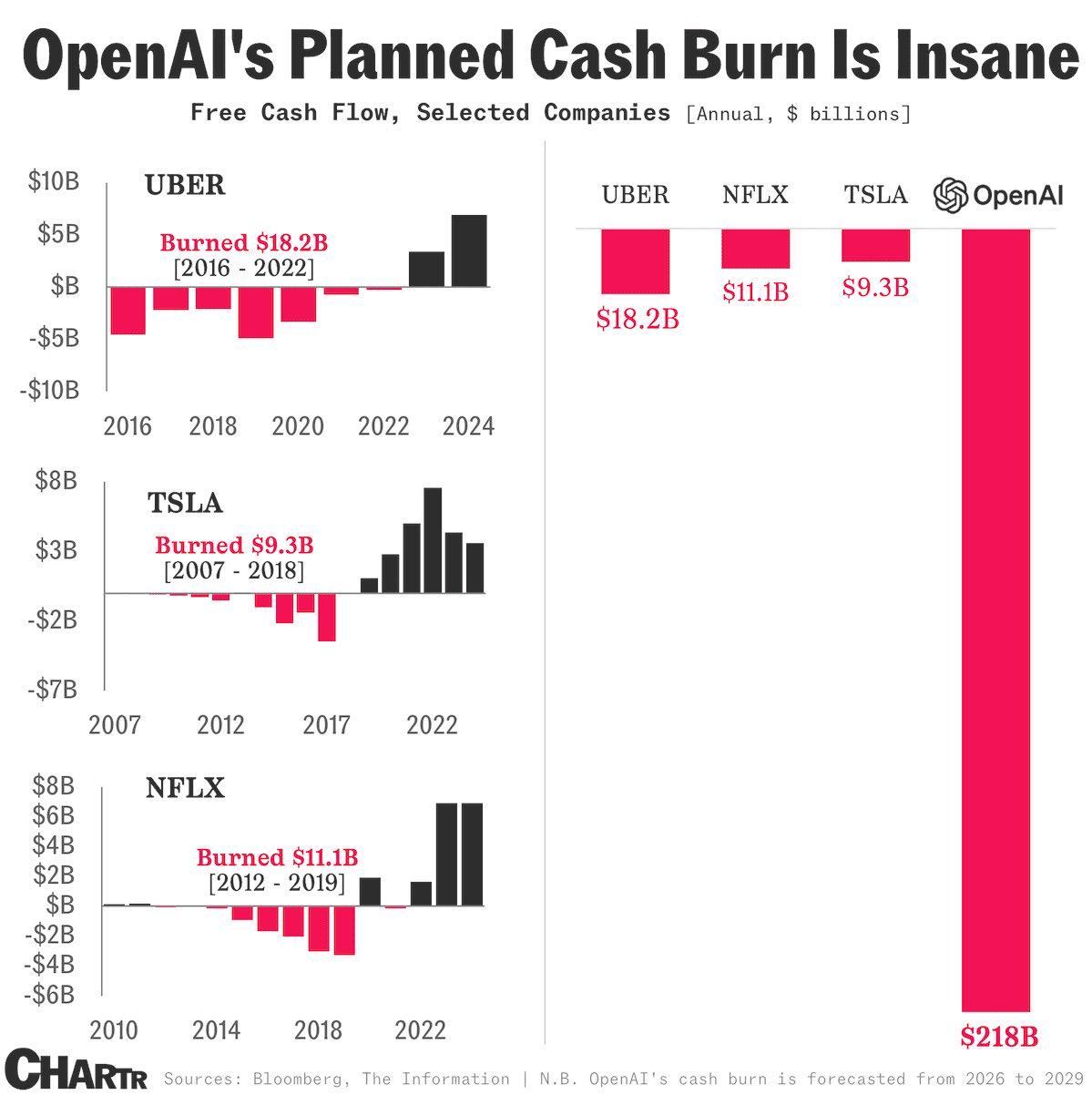
35:25 – Graph Tristan references on OpenAI revenue loss
35:50 – Future Life Institute: AI Safety scorecard, Center for AI Safety: AI Ratings Dashboard, Safer AI: AI Ratings Table
36:18 – OpenAI and Department of War
36:30 – NVIDIAs chip production expectations
37:25 – Causes of the 2008 financial crisis (More info)
38:55 – Bernie Sanders on boycotting AI data centers
39:50 – Stanford research: 16% job loss to AI
40:15 – Block (formerly Square) let go of nearly half their staff recently due to AI
42:35 – Carbon credits
43:00 – My Seoul Declaration
44:50 – Zak Stein (TGS Ep #122 + #180), AI and attachment, Your Undivided Attention Ep with Zak Stein, Reality Roundtable with Zak and Nora Bateson on AI and attachment
45:10 – Script for good AI Hygiene – to make a chatbot less sycophantic and remove chat bait
47:07 – Character.AI, CEO jokes AI is trying to replace “your mom”
48:30 – Sewell Setzer III (Character.AI assisted suicide), Adam Raine (ChapGPT assisted suicide), Deaths linked to AI chatbots
50:40 – Romanian orphans and attachment study
51:45 – AI-induced psychosis
52:50 – AI Psychological Harms Research Coalition
57:30 – Moloch
57:40 – Umberphylic
59:30 – Jonathan Haidt (TGS Ep #59) on social media dangers, Anxious Generation Movement
1:01:10 – States with no-phones-in-school policies, Countries with adolescent social media restrictions
1:02:15 – U.S. State AI Law Tracker
1:05:25 – Multipolar traps + Multipolar Traps or Moloch Traps | Conversational Leadership
1:06:20 – Google DeepMind
1:06:50 – Larry Page
1:08:30 – Artificial General Intelligence
1:09:05 – 2001: A Space Odyssey (HAL 9000)
1:09:15 – Game Theory
1:11:40 – Textbook: Artificial Intelligence: A Modern Approach by Stuart Russell, Funding gap between AI safety and AI capacity-building
1:13:30 – China regulating anthropomorphic AI, Chinese social media regulations
1:16:30 – Everything Everywhere All At Once, Navalny
1:16:40 – Your Undivided Attention podcast:
1:17:15 – The Day After, Reagan and Gorbachev talks and films influence
1:21:40 – Draft of Global AI Treaty, The Framework Convention on Artificial Intelligence
1:26:15 – Resource curse, Intelligence curse
1:27:55 – Sam Altman AI energy usage compared to raising a human
1:27:25 – Peter Thiel’s hesitation to a question on if the human species should survive
1:28:10 – Transhumanism
1:29:00 – GDP is not a measure of human well-being (creator never intended as such)
1:30:10 – Dario Amodei essay: The Adolescence of Technology, Frankly on it
1:30:45 – Fermi Paradox, Enrico Fermi
1:31:15 – AlphaFold
1:32:40 – Teflon indirect effects
1:33:00 – Second-, third-, nth order effects
1:37:10 – Indus Waters Treaty, Strategic Arms Limitation Talks, Montreal Protocol
1:38:00 – Biden and Xi signed an agreement to keep AI out of nuclear decisions
1:39:00 – CHT Blueprint of Real Solutions (not yet published)
1:40:03 – The Human Movement
1:41:20 – Platform that allows people to discuss AI policy (not yet published)