Ep 235 | Robert Pape
The Escalation Trap: Is America’s Strategy in Iran Backfiring?

Description
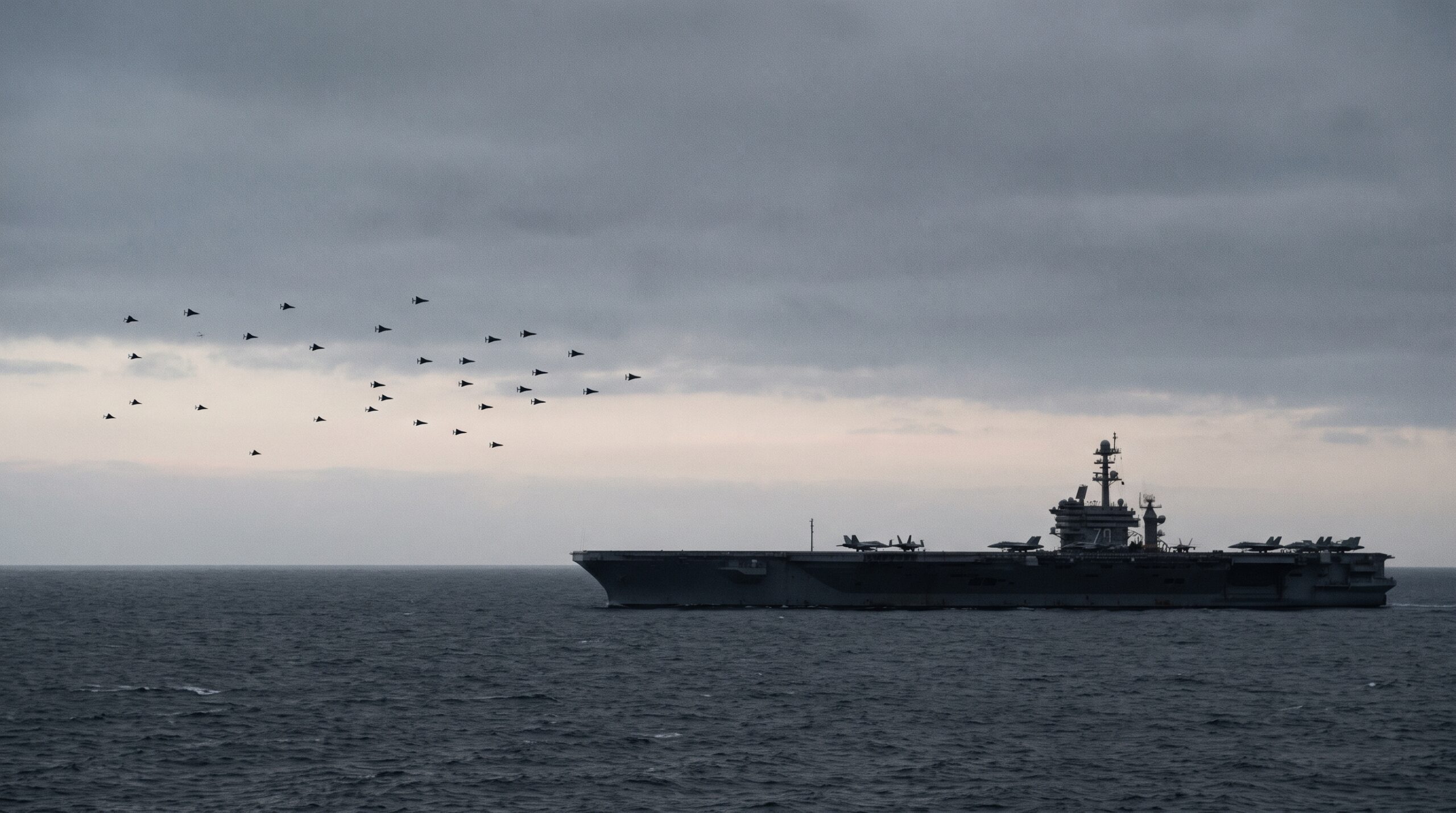
The United States, a global superpower for the last several decades, is now locked into a battle for control over the region with the bulk of the world’s remaining fossil fuel reserves. Despite U.S. military strength, Iran is not backing down, equipped with a new era of military technology. What happens if the U.S. strategy backfires against its leadership’s intention, and what are the larger implications for the balance of geopolitical power?
In this episode, Nate welcomes military historian and political scientist Robert Pape for an in-the-moment breakdown of the Iran war’s trajectory. Drawing on more than two decades of modeling U.S. strikes on Iran, Pape lays out his central concept: the “escalation trap,” in which tactical military success – such as killing leaders, hitting key assets, or a blockade – actually results in a strategic backfire as the attacked side is motivated by the need to survive. He layers this dynamic with the “Second Precision Revolution,” which describes the rise of cheap, mass-produced drones that enable countries like Iran and Ukraine to withstand attacks from far stronger militaries. The two also discuss the tenuous position of the other Gulf States bordering Iran, the effects of this war on the financial power of the U.S., and the risk of an Iranian nuclear test in the next few months. Pape brings this all together to point toward the United States’ position at the edge of losing its status as a lone superpower, pushing the world back toward regional power centers.
What does the United States risk by continuing its strategy of brute punishment? How is the rest of the world adapting to the rapidly changing geopolitical gameboard? And if the United States global standing is relegated – and modern warfare is redefined by decentralized drone technology – what will it mean for stability and globalization more broadly?
About Robert Pape
Robert A. Pape is Professor of Political Science at the University of Chicago specializing in international security affairs. His publications include Dying to Win: The Strategic Logic of Suicide Terrorism and Bombing to Win: Air Power and Coercion in War. His newest book, Our Own Worst Enemies: America in the Age of Violent Populism, is now available.
Before teaching at the University of Chicago in 1999, Pape taught international relations at Dartmouth College for five years and air power strategy for the USAF’s School of Advanced Airpower Studies for three years. He received his PhD from the University of Chicago in 1988. He is the director of the Chicago Project on Security and Threats.
Show Notes & Links to Learn More
Download transcriptGuest:
Robert Pape, Director, Chicago Project on Security and Threats
- Publications: Substack, Google Scholar, UChicago CPOST
- Books: Bombing to Win: Air Power and Coercion in War, Dying to Win: The Strategic Logic of Suicide Terrorism
- New book published Sept 22, 2026: Our Own Worst Enemies: America in the Age of Violent Populism
- Featured Article: Why Economic Sanctions Do Not Work (International Security, 1997)
Grab-and-Go Resources:
New? Start here:
- Oil 101
- The Great Simplification (32-minute film)
- Reality Blind Vol. 1: What if Oil Cost $400 per Barrel?
From the Archive:
- Ep 227: Sal Mercogliano on maritime chokepoints
- Ep 223: Michael Every on the economics of the Hormuz crisis
- Ep 229: Jeff Currie on the end of globalization
Episode Foundations:
- Iran’s October Surprise (Escalation Trap, 14 September 2026)
- Hammer and Anvil: How to Defeat ISIS
- IEA: how global oil supplies readjusted after the Strait of Hormuz shock
Next Steps:
- Escalation Trap, Prof. Robert Pape’s running analysis
- War Powers Resolution activist guide
- 4 questions for judging reports and posts about the US-Iran war
- Iran Effects, Local Preparedness, and End of Empire (Frankly #131)
Resources by Timestamp:
03:18 – Ansar Allah (Houthis), East-West Pipeline, Attack on Saudi oil infrastructure
03:31 – *Gulf crude exports at about two-thirds of pre-war levels, *Global oil inventories drawn down 3.8 million barrels a day
03:56 – Escalation Trap Substack, Uncertain Deal, And Iran Certainly Enters Its Period of Maximum Leverage (June 15 post)
04:15 – U.S.-Iran memorandum of understanding
04:28 – Red Sea shipping attacks as a second front
04:45 – Iranian demand to evict U.S. forces from the region
05:48 – Houthi maritime blockade of Saudi Arabia declared 20 July
06:26 – 2026 Iran war, Benjamin Netanyahu
07:05 – Strait of Hormuz, 2026 Strait of Hormuz crisis
07:13 – Strategic Petroleum Reserve, IEA emergency oil stocks
07:20 – *China’s crude oil imports down 3.9 million barrels a day
07:33 – Pipeline bypasses around Hormuz, Yanbu oil terminal on the Red Sea
08:13 – Twenty years of modeling air strikes on Iran
08:38 – Logic of political violence
08:48 – Saudi oil pipeline mostly out of service for several weeks
09:05 – *Two pumping stations on the East-West Pipeline damaged
09:50 – Transportation bombing in World War II
11:06 – *Pipeline attack attributed to Iran-backed militias in Iraq rather than the Houthis
11:38 – *Abqaiq sits in Saudi Arabia’s Eastern Province, not near Yanbu, 2019 Abqaiq-Khurais drone attack
12:27 – *Strait of Hormuz carries about 20% of the world’s oil, East-West Pipeline flow of 4 to 5 million barrels a day, about 5% of world supply
12:54 – Pig in the python
13:05 – *Shanghai crude futures at a record $138.50 a barrel, *U.S. retail diesel at $6.29 a gallon
13:28 – Energy blindness
13:43 – Referenced Frankly: Wide Boundary News: Biodiversity Depletion, Iran & the Strait of Hormuz, and the Green Wedge, Battle of Waterloo, Napoleon
14:18 – Escalation trap, Escalation ladder
15:42 – Second Precision Revolution, Cheap mass drones
15:48 – Naval mines, Iran’s claimed sovereignty over the Strait of Hormuz (The Great Simplification Ep 227 on maritime chokepoints)
16:59 – Jack Keane
17:24 – Strategic logic of suicide terrorism, Dying to Win
19:08 – Fall of Saigon, Vietnamization
19:58 – *Persian Gulf holds about 55% of world oil reserves, The spice (Frankly on the Strait of Hormuz and the spice)
21:08 – Preventing regional hegemony in the Persian Gulf, Carter Doctrine
21:36 – Twelve-Day War (June 2025)
22:56 – Global public opinion on the war
23:40 – Gulf War, Saddam Hussein, Iraqi invasion of Kuwait, Operation Desert Shield
24:03 – *43 days and 148 U.S. battle deaths in Operation Desert Storm, *Pentagon’s worldwide body-bag stockpile was 63,000, the Gulf allocation classified
24:14 – Globalization, Peace dividend
24:53 – Strategy versus Tactics
25:13 – Trump tariffs
25:25 – Punishment strategy in coercion, Donald Trump
25:43 – Bombing to Win: Air Power and Coercion in War
26:33 – Naval blockade of Iran, Why Economic Sanctions Do Not Work
26:58 – Rally ’round the flag effect
27:12 – Islamic Revolutionary Guard Corps
28:36 – Military versus economic instruments: Pete Hegseth, Scott Bessent
28:58 – Coercion, Action, mechanism, and outcome as the anatomy of strategy
30:26 – Fight-or-flight response
32:12 – The Blitz, Coventry Blitz, Adolf Hitler
33:04 – Churchill replacing his air staff after the bombing of London
33:22 – Arthur Harris, RAF area bombing of German cities, *Dehousing minute targeted 58 German towns to make a third of Germans homeless
34:38 – Saudi Arabia-Iran relations, Shia-Sunni divide
34:50 – Petrodollar
35:04 – Mohammed bin Salman, Regime-change bombing, New York Times report that MBS urged Trump to keep striking Iran
35:30 – Saudi refusal of U.S. overflight rights, Truth Social, Two-week U.S.-Iran ceasefire agreed 8 April 2026
36:30 – Saudi crude exports down to about 3 million barrels a day in August, the lowest since 2017
36:40 – Covert action, Shia grievances inside Saudi Arabia
37:06 – Putin’s demand for a new government in Kyiv
37:12 – *House of Saud numbers about 15,000, with about 2,000 holding most of the power and wealth
38:59 – U.S. military bases in the Persian Gulf, *19 U.S. military sites in the region, 8 of them permanent bases, 40,000 to 50,000 troops
39:18 – Damage to U.S. bases in the Gulf
39:29 – United States Fifth Fleet, Naval Support Activity Bahrain
39:46 – USS Abraham Lincoln, Diego Garcia
40:06 – Hypersonic missiles, Aegis Combat System
40:43 – Seigniorage, Petrodollar recycling (The Great Simplification Ep 223 on the economics of the Hormuz crisis)
41:06 – Gulf states hosting U.S. bases: Kuwait, Iraq, Bahrain, Qatar, the UAE, Saudi Arabia
41:26 – Foreign central bank holdings of U.S. Treasuries, Henry Kissinger
42:38 – Regional hegemony
43:08 – De-dollarization, BRICS summit, Petrocurrency
44:10 – JD Vance
44:16 – Great power politics
44:30 – Abbas Araghchi
44:58 – Narendra Modi
45:15 – China and Russia’s alignment with Iran
45:58 – A new security architecture
46:28 – China’s dependence on Hormuz oil
47:40 – Chimpanzee and bonobo aggression, Planet of the Apes
47:57 – Preventive war
48:18 – Preventive wars launched by strong states: Germany in 1914, Japan in 1941, Russia’s 2022 invasion of Ukraine
48:48 – Hubris, Overconfidence effect
49:50 – Natanz
49:58 – Pickaxe Mountain
50:28 – Nuclear weapons testing
50:48 – Tactical nuclear weapons
51:48 – Center for Strategic and International Studies, Satellite imagery showing a 2026 uptick in construction at Pickaxe Mountain
52:13 – Iran’s October Surprise
52:45 – Nuclear taboo
53:00 – Nuclear fallout
53:40 – Killing of Iran’s supreme leader
54:08 – *U.S. national debt above $40 trillion
54:16 – *30-year Treasury yield above 5.3%, *10-year Treasury note at 5%
55:10 – Pariah state
55:47 – Balance of power, Regional stability as a multi-year goal
56:10 – Offshore balancing
56:40 – Defeat of the Islamic State, Hammer and Anvil: How to Defeat ISIS
56:58 – Syrian Kurds, Syrian Democratic Forces
57:08 – *Hammer-and-anvil campaign against ISIS ran three years across three phases
57:26 – Russo-Ukrainian War, War of attrition
57:45 – Drone warfare in Ukraine, Russian annexation of Crimea, U.S. military advisers to Ukraine
58:26 – Professional military, Non-commissioned officer corps
59:18 – Military logistics
59:38 – Security force assistance
1:00:26 – Interdiction of Iranian oil tankers
1:01:39 – Decline of American power, Western Hemisphere sphere of influence
1:02:23 – 2026 United States midterm elections
1:02:53 – Pax Americana
1:03:12 – European Parliament, European rearmament
1:03:38 – U.S. alliances with South Korea and Japan
1:04:06 – Power vacuum
1:04:46 – Social media polarization and us-versus-them framing, Ultra-Processed Information (Frankly #128)