Ep 234 | Sarah Wilson
Radical Simplicity: The Opportunities of a World in Collapse

Description
For years, the climate movement ran on the promise that, if we all rally hard enough, we could have it all: continue with our current system and save the planet. Yet the events of the past few decades have shown that this isn’t quite the case, and in fact, climate is just one crisis among many produced by our growth-at-all-costs system. This raises the question: What happens when a culture built on the certainty of progress has to confront its own uncertainty?
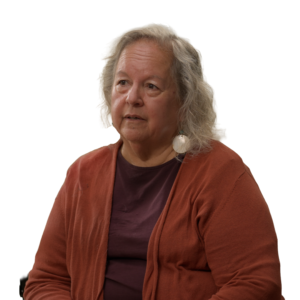
In this episode, Nate is joined by philosopher and author Sarah Wilson for an exploration of the emotions that come from learning about, processing, and then embodying the full extent of the metacrisis. Sarah shares her own emotional arc through this journey, and makes the case that “hope” (at least the version most of us think of) is no longer helpful, since it defers responsibility to some future savior rather than requiring anything of us now. In its place, she argues for truth to ground us, revealing the only path forward is to be “thoroughly human” – grieving, laughing, dancing, showing up for our neighbors. She and Nate also explore why prepping alone doesn’t work, and that we should instead be working toward a radical simplification: an intentional shift toward a slower, more communal way of living.
Why does the fear of uncertainty run so much deeper than we admit, and what happens to us once we stop resisting it? What emotions and opportunities do we make room for when we let go of false hopes that someone else will solve our crises? And if collapse is actually a slow unraveling of the system we’ve built our lives around, what would it look like to meet it with the same sense of duty and connection that has always seen humans through hard times?
About Sarah Wilson
Sarah Wilson is a multiple-time New York Times and Amazon bestselling author, social philosopher, international keynote speaker, minimalist, and philanthropist. She edited Cosmopolitan magazine Australia at 29, founded the global I Quit Sugar movement, hosted the most-watched non-sports broadcast TV series in the nation’s history – Masterchef Australia – and wrote the bestseller First, We Make the Beast Beautiful, which Mark Manson described as “the best book on living with anxiety that I’ve ever read.”
Her book, This One Wild and Precious Life, won the US Gold Nautilus Prize, and she has been ranked in the top 200 most influential authors in the world (two years in a row). Her latest book, I Eat the Stars, is now available globally.
Sarah lives nomadically, leading dynamic, global conversations about modern philosophy, creativity, existential risk and climate change via her keynote speaking, Wild podcast, and her Substack and social communities (of 550,000 subscribers).
Show Notes & Links to Learn More
Download transcriptThe TGS team puts together these brief references and show notes for the learning and convenience of our listeners. However, most of the points made in episodes hold more nuance than one link can address, and we encourage you to dig deeper into any of these topics and come to your own informed conclusions.
Guest:
Sarah Wilson, Substack: This is Precious
- Books: I Eat the Stars, This One Wild and Precious Life, First, We Make the Beast Beautiful, I Quit Sugar
Grab-and-Go Resources:
New? Start here:
- What to Do as the World Falls Apart: A Framework for Action (Frankly #132)
- The Great Simplification (32-minute film)
From the Archive:
- The Great Simplification Ep 199: Sheldon Solomon on terror management theory
- The Great Simplification Ep 167: Francis Weller on grief
Episode Foundations:
- Sarah Wilson’s book I Eat the Stars
- Sebastian Junger, Tribe: On Homecoming and Belonging
- Consume Less, Live Well (2025 study on simpler consumption and wellbeing)
Next Steps:
- Build an emergency supply kit (More info)
- Community Tool Box: building community capacity
- Guide to talking across the political divide
- Elders and eldership, Building intergenerational programs
- Ritual Design Toolkit, Create a Sacred Place
Resources by Timestamp:
03:49 – Metacrisis
03:56 – Crises composing the Metacrisis: Nuclear crisis, Artificial intelligence singularity, Climate crisis, Food and water scarcity, Trade-route disruption
04:41 – Mindsets behind the Metacrisis: Growth imperative, Infinite growth on a finite planet, Individualism
06:36 – Complexity
06:51 – I Eat the Stars, Degrowth
08:30 – Left-brain and right-brain thinking (The Great Simplification Ep highlighting such)
09:49 – Embodied understanding
10:46 – Systems thinking
11:25 – Climate movement
12:09 – Paris Agreement
12:23 – Planetary boundaries
12:36 – UN Secretary-General’s code red for humanity
12:43 – Mounting threats: Democratic backsliding, Artificial intelligence singularity, Nuclear threat
12:48 – Doomsday Clock at 85 seconds to midnight
12:58 – Climate activist burnout
13:18 – Complex systems collapse
13:51 – I Eat the Stars serialised on Substack
14:17 – Václav Havel (referenced quote)
14:49 – Cognitive dissonance
15:31 – Neoliberalism
16:07 – Loss of certainty, Intolerance of uncertainty
17:00 – Human awareness of mortality
17:24 – Existentialism
18:33 – Sheldon Solomon (The Great Simplification appearance), Terror management theory
19:09 – Grief (The Great Simplification episodes on such)
20:55 – Collapse as a homecoming
21:28 – Bill Plotkin (The Great Simplification appearance), Ecological adulthood
24:24 – Hopium, Reverend Michael Dowd
24:37 – Green economy
24:48 – Tech bros, Artificial intelligence as a climate solution
25:22 – Toby Ord, Existential risk (related The Great Simplification episode), Humanity in its adolescence
25:43 – *Average mammalian species lifespan of 1-2 million years
26:30 – Psychopathic instrumentality of institutions (Frankly on such)
26:40 – Market fundamentalism, Techno-solutionism
27:08 – Sarah Wilson on choosing truth over hope
30:04 – Margaret Wheatley, Islands of Sanity
31:01 – Nervous system co-regulation
32:10 – Liminality
32:25 – Antonio Gramsci (referenced quote)
32:53 – Nefarious forces in the interregnum: Fascism, Bad-faith actors
33:22 – Milton Friedman (referenced quote)
34:16 – Simone de Beauvoir, What Is Existentialism?, Fascism in Europe, Communism
34:38 – Axial Age, Buddhism, Judaism, Confucianism
35:41 – Stock markets at all-time highs
36:20 – European natural gas prices (Dutch TTF), U.S. Henry Hub natural gas spot price
37:04 – French Revolution, How the French Think
37:49 – Anti-intellectualism
38:47 – Collapsology
39:18 – European Union preparedness strategy, 72-hour emergency kit guidance
39:43 – Talk of a third world war in Europe, French hospitals preparing for war
40:23 – Prepping and stockpiling
42:11 – Intentional communities
42:34 – Minimum viable community size, Dunbar’s number
43:18 – Pema Chödrön, Start Where You Are
44:31 – Community cohesion after disaster, Mutual aid
45:13 – Nate’s four responses to the predicament: (Frankly on such)
- Bend-not-break deflationary depression
- Avoiding strategic thermonuclear war
- Protecting the web of life
- Inculcating a sense of the sacred
46:13 – Species-level rite of passage
46:43 – Mad Max
47:26 – Pro-social prepping
49:15 – 72-hour emergency kit checklist
49:30 – Grid blackouts, Internet outages
49:40 – European heat waves
50:03 – I Quit Sugar (The Great Simplification Ep on processed foods)
52:22 – Self-help industry
55:26 – *2.1 billion people cook with polluting fuels
55:48 – Global South
55:58 – Collapse already underway: Sudan, Democratic Republic of the Congo, Gaza
56:20 – Peter Turchin (The Great Simplification appearance), End Times
56:29 – Political polarization, Economic inequality
57:52 – Mass civil unrest
58:10 – Acedia, Loneliness crisis
58:37 – Post-apocalyptic fiction
58:59 – The Great Simplification
59:36 – Simple living
1:00:23 – Consumerism (Nate and DJ’s book covering such)
1:00:59 – Consume Less, Live Well (2025 study)
1:01:40 – What the death of the system takes with it: Unboxing videos, Golf courses, Weekend youth sports, The LinkedIn self
1:02:29 – Deferred-life plan
1:03:07 – Parable of the fisherman
1:04:17 – Collective action
1:04:48 – Human ultrasociality, Cooperation as our superpower (Nate and DJ’s book covering such)
1:05:16 – Contagious kindness
1:05:40 – Duty
1:06:22 – Hedonic treadmill, Lottery winners and accident victims study
1:07:17 – Commitment, Conflict, and Caring
1:08:26 – Abraham Maslow, Self-transcendence beyond self-actualization
1:08:47 – Viktor Frankl, Man’s Search for Meaning
1:09:42 – Choosing whether to have children
1:10:21 – This One Wild and Precious Life
1:10:40 – Paul Ehrlich (The Great Simplification appearance), The Population Bomb
1:11:07 – *Global population is projected to peak just under 10.3 billion in 2084 (Estimates vary substantially by methodology; the IHME model projects a peak of ~9.7 billion in 2064)
1:12:14 – Pronatalism, Abortion restrictions, China’s three-child policy
1:12:38 – Depopulation and crumbling infrastructure
1:13:04 – Taiwan’s colleges closing on falling births, *South Korea’s total fertility rate of 0.80
1:13:40 – Net zero by 2050
1:14:19 – Margaret Mead, Jeremy Steig
1:15:30 – Post-traumatic growth
1:15:52 – Sebastian Junger, Tribe
1:16:13 – The Blitz, Mental hospitals during the Blitz
1:17:01 – Rationing in wartime Britain
1:19:05 – Meditation
1:19:37 – Movement in nature
1:20:00 – Minor-key music
1:20:21 – Crying and self-soothing
1:20:35 – Psychedelic-assisted emotional release
1:20:52 – Soul nerding
1:21:12 – Type A personality
1:22:59 – Looking into strangers’ faces
1:24:06 – Humility
1:25:13 – Ecological grief
1:26:26 – First, We Make the Beast Beautiful
1:27:06 – Pattern recognition in autism
1:28:24 – Tangible responses: Simplify now, Reclaiming attention from your devices, Repair Café, Building community
1:28:54 – Nervous system regulation
1:29:36 – Memento mori
1:30:33 – Studying the humanities, Philosophy, Tech companies hiring philosophers
1:31:53 – Trusting intuition
1:33:29 – Indigenous knowledge systems
1:34:18 – Elders and eldership, Building intergenerational programs
1:36:36 – Techno-authoritarianism