Ep 163 | Dougald Hine
Dougald Hine: “Reimagining the Cultural Narrative: Art and Storytelling for Systemic Change”
Show Summary
In today’s modern era, the overwhelming flood of information that constantly flows our way can leave us feeling disoriented, lost, and powerless. Even science – our most trusted source of truth – can be taken out of context to fuel division and distort the reality around us. In the midst of this confusion, how can we learn to ground ourselves and find guideposts that can direct our lives and work?
Today, Nate is joined by storyteller and social thinker, Dougald Hine, to explore the importance of narratives in shaping our understanding of the world and how they can help us navigate the complexities of life, especially in the face of ecological crises. Together, they discuss the need for a reframing of conversations around environmental and climate issues, the importance of grassroots responses to systemic crises, and the concept of ‘engaged surrender’ as a way to navigate the challenges of modern life.
How can we foster emotional resilience in the face of ecological overshoot and the death of modernity? What role do art and storytelling play alongside science and data in responding to our collective human predicament? And how can we strengthen our communities and plant the seeds for a different way of life, starting in our own small corners of the world?
About Dougald Hine
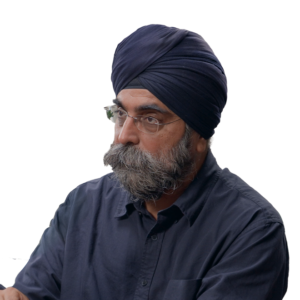
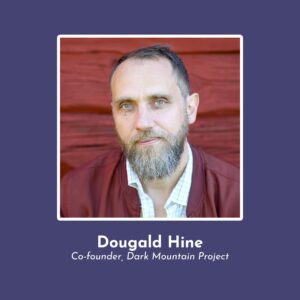
Dougald Hine is a social thinker, writer and speaker. After an early career as a BBC journalist, he went on to co-found the Dark Mountain Project, where he was the director until 2019. He is also the co-author, with Paul Kingsnorth, of Uncivilisation: The Dark Mountain Manifesto, and his latest book is titled, At Work in the Ruins: Finding Our Place in the Time of Science, Climate Change, Pandemics & All the Other Emergencies.
Dougald’s recent projects include Notes From Underground, a ten-part essay series for Bella Caledonia exploring the deep roots of the new climate movements, and The Great Humbling, a podcast he co-hosts with Ed Gillespie. He and Anna Björkman are creating a school called HOME, ‘a gathering place and a learning community for those who are drawn to the work of regrowing a living culture’. His latest writing is published on his Substack, Writing Home.
Show Notes & Links to Learn More
Download transcript00:00 – Dougald Hine info + works, Reality Roundtable Episode, The Dark Mountain Project, A school called HOME, Book: At Work in The Ruins, Podcast: The Great Humbling, Substack: Writing Home
03:34 – Alan Garner
11:28 – Origins of storytelling
14:20 – Martin Shaw
15:03 – Lydia Catterall
19:13 – Chernobyl disaster
19:39 – 1987 Brundtland Report + 1992 Earth Summit
19:54 – Margaret Thatcher UN Climate Change Speech 1989
25:15 – Paul Kingsnorth
26:47 – Global Warming in the Pipeline
30:30 – The Bottlenecks of the 21st Century
32:16 – Marc Gafni + from pre-tragic to post-tragic
33:36 – Stephen Jenkinson
34:05 – Eleanor Robins’ Substack + essay on Athenian democracy and the suppression of grief
36:45 – Marisol de la Cadena + Mario Blaser: A World of Many Worlds
38:01 – Bruno Latour: Down to Earth
38:56 – Bayo Akomolafe
41:10 – Felix Marquardt
42:10 – The Dark Mountain Manifesto
46:30 – Vanessa Andreotti + TGS Episode
49:04 – Jonathan Rowson + TGS Episode
50:43 – 18th Century Deism
57:01 – Richard Smith + review of At Work in The Ruins
59:39 – Bill Plotkin + TGS Episode
1:01:15 – Robin Wall Kimmerer + Braiding Sweetgrass
1:05:14 – Luke Kemp + TGS Episode + the stomp reflex
1:06:42 – Ivan Illich
1:08:50 – John Moriarty
1:16:22 – M.R. O’Connor: Ignition
1:17:38 – The Road
1:22:49 – David Fleming
1:26:59 – Peasantry School
1:29:58 – Alastair McIntosh: Soil and Soul