Ep 226 | Matthew Monahan
Can Money Serve Life? How to Fund Communities Doing the Real Work

Description
Every year, hundreds of billions of dollars flow through global philanthropy, yet only a small fraction reaches environmental, climate, and nature-related causes. Meanwhile, in small towns and rural communities around the world, a hidden throughline of regenerative work is already underway. This work rarely waits for large-scale funding to begin, but it does need resourcing to grow into replicable movements capable of propelling system-wide change. What would it take to build financial infrastructure that actually gets capital to the people already doing the work of healing land and community?
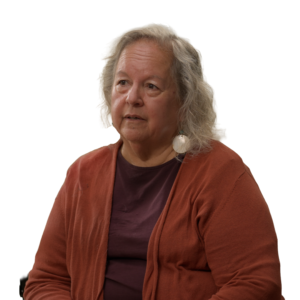
In this episode, Nate is joined by Matthew Monahan, co-founder of the nonprofit Ma Earth, to explore the emerging field of regenerative finance. Matthew digs into why top-down, siloed, and low-trust funding systems keep capital from reaching frontline communities, and how tools like open protocols, decentralized data commons, and blockchains might (with healthy consideration) help coordinate trust and resourcing at scale. Matthew also discusses Ma Earth’s collective crowdfunding platform that pairs philanthropic dollars with community fundraising for grassroots land and ecological projects – from mangrove restoration in the Pacific to a farmer’s cooperative for war amputees in the Congo – and how anyone can become involved.
How might we approach the ambitious goal of attuning money with the health of the planet and the life that inhabits it? Is it possible to use tools like blockchain and crowdfunding to route capital toward life without building a bigger version of the same self-eating machine? And can bottom-up, community-defined funding scale to the size of the problem without losing the trust and specificity that make it work in the first place?
About Matthew Monahan
Matthew Monahan is the co-founder of Ma Earth, a community-led movement aiming to align economic incentives with planetary health and regeneration. He also hosts The Regeneration Will Be Funded, a podcast under Ma Earth that explores intersections of regenerative finance, technology, and ecological health.
He’s involved in regenerative agriculture, specifically through Mangaroa Farms in Aotearoa, New Zealand, a regenerative farm and educational hub. This farm works on transforming dairy & pine plantations into more regenerative systems, reforesting, building local food infrastructure, and engaging communities.
Show Notes & Links to Learn More
Download transcriptThe TGS team puts together these brief references and show notes for the learning and convenience of our listeners. However, most of the points made in episodes hold more nuance than one link can address, and we encourage you to dig deeper into any of these topics and come to your own informed conclusions.
00:00 – Matthew Monahan, founder of Ma Earth and Biome Trust, host of The Regeneration Will Be Funded
Resources:
- Donate to Ma Earth Funding Round 3
- (Round 3 fundraising open July 1-21, 2026. Round 4 opens Earth Day: April 22, 2027)
- Find out more about how to get your project funded here (next round of project applications opens early 2027)
04:30 – Profit from clearing old-growth Amazon rainforest for palm oil, Bottom trawling of ocean ecosystems
05:20 – Community composting, School garden programs, Reforestation nurseries
06:05 – Only 2-4% of global philanthropy goes to environment, nature, and climate
07:08 – Money as the dominant human coordination technology (Nate’s take)
08:35 – Regenerative finance
09:08 – John Fullerton coined regenerative economics (The Great Simplification Ep #149)
09:33 – Ecological economics
10:08 – Schelling point
10:21 – Beyond sustainability toward regeneration
10:56 – Brett KenCairn on Earth’s regenerative capacity ~50% lower from human land use (The Great Simplification Ep #222)
11:57 – Money co-evolved with writing thousands of years ago
12:52 – Gift economies in small-scale societies
13:54 – Top-down carbon credits and net-zero commitments, COP climate declaration
14:34 – Coconut rhinoceros beetle invasion in Hawaii
15:01 – Fragmented, siloed climate and impact funding
15:51 – Eroded trust and missing feedback loops in environmental funding
16:44 – Carbon tunnel vision: coordinating only around CO2
17:41 – From a Silicon Valley startup to a New Zealand farm, Regenerative agriculture (more info)
18:34 – Ma Earth: collective funding platform for community-led regeneration
18:57 – Six-month funding rounds with three-week community campaigns
19:46 – Certified: interoperable, open-source, decentralized protocol layer
20:47 – WWF: ~70% decline in wild mammal populations
22:00 – Gitcoin quadratic-funding crowdfunding pilots
23:26 – Round three: 800+ applications from 101 countries
23:56 – Funding round selection partners:
- Andrew Millison (The Great Simplification Episodes #178 & #64), Earth Repair Fund and ”Plant The Rain” project in Ma Earth Funding Round 3
- Regenerosity
- One Earth
- Commonweal
- Alexa Firmenich (The Great Simplification Ep #106), Naia Trust
- Imaginal Seeds
- Restor
- GainForest
- Biome Trust
24:44 – $1 million matching pool for 200 projects across 60+ countries
25:07 – Learning Environment youth land programs in Whanganui, NZ
25:54 – Taranaki Maunga granted legal personhood through a Crown–Māori treaty settlement
26:30 – Rights of Nature (The Great Simplification episode on such)
26:45 – Pyramid Mountain becomes first U.S. mountain to own itself, via Center for Democratic and Environmental Rights and Center for Ethical Land Transition
27:16 – Rights of whales
29:12 – Hypercerts Foundation certifying impact claims
29:30 – Project-sovereign data commons
29:48 – GainForest, Silvi, and the Regenerative finance (ReFi) movement
29:57 – Bureaucratic violence of constant grant applications
30:30 – BioFi on-chain endorsements from Samantha Power (The Great Simplification: Reality Roundtable #14)
31:15 – AT Protocol from Bluesky for decentralized data
32:16 – Environmentalist skepticism of crypto and blockchain (Study on such)
33:14 – ~180 fiat nation-state currencies
33:44 – Complementary and local currencies tied to ecological health
34:09 – Nature-based currency
34:31 – Public smart-contract blockchains like Ethereum
34:50 – Bitcoin as digital gold, Warren Buffett: the “pet rock” critique of gold
35:05 – Bitcoin’s energy footprint
35:38 – Ethereum’s values: censorship resistance, privacy, security
36:56 – Currencies tethered to GDP growth and the metabolism of the economic Superorganism
38:11 – Average person spends 7–9 hours a day online
40:15 – Local food movement as a template for economic redesign
40:30 – Islands of coherence
41:12 – Bioregional/Watershed-scale organizing
42:30 – Nature blindness among technologists
43:00 – Wide-boundary perspective (Frankly on such)
43:30 – The Holocene’s 12,000-year window made way for exponential frontier technologies
44:58 – Philanthropy’s degrees of freedom
45:20 – Widening concentration of wealth
45:39 – Extreme wealth as financial claims on future biophysical reality
49:14 – Quadratic funding / WTF is QF?
50:00 – Silicon Valley’s iterative test-and-learn playbook
50:17 – The more-than-human predicament; the living world treated as fungible, priced assets
50:48 – Risk of financializing nature and perpetuating growth logic
51:12 – Carbon-credit perversions (Example)
52:00 – Regen Network
53:30 – Decades of carbon markets and their mixed record
55:45 – Mangaroa Farms
57:20 – Farming on Crutches, via Be the Earth Foundation
58:44 – Trust and reputation infrastructure, like Uber and Airbnb
59:40 – The polycrisis/metacrisis
1:04:31 – Round 4 Ma Earth project applications open in early 2027 – Round fundraising launches on Earth Day