Ep 225 | Tad Patzek
We Weren’t Expecting This: What Does a Super El Niño Mean For the Climate?

Description
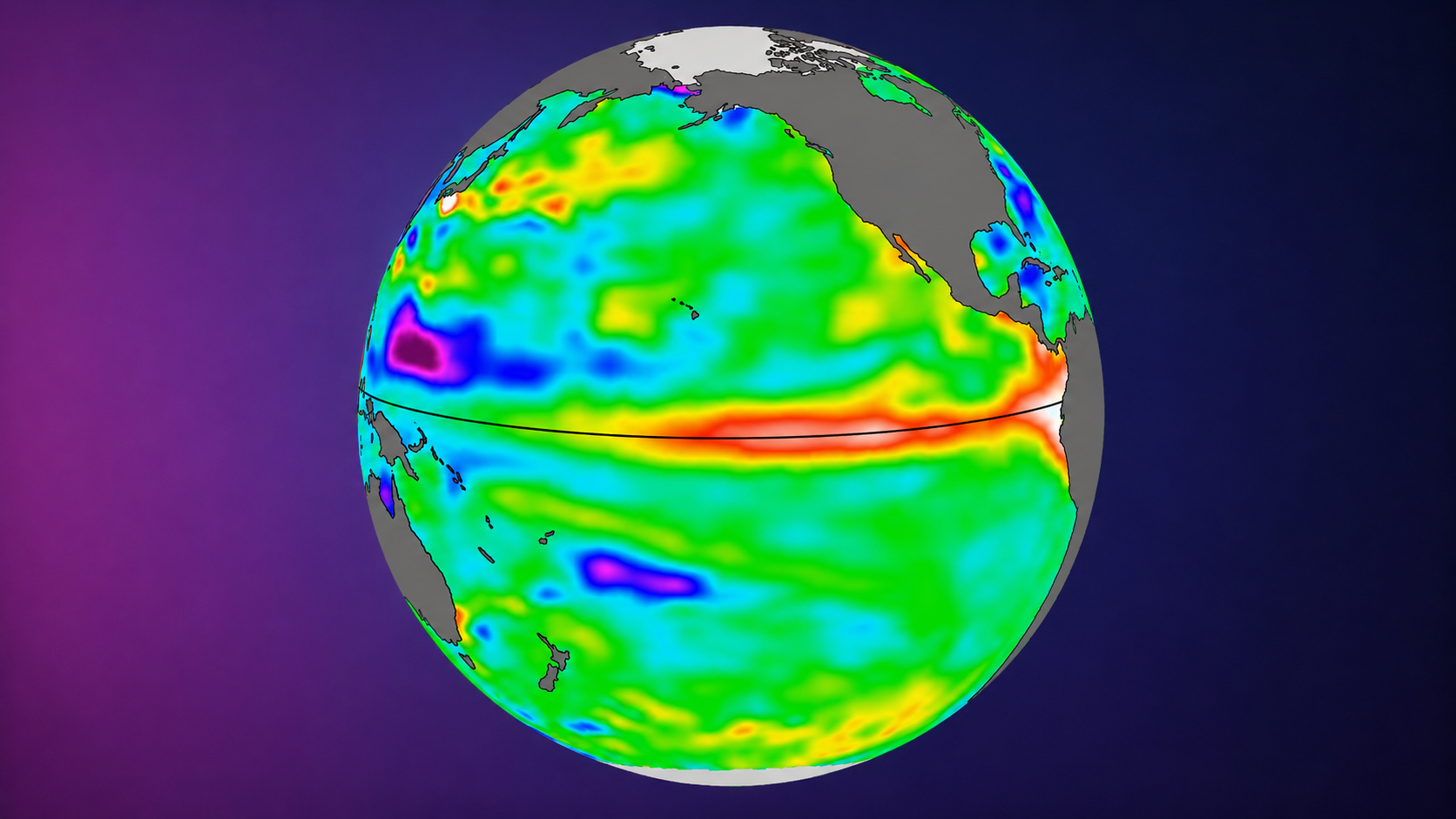
This year’s projected Super El Niño forming in the Pacific could become one of the strongest climate oscillations in over a century. As regions prepare for the effects, and continue to adapt to extreme heat waves, intensifying storms, accelerating ice loss, and increasingly erratic rainfall, scientists and citizens alike are questioning what our new normal will look like under accelerated global heating. From climate basics to unfolding atmospheric research, what do we know about the trajectory our climate is currently on, and what gaps of knowledge still need to be filled?
In this episode, Nate is joined by earth scientist and thermodynamicist Tad Patzek for an exploration of the mechanics and mathematics of global heating itself. Tad explains why CO₂ has such an outsized effect in contrast to its small concentration, how water vapor amplifies the greenhouse effect, and why climate models sometimes get things wrong. His new research, currently under peer review at Geophysical Research Letters, identifies a declining Earth albedo as an additional accelerant of warming over the past 26 years. Combined with accelerating ocean heat absorption, melting ice sheets, and the dynamics of an approaching Super El Niño, Tad argues the warming curve itself may be bending upward.
Is the projected Super El Niño a signal of more extreme climatic swings to come? What sort of research is being done to explore and predict climate feedback dynamics that are only partly understood? And if the warming curve is indeed bending upward, what does it mean to plan, prepare, or adapt when the system itself may be moving faster than our models anticipated?
About Tad Patzek
Tad Patzek is Professor Emeritus of Petroleum and Chemical Engineering at the Earth Sciences Division and Director of the Ali I. Al-Naimi Petroleum Engineering Research Center in KAUST, Saudi Arabia. Formerly, he was the Lois K. and Richard D. Folger Leadership Professor and Chairman of the Petroleum and Geosystems Engineering Department at The University of Texas at Austin. Additionally, he was previously a Professor of Geoengineering at the University of California, Berkeley. Prior to joining Berkeley, he was a researcher at Shell Development, a research company managed for 20 years by M. King Hubbert. He is also a full Presidential Professor in Poland, which is the highest honor, and also served as a member of the DOI Macondo Well Advisory Committee.
Patzek’s current research involves mathematical and numerical modeling of earth systems with emphasis on fluid flow in soils and rocks that can be hydrofractured. He is working on the thermodynamics and ecology of human survival, and food and energy supply for humanity. His current emphasis is the use of unconventional natural gas as a fuel bridge to the possible new energy supply schemes for the world. Patzek is a coauthor of over 400 papers and reports, and most recently, he has cumulated his research into his upcoming book Thermal Power and Climate Change: A Data-Driven Analysis of Cause and Effect, 1800-2100 (Preprint available now)
Show Notes & Links to Learn More
Download transcriptThe TGS team puts together these brief references and show notes for the learning and convenience of our listeners. However, most of the points made in episodes hold more nuance than one link can address, and we encourage you to dig deeper into any of these topics and come to your own informed conclusions.
00:00 – Tad Patzek, Scholarly works, Blog: Life Itself, Previous The Great Simplification appearance
- Referenced Geophysical Researcher Letters Preprint: Observed Decline in Planetary Albedo and Recent Global Warming Acceleration
- Why Talking About Climate Change Is So Difficult
- Thermal Power and Climate Change — A Data-Driven Analysis of Cause and Effect, 1800-2100
- In-video inserts
03:57 – Fossil amoeba (the Superorganism)
04:20 – Global heating (Why this term is used), Why Talking About Climate Change Is So Difficult by Tad
05:00 – Role of CO₂ in the atmosphere
05:06 – CO₂ at ~430 ppm vs pre-industrial ~280 ppm
05:59 – Roughly half of emitted CO₂ stays in the atmosphere
06:08 – CO₂ well-mixed up to the tropopause
06:24 – Atmospheric temperature lapse rate
06:50 – Water vapor as the dominant greenhouse gas, Water vapor declines exponentially as altitude increases
08:03 – CO₂ as climate driver, water vapor as feedback
08:50 – Pre-industrial CO₂ near its 800,000-year low (~280 ppm)
09:01 – Milankovitch cycles
09:36 – CO₂ fluctuated 180-300 ppm over 800,000 years
09:55 – CO₂ as the key controller of planetary climate
10:16 – ~1.5°C of warming above pre-industrial average
10:43 – Land warms faster than the global average
11:14 – How we know CO₂ leads warming, not the reverse
11:47 – ~2.3-2.6 trillion tons of CO₂ emitted in 140 years
12:16 – Carbon cycle
12:43 – Without human emissions, the next ice age would arrive in ~50,000 years
13:24 – Paleocene-Eocene Thermal Maximum (PETM): Ice-free world with sea level tens of meters higher
14:06 – ‘Runaway warming’ as a loaded term
14:46 – Tad’s Geophysical Research Letters preprint on accelerating warming
15:17 – Oceans absorb ~90% of excess heat and about a third of carbon emissions
15:43 – Atmosphere as Earth’s radiative window to space
16:30 – Super El Niño forecast for the Pacific: Recent news story on its implications
17:16 – El Niño-Southern Oscillation (ENSO), La Niña
17:39 – Equatorial Pacific trade winds
18:19 – Walker circulation
19:00 – Humboldt (Peru) current upwelling
20:18 – Jet stream, Rossby waves
20:49 – Texas and Florida deep freezes from jet-stream excursions
21:14 – Rising background temperature of the Pacific Ocean
22:47 – Clausius-Clapeyron: Warmer air holds more water vapor
23:13 – Fewer but more powerful cyclones and hurricanes, Intensified droughts and deluges
25:12 – More extreme heat, drought, and rainfall on a rising baseline
25:59 – Cumulative vs. annual CO₂ emissions
26:59 – Near-linear warming with cumulative CO₂ emissions (TCRE)
29:10 – Atmospheric residence/lifetime of CO₂
30:25 – Logarithmic CO₂ radiative forcing
31:16 – Aerosol cooling (about -1.4 W/m^2)
31:53 – Land-use change, Melting glaciers
32:07 – Cloud feedback uncertainty in climate models
34:03 – Energy in: Solar insolation ~240 W/m², Energy out: Balanced by outgoing infrared radiation = Earth’s energy imbalance (~1 W/m²)
34:41 – CERES instrument (Clouds and the Earth’s Radiant Energy System)
35:14 – Watts per square meter as the unit of radiative forcing
35:38 – Albedo (Earth’s reflectivity)
36:19 – Hemispheric albedo symmetry (clouds compensate land)
37:08 – Acceleration of global warming
37:23 – Warming acceleration linked to declining albedo (from ~0.29 toward ~0.28)
38:36 – Ecological civilization, Regenerative technology and culture
39:08 – ~80% of extra energy absorbed by surface ocean water
39:25 – Ocean heat uptake accelerated after 2014
39:59 – Accelerated ice melt in Antarctica, Accelerated ice melt over Greenland
41:31 – Crossing 1.5°C in 2024, On track to 2°C by 2050
41:56 – Climate vs. weather
43:41 – Patzek projection: +2°C by 2050, +3°C by 2100, +6°C over land
45:18 – Humans poorly adapted to slow, invisible change
45:50 – Himalayan glacier melt threatens water for ~2 billion people
46:10 – Glacial lake outburst floods (Himalayas)
47:13 – ~30 cm of global sea level rise since the early 1900s
47:29 – Coastal saltwater inundation in Texas, Florida, and Maine, Jakarta sinking and relocating its capital
48:02 – Heat domes from Rossby-wave adiabatic compression
48:58 – Polar vortex
50:27 – ~62,000 heat deaths in Europe in 2022, Heat deaths untracked in the United States
51:01 – The Ministry for the Future by Kim Stanley Robinson
51:49 – Indian subcontinent heating faster than the global average
52:45 – March 2022 East Antarctica heat anomaly (+40C above average)
54:05 – Dome C ice cores and the 800,000-year climate record
55:45 – Wide-boundary questions, Helping civilization bend not break
56:00 – Climate tipping points, Planetary boundaries
56:29 – Accelerating, linear decline of Earth’s albedo
57:37 – Expansive clay soils shrinking and swelling: Infrastructure damage to roads, bridges, and dams
58:15 – Permafrost methane release in Alaska and Siberia, Subsea methane hydrates
58:50 – Siberian methane craters and slumping Arctic coasts
59:47 – Unknown climate feedbacks may bend the warming curve up, not down
1:00:54 – Human power (more info)
1:01:22 – Rising tensions between Global South and Global North
1:02:33 – UN Convention to Combat Desertification (land degradation COP), Convention on Biological Diversity (biodiversity COP), UN climate COP (UNFCCC)
1:02:44 – Planetary boundaries, Metacrisis
1:03:05 – Strait of Hormuz tensions, Russia-Ukraine war
1:04:11 – Falsifiability
1:06:11 – Society of Petroleum Engineers meeting in Bakersfield, California
1:06:37 – Petroleum engineers’ skepticism and denial of climate change
1:06:53 – Chevron executive turned USC professor
1:07:16 – ‘Why should I cut consumption if others won’t?’ (free-rider problem)
1:08:32 – Solidarity movement (Poland)
1:10:30 – Climate science as an interdisciplinary synthesis
1:12:14 – Appealing to greed and fear to motivate action
1:12:29 – Home insurance retreat in Florida and California
1:13:04 – Saltwater intrusion into coastal aquifers
1:13:09 – Survival of the Everglades (more info), Wet-bulb temperature limits on human survival
1:13:53 – Parts of Texas hotter than the Sarhara desert
1:14:02 – Subtropical jet stream pulling Pacific moisture into Texas
1:15:49 – Shutdown of US satellite and Earth-observation programs
1:16:05 – NOAA, NASA, and USDA websites and data going dark
1:16:38 – EU Copernicus Earth-observation program, Aging Aqua and Terra satellites
1:17:45 – Rising military R&D funding amid science cuts
1:19:01 – No-regret strategies for uncertain futures
1:19:15 – Reducing digital distraction and information overload, Young people abandoning agency under a flood of bad news
1:19:56 – Get informed and vote in a complex system
1:21:50 – Rate of ocean heat absorption and its effect on currents
1:22:23 – Antarctic and Greenland ice loss driving meters of sea-level rise
1:22:55 – Accelerating Himalayan glacier melt and downstream Asia
1:23:07 – Europe warming faster and more violently, Poland’s vulnerability to drought