Ep 222 | Brett KenCairn
The Missing Half of Climate Change: Why Our Planet is at 50% Capacity and How to Get it Back

Description
The Dust Bowl of the 1930s is one of the worst ecological disasters in American history. Across the great plains, roughly 2.5 million people left the region over the decade, amid severe crop failures, livestock losses and widespread hunger. Caused by drought and extreme land degradation, this regional collapse is also an example of what is now happening in ecosystems across the globe. The glimmer of hope in this story lies in the equally remarkable recovery of the Dust Bowl region, which has continued on as one of the most productive agricultural regions in the world. What if we could name and replicate the techniques used to rehabilitate this once inhospitable landscape and use them to restore and regenerate local ecosystems across the planet?
In this episode, Nate is joined by regenerative change practitioner Brett KenCairn for a conversation that reframes the dominant narrative about climate change, emphasizing that it was never just a carbon problem but also one centered on living systems degradation. Brett explains that the desolation of foundational, life-supporting ecosystems has resulted in our planet now operating at roughly half its biological productive capacity. Remarkably, this reframing also clears the way for a path forward: because most degradation is due to how humans have used the land, it means – if we act soon – altering our use of the land can also help regenerate lost capacity. Brett describes how his team and other regenerative experts are attempting to do just that by restoring biodiversity, water cycles, photosynthetic capacity, and (most importantly) opening the door to broad community participation through training, compensation, and meaningful work.
What sorts of regenerative techniques might help bolster our local ecosystems’ capacities to buffer, absorb, and cycle energy in order to support life during the extremes ahead? How could we alter our economic and social incentives to better support those doing the critical work to stabilize local ecology? And lastly, could the principles of living systems regeneration also act as an opportunity to reconnect with our place among the web of life, paving the way toward a humanity rooted in stewardship and reciprocity?
About Brett KenCairn
Brett KenCairn is the Founding Director of Center for Regenerative Solutions and Senior Policy Advisor for Climate and Resilience in the City of Boulder’s Climate Initiatives Team. He coordinates the city’s nature-based solutions work. Brett has worked across the western US in community-based initiatives in rural, Native American, and other marginalized communities. He is the co-founder of multiple organizations including the Rogue River Institute for Ecology and Economy, Veterans Green Jobs, and Community Energy Systems.
Show Notes & Links to Learn More
Download transcriptThe TGS team puts together these brief references and show notes for the learning and convenience of our listeners. However, most of the points made in episodes hold more nuance than one link can address, and we encourage you to dig deeper into any of these topics and come to your own informed conclusions.
00:00 – Brett KenCairn – Center for Regenerative Solutions, City of Boulder Nature-Based Climate Solutions: Cool Boulder
03:20 – Brett KenCairn Bioneers talk
03:42 – UN Convention on Biological Diversity
04:05 – Brett KenCairn’s referenced quote on stabilizing the climate
04:23 – 50% of living system function lost on this planet
05:10 – Energy systems change & Carbon accounting vs. Natural climate solutions framework
05:20 – Carbon sink capacity of the earth, Natural carbon sinks
05:43 – Climate as a biologically mediated dynamic
06:15 – Gaia hypothesis and James Lovelock
06:30 – Sentience across life forms including unicellular organisms
07:00 – World Atlas of Desertification: 75% of terrestrial world deeply degraded
07:10 – 2 billion hectares of abandoned agricultural land (More info) vs. 1.5 billion hectares currently used/available
07:30 – Cedars of Lebanon and the Fertile Crescent (Nate’s recent Frankly on Lebanon)
07:55 – Global plant biomass reduced 50% since the Holocene began
08:15 – Planet has one-third less forest than it did
08:25 – 73% of all species in decline
08:32 – Wild mammal biomass: 95% wild to 95% human/domesticated reversal
08:57 – Ocean phytoplankton declined 40%
09:00 – Marine fish biomass down 60-80%
10:00 – “A Planet at Half Capacity” (report provided by Brett), Diminished potential of conventional lawns (list of citations provided by Brett), More info:
- Global vegetation is operating below its ecological potential
- Humans now appropriate or alter about a quarter of potential plant growth (more info)
- Land degradation is threatening species
11:05 – Boulder Parks and Recreation
11:40 – Tree canopy expansion as climate adaptation, photosynthesis boost, stormwater management, decreasing irrigation need
12:50 – Biocapacity
12:55 – 40% of net primary productivity diverted to human use
13:45 – Historical abundance: passenger pigeons, salmon runs, buffalo herds
14:30 – Degradation of the environmental movement
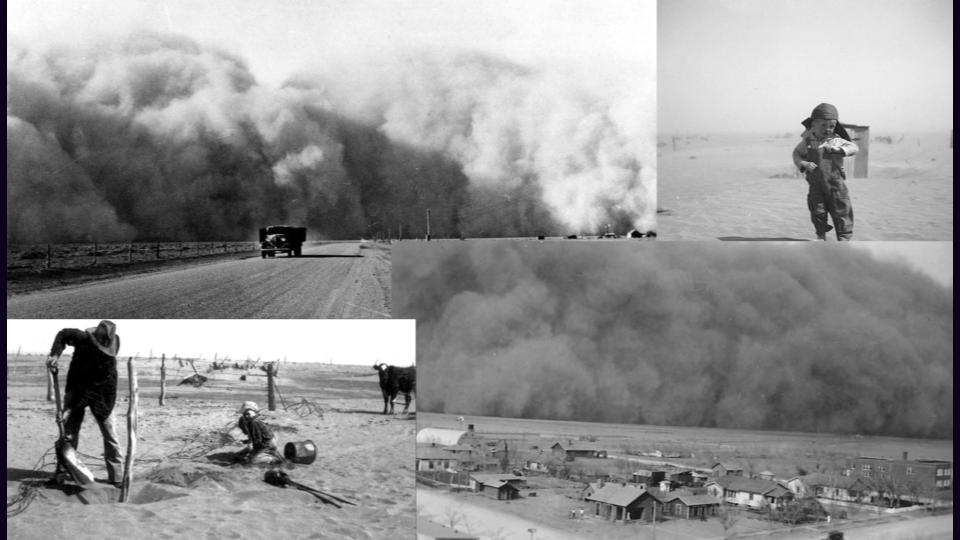
15:05 – Dust Bowl as historical example of climate degradation, Ken Burns’ The Dust Bowl documentary
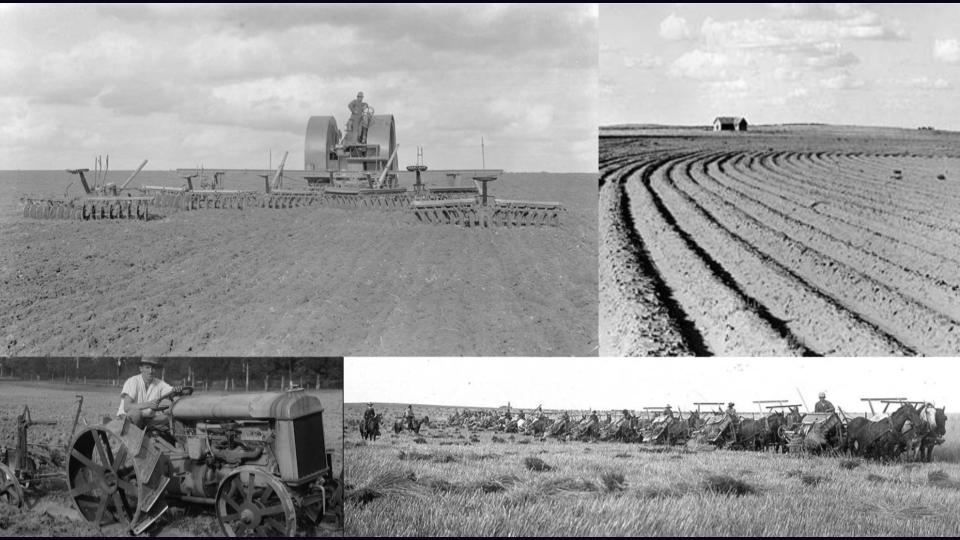
15:32 – In-video insert: Dust bowl images, In-video insert: Wheat farming images
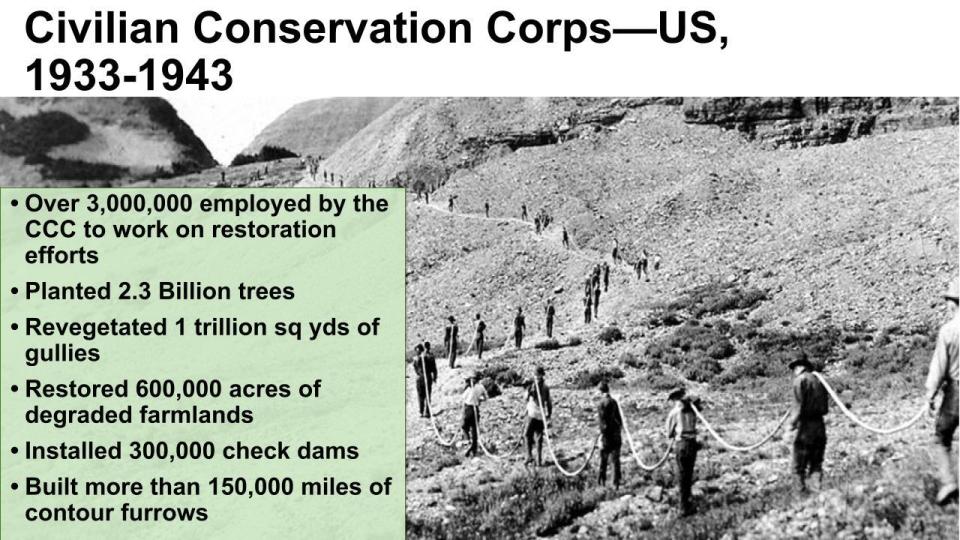
16:40 – New Deal mobilization of millions for land restoration (Civilian Conservation Corps), Dust Bowl land restoration project
17:15 – Aldo Leopold and the Dust Bowl response
17:34 – In-video insert: Civilian Conservation Corps during Dust Bowl restoration
17:35 – Terracing systems and shelterbelts, How plants to stop erosion
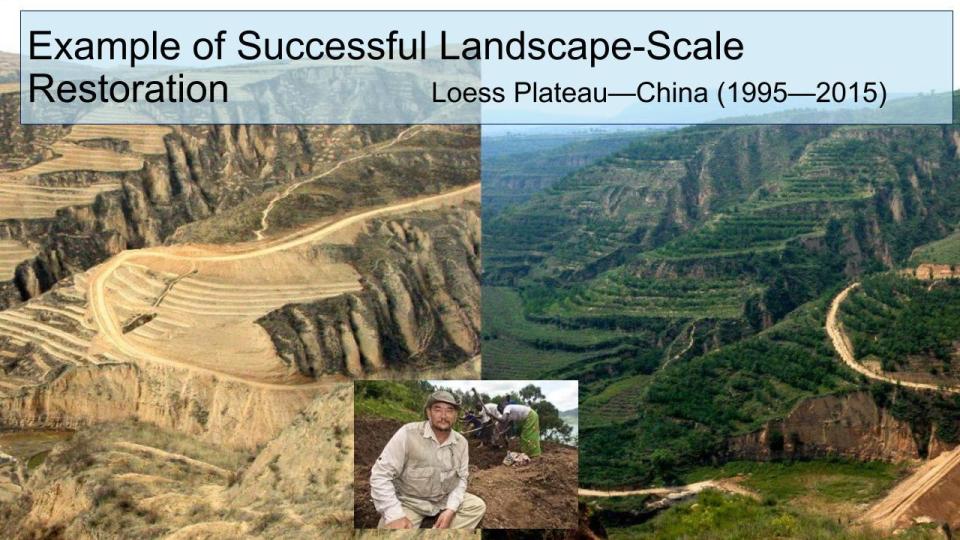
18:25 – Loess Plateau restoration – John D. Liu documentary
18:42 – In-video insert: Loess Plateau restoration
19:15 – Andrew Millison and permaculture work across Africa and South Asia (The Great Simplification Episodes on such: #178, #64)
19:35 – Didi Pershouse, Walter Jehne, Vijay Kumar Thallam – Natural farming movement in India: Andhra Pradesh Community Managed Natural Farming
19:55 – Ray Archuleta and Gabe Brown on regenerative agriculture (more info)
21:15 – Women’s self-help groups and microfinance cooperatives in India (more info)
21:25 – Vandana Shiva (The Great Simplification appearance: #46)
21:45 – Green Revolution collapse and Indian farmer suicides
22:15 – Creating your own soil amendments by culturing animal products and with other local materials
22:37 – Multi-species cover cropping
22:45 – Elaine Ingham and the Soil Food Web School
23:22 – Petrochemical industry capture of agriculture and ecological restoration
24:10 – Bread and circuses
25:15 – Nate’s Framework for Action: (Video, Written Piece)
26:05 – Early 1970s climate science discussions (more info), Rob Lewis: A Climate According to Life Substack (referenced piece on climate as “two-legged”)
26:30 – Study of Man’s Impact on Climate (1971 MIT/SMIC report) → 1972 United Nations Conference on the Human Environment, History of climate convenings
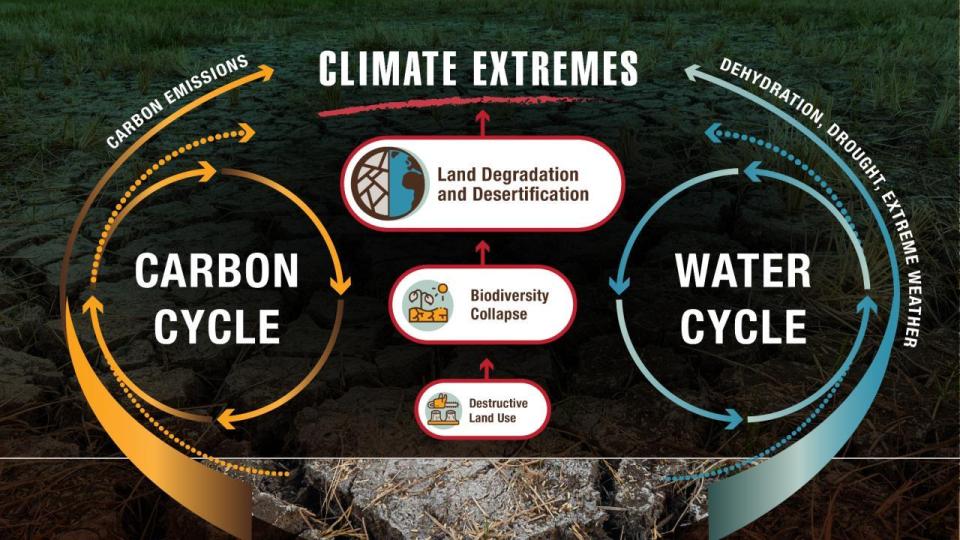
27:18 – In-video insert: Causes of climate extremes
27:20 – Predominant greenhouse gas is water, Disrupting land disrupts the water cycle (see Anastassia Makareiva’s The Great Simplification appearance)
27:49 – Sanderman et al. 2017: soil carbon loss over 12,000 years, In-video insert
27:58 – ~One-third of excess atmospheric carbon from land degradation, not fossil fuels
28:52 – Transpiration as Earth’s natural heat pump (more info), Convective cycle
29:25 – Heat pumps are sustainable home energy systems
29:55 – Connection between technological solutions and economic activity
30:40 – Rio Earth Summit 1992 – 3 conventions: Convention on Biological Diversity (CBD), Convention to Combat Desertification (UNCCD), Convention on Climate Change (UNFCCC)
31:20 – Global heating
32:00 – Living Systems Management
32:25 – ~⅓ of carbon increase has to do with land degradation* but water cycle degradation could be tipping that to over ½
33:55 – Millán Millán, Referenced podcast with the late scientist, Overview of Millán’s two-legged climate
35:00 – Cool Boulder: Nature-based solutions, In-video insert
35:20 – Natural Climate Solutions paper (2017, Griscom et al.)
35:35 – Carbon markets and carbon sequestration “trend”, Voluntary carbon markets
36:20 – Principles of natural climate solutions
36:35 – UN Environment Programme: Nature-based Solutions
37:00 – Emerson tradition and nature as separate
37:15 – Ecological restoration and the historical baseline problem
37:45 – Beaver extirpation and overgrazing in the Intermountain West, Intermountain West ecology before European contact
38:35 – Restoration vs. regeneration (more info)
39:42 – Trophic level
40:50 – Global heating trajectories, Worsening heatwaves, droughts, floods
41:30 – Boulder/Longmont desertification risk assessment, Lynker Technologies remote sensing analysis, City of Longmont Climate Risk Mapping Tool
42:05 – Soil and water conservation districts as watershed jurisdictions (1930s)
42:30 – Strip farming
42:50 – Colorado River Compact and near collapse
43:25 – Bare dirt convective cycles driving desertification
45:20 – Strait of Hormuz and energy supply complexity
46:08 – Carbon Pulse, Economic Superorganism
46:40 – 1970s: Donella Meadows & Club of Rome – Limits to Growth
47:15 – Sustainability movement → resilience
48:05 – Paul Ehrlich and ecological overshoot from increased biocapacity, TGS #9 Paul Ehrlich
48:32 – The Great Simplification
49:00 – Joseph Tainter on energy and complexity, TGS #27 Joe Tainter
49:05 – Economic Superorganism
49:15 – Wide-boundary perspective
50:45 – Barriers to and how to engage community stewardship, Issue of professionalization
51:27 – Herbicide spraying in Boulder Valley schools
52:10 – Boulder Community Land Stewards program
55:30 – Compounding disruptions: floods, heat, drought, fire, infectious diseases
56:02 – Societies with high social cohesion are most successful, Social cohesion as climate resilience
56:50 – Local currencies
57:45 – ACORN community organizing in Albuquerque and Houston
58:30 – Financialization and marketization of community relationships
1:00:15 – Managing the forest-water nexus
1:00:35 – Soil moisture reservoirs
1:00:50 – Forest design for snowpack retention
1:01:30 – Anastassia Makarieva and the biotic pump theory
1:02:20 – Focus on fire mitigation in Colorado, Forests as a water utility
1:02:35 – Walter Jehne on local land cover and climate dynamics
1:03:05 – Boulder/Longmont spring precipitation increase of 1.5 inches
1:03:40 – Western snowpack releasing three to four weeks earlier
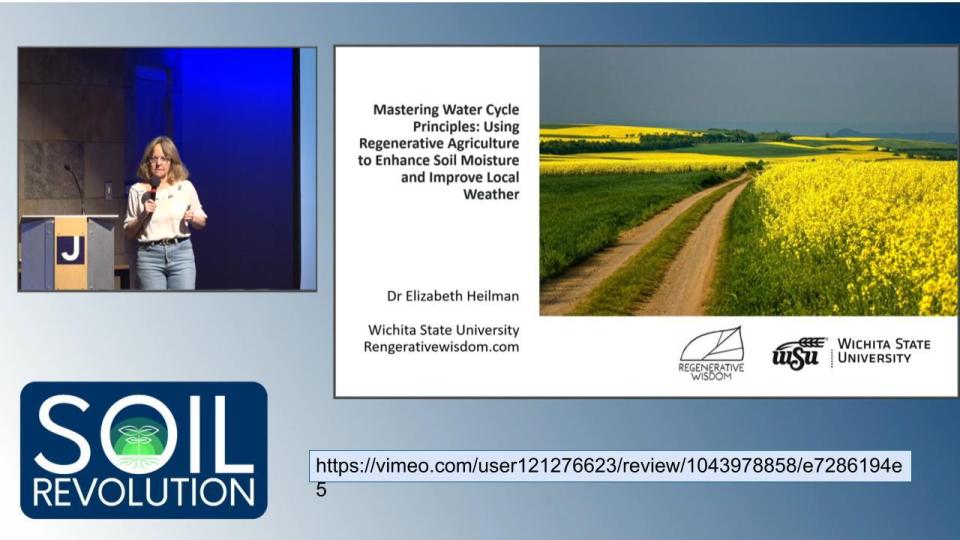
1:04:22 – Elizabeth Heilman and Dale Strickman presentation on mastering water cycles – Boulder Soil Revolution conference, In-video insert
1:06:15 – Changing our view on what is wealth
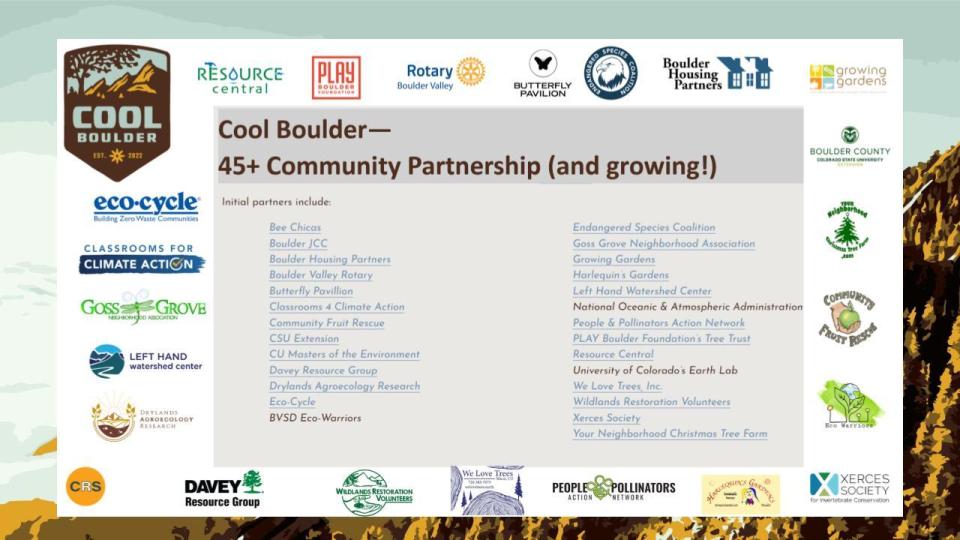
1:07:48 – Cool Boulder community partners, In-video insert
1:08:45 – Greg Brown song on Upper Peninsula neighborlyness: “Laughing River”
1:10:19 – Tom Chi (The Great Simplification Episode #120), Tom Chi on humans and the biosphere
1:10:35 – Climate caused humans, Agricultural Revolution, Industrial Revolution
1:11:45 – Regenerative economy
1:12:18 – Resilient landscape contractor training programs
1:13:15 – Civilian Conservation Corps
1:14:45 – Global biodiversity loss drivers, North American biodiversity loss
1:15:50 – Multi-layered canopies as photosynthetic “solar panels”
1:16:20 – Albedo and surface cooling from vegetation
1:16:55 – Donella Meadows on leverage points: consciousness as the deepest lever
1:18:25 – Importance of regional collaboration
1:18:43 – Local existential risk example: Boulder, CO 2013 wildfire and flooding
1:19:33 – Islands of coherence, Frankly #65 – And Then What?: Using Wide-Boundary Lenses
1:20:15 – Importance of local governance in ecological restoration
1:22:50 – Reconnecting with the web of life
1:23:25 – Language of reciprocity with the living world
1:25:25 – Suburban lawn to native plant oasis case study
1:27:50 – Advice for young people: Cultivating relationship with living things & practical skills
1:30:45 – Integrating living systems into every school’s curriculum
1:31:15 – Local government as essential partner for scaling stewardship