

#142 | Frankly
A Guide to Staying Human (Part 2): Navigating Dread and Carrying the Weight of Tomorrow

Description
In this week’s Frankly, Nate offers the second episode in his series on staying human, this time focused on dread. Opening with a personal reflection on his own relationship to dread, Nate describes how the chronic anticipation of collapse affects the human nervous system long before any single crisis fully arrives. He walks through how the neuroscience behind the body’s threat response was wired for more immediate risk, rather than the slow-moving and abstract risks of the more-than-human predicament.
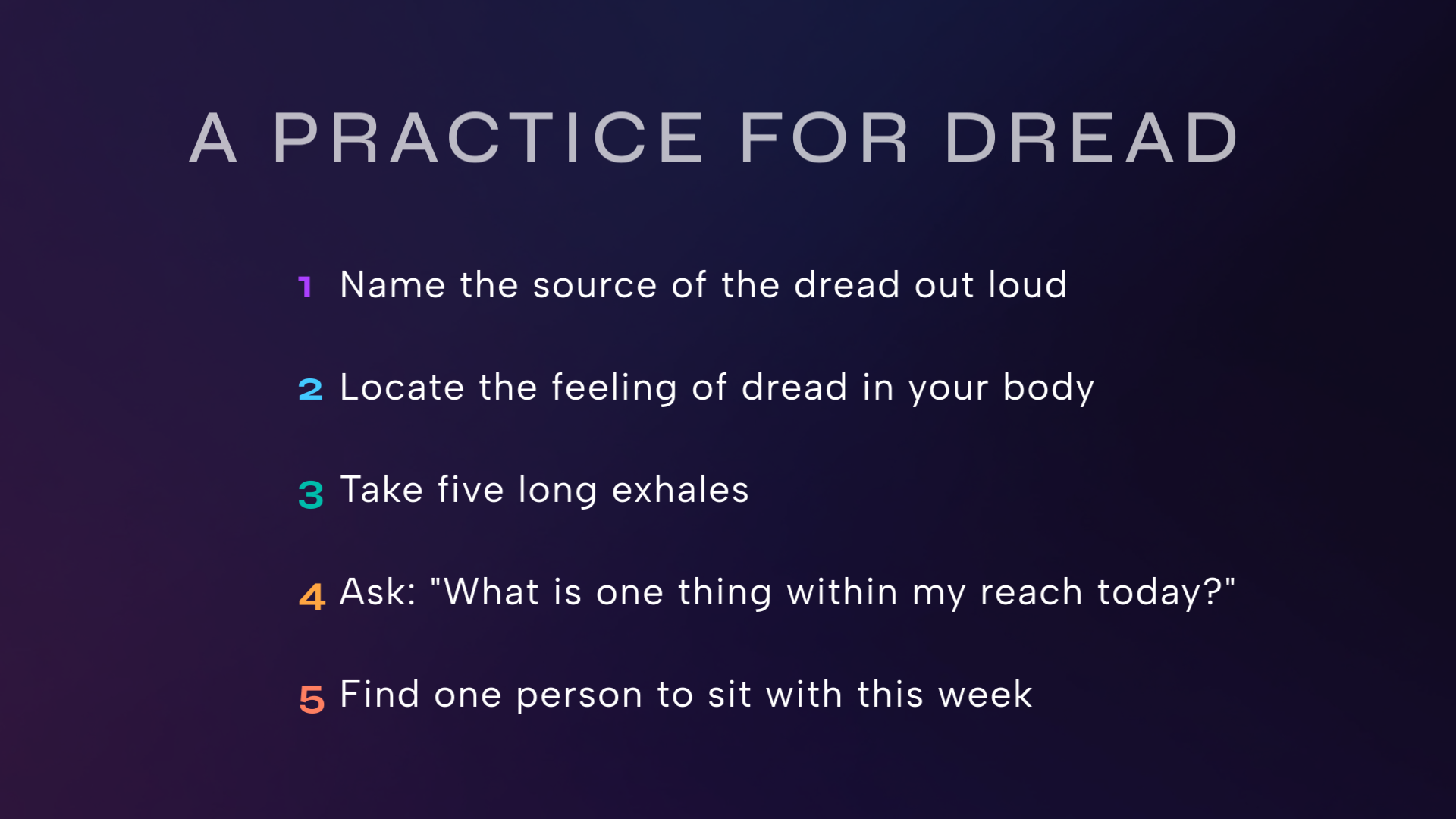
The latter part of the episode turns toward response. Nate outlines five practical pathways for metabolizing dread, drawing on insights from a wide variety of thinkers across neuroscience, trauma research, and contemplative traditions. These pathways include tools like mental reframing, somatic practice, reclaiming agency, community and co-regulation, and what Nate calls “befriending the darkness.” He closes the episode with five concrete steps individuals can take when dread arises in daily life in order to move from dread into presence amidst widespread transformation.
Where in your body do you actually feel the weight of what you know about the future? What is one action within your reach today that is small but real? And who in your life can sit with what you carry, without trying to fix it?
Show Notes & Links to Learn More
Download transcriptThe TGS team puts together these brief references and show notes for the learning and convenience of our listeners. However, most of the points made in episodes hold more nuance than one link can address, and we encourage you to dig deeper into any of these topics and come to your own informed conclusions.
00:00 – Frankly Series: A Guide to Staying Human, Essay version of this Frankly on Substack
00:03 – Art Berman, TGS #220 (Recent episode on oil/Iran), Previous TGS appearances
00:07 – Iran War 2026, Strait of Hormuz Crisis
00:38 – Dread definition
02:06 – Global heating, Net energy decline, Soft feudalism on the horizon
03:23 – Lise Van Susteren, Pre-traumatic stress
03:53 – In-video cartoon source
03:54 – Amygdala
05:08 – Frankly #129 A Guide to Staying Human Part 1, Series Playlist
06:36 – More-than-human predicament
06:38 – How amygdala responds to threats, HPA axis, Fight or flight response
08:15 – EROI, Upcoming El Niño, Current global conflicts
09:15 – Allostatic load, In-video insert source
09:35 – High cortisol levels:
- Affect hippocampus function
- Impair the prefrontal cortex
- Dysregulate sleep and immune function
- Push people toward addictive behaviors
- Reduces cognitive bandwidth
10:30 – Physiological experience of dread
11:00 – Famous study about dread, “Extreme dreaders”
12:00 – Repeated study on dread
14:20 – Types of Dread: Vigilance vs. Rumination vs. Extreme Dread
16:10 – Mental reframing and how to start
17:09 – Viktor Frankl, Man’s Search for Meaning
17:38 – Breathing practices to calm stress, Longer exhales calm the body
17:40 – How to regulate the Vagus Nerve
17:45 – Movement to calm stress, Walking lowers stress hormones
18:57 – Peter Levine, Importance of discharging the stress from fight or flight response
19:33 – Agency (Self-leadership), Self-trust is key to agency
22:07 – Holding dread alone is much more difficult than in community
22:15 – How to build community, How to be more vulnerable with others, The Power of Vulnerability
22:29 – Psychological importance of being seen and understood by others
23:28 – If you are in acute mental crisis or having thoughts of suicide dial 988 (988 Lifeline)
23:40 – Buddhism, Stoicism, Mysticism, Francis Weller, Joanna Macy (The Work That Reconnects (RR #17, TGS #202)): The way through dread is not around it but into it
24:45 – What happens when you sit with tough feelings
25:37 – Stephen Levine, How alive some of the dying are
27:43 – Importance of naming your fears out loud, Dr. Daniel Siegel – “Name It to Tame It”
28:25 – How to locate a feeling in your body
29:25 – A Practice for Dread (Guide from video)
30:50 – Ecological overshoot, The peak of the Carbon Pulse (More info)
31:55 – Presence, Default Mode Network (TGS Episode on such)



: Navigating Dread and Carrying the Weight of Tomorrow&p[url]=https://www.thegreatsimplification.com/frankly-original/142-a-guide-to-staying-human-part-2&p[images[0]=https://www.thegreatsimplification.com/wp-content/uploads/2026/05/Frankly-142-Podcast-Thumbnail-BG-Final.png)