#159 | Frankly
The Real Work: Four Kinds of Work for a Less Catastrophic Future
This week, Nate zooms out from recent headlines about climbing diesel prices, a thinning U.S. Strategic Petroleum Reserve, and inflationary bond markets to ask the deeper question: what is the real work that’s required of us as the systems that underpin modern life begin to buckle? He draws on decades of tracing the links between energy, ecology, and economy to argue that our response to the predicament is not necessarily to prevent the inevitable economic deflation, but to begin to shape how society moves through it.
From this premise, Nate outlines four areas of intervention that he feels are underattended, given the scale of what’s coming. He calls attention to how we can help communities bend and not break as supply chains strain under pressure, and the ways we might shepherd ecosystems and species through this bottleneck of humanity’s own making. He describes the sobering work of steering nations away from nuclear catastrophe when the proliferation fears that once restrained global powers have faded. Finally, he shows that underlying it all is the slower, generational project of recovering a sense of the sacred in a culture that has learned to measure everything in dollars. Woven through these areas of “real” work is the opportunity to rediscover meaning itself – including the idea that a life well spent is one oriented toward sustaining and enriching life beyond ourselves.
Why should we view what we’re facing as a predicament to mitigate and not a problem to solve? What would it take for society to absorb systemic shocks without fracturing the social bonds that hold it together? And in a culture built on extraction and convenience, what would it mean to reestablish a sense of the sacred in our relationship with the living world?
Show Notes & Links to Learn More
Download transcriptThe TGS team puts together these brief references and show notes for the learning and convenience of our listeners. However, most of the points made in episodes hold more nuance than one link can address, and we encourage you to dig deeper into any of these topics and come to your own informed conclusions.
New? Start here:
– The Great Simplification (32-minute film)
– The Superorganism Explained in 7 Minutes (Frankly #97)
From the Archive:
– The Great Simplification Ep 222: Brett KenCairn on regenerating living systems
– The Great Simplification Ep 17: Chuck Watson on nuclear war risk
– Frankly #151 | Protect the Irreversible
Episode Foundations:
– Reality Blind Vol. 1: Energy Part 8, The Carbon Pulse
– Federation of American Scientists, Status of World Nuclear Forces
– Global food insecurity and famine from nuclear war soot injection
Next Steps:
– Community Resilience Toolkits
– Campaign to abolish nuclear weapons
Resources by Timestamp:
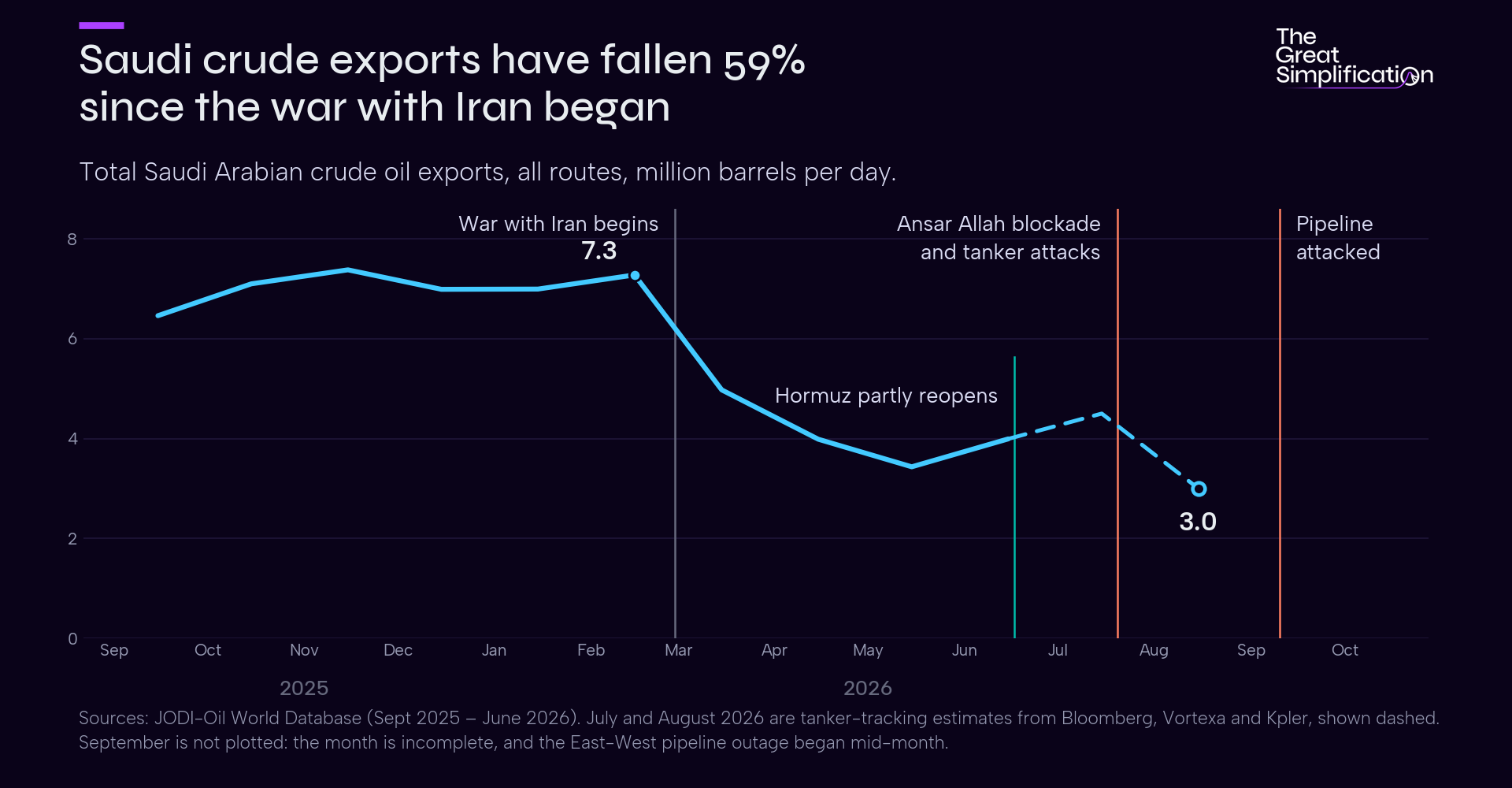
00:03 – Saudi oil export capacity, Ansar Allah attacks on Saudi oil infrastructure, Saudi crude exports down 59% since the war with Iran began
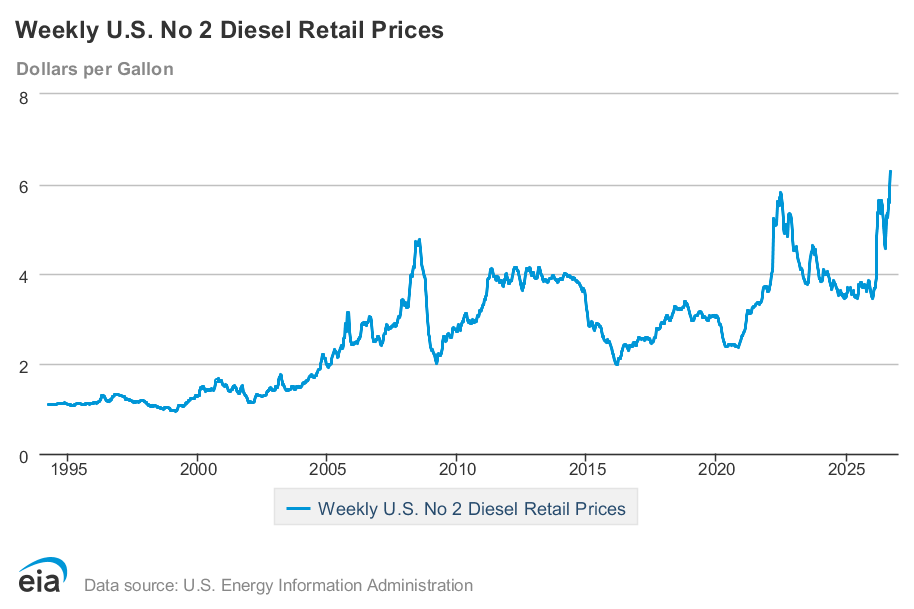
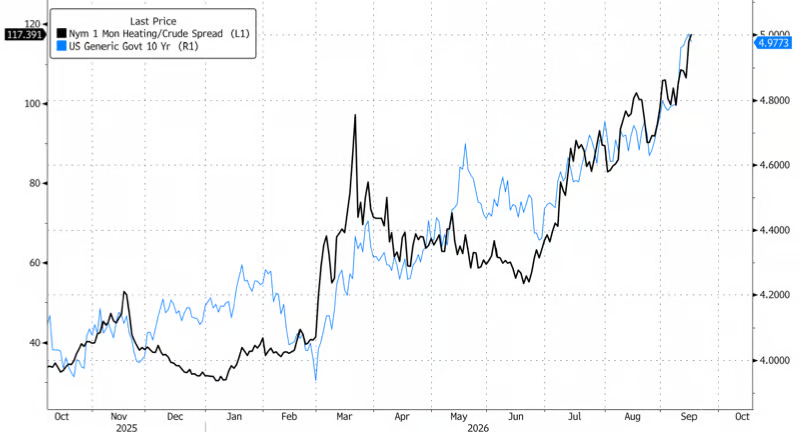
00:19 – U.S. diesel prices, Weekly U.S. No. 2 diesel retail prices since 1994, Heating oil/crude spread vs. U.S. 10-year Treasury yield (Bloomberg)
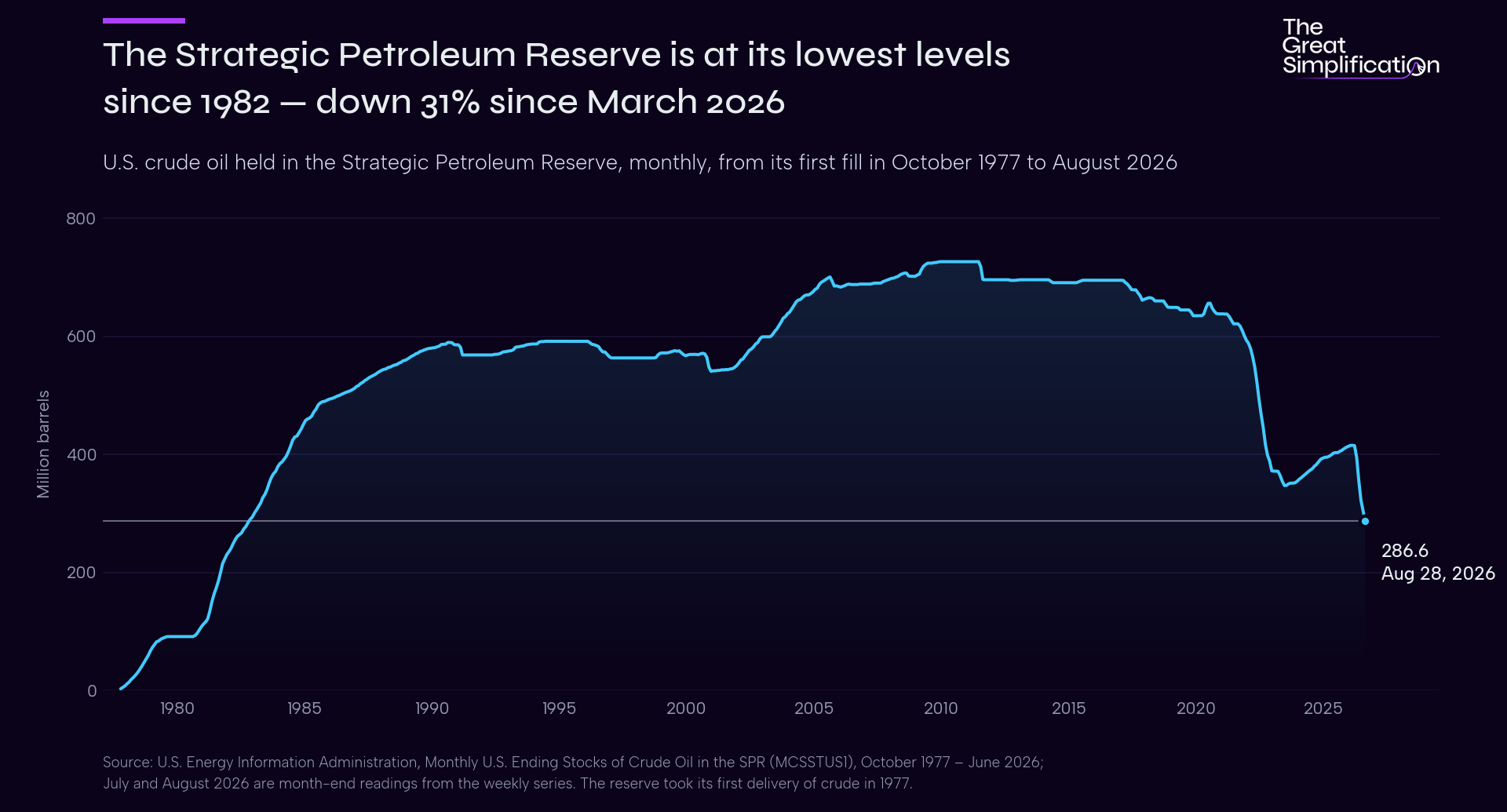
00:26 – Strategic Petroleum Reserve at its lowest level in over 40 years, SPR crude stocks since 1977
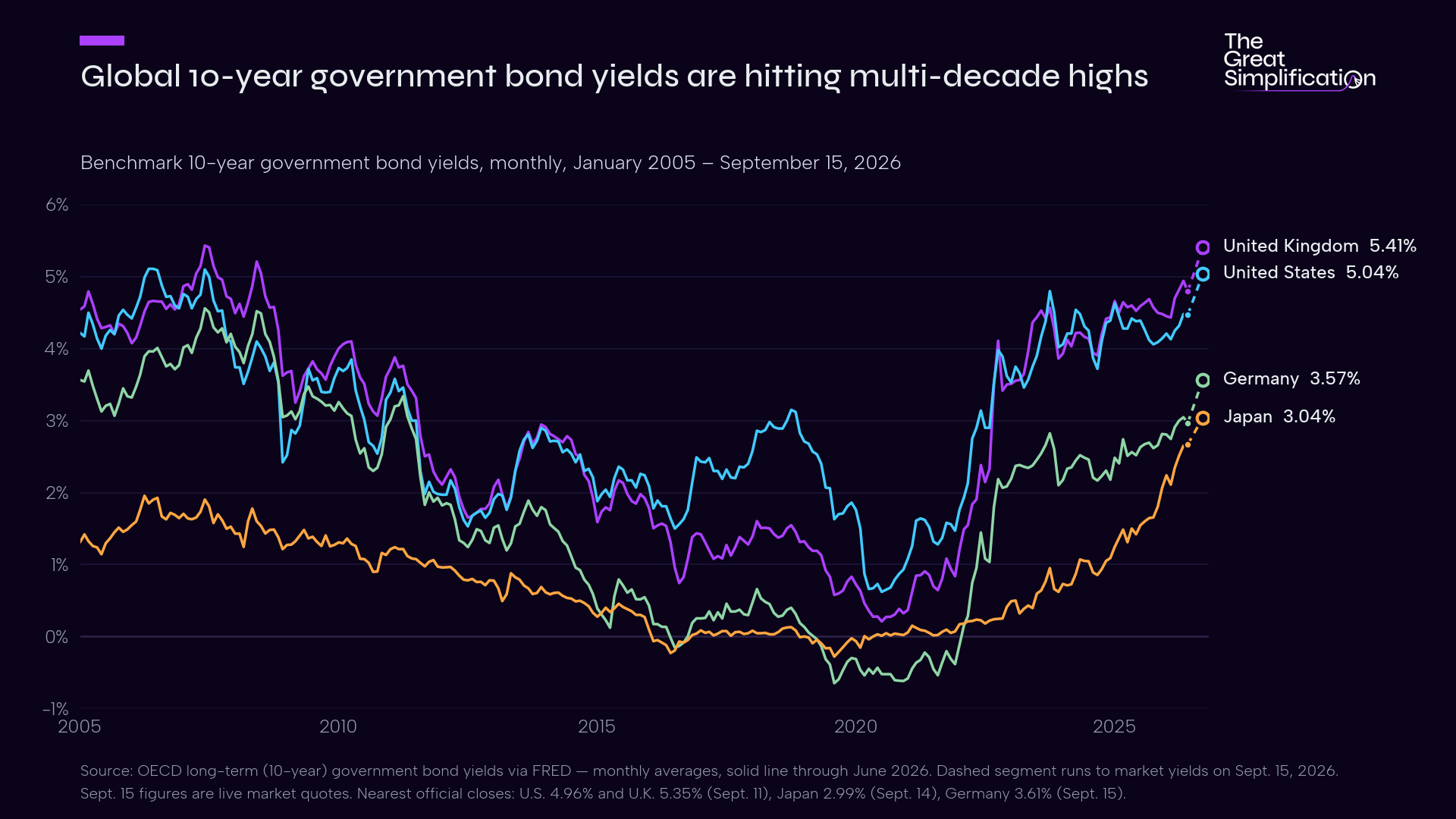
00:33 – Global bond yields breaking out, Inflation expectations, Global 10-year government bond yields at multi-decade highs
00:39 – Purchase limits on motor oil
01:26 – Energy blindness
01:56 – Cargo cult thinking, Techno-optimism
02:28 – Predicament rather than a problem (Frankly 158)
02:52 – The Great Simplification
03:18 – Humans as an apex predator, Ultrasociality
03:26 – Social hierarchy, Agricultural surplus
03:33 – Mining historic stocks of fossil fuels, Non-renewable mineral depletion
03:45 – Fossil armies / Energy slaves
03:52 – Complex societies (The Great Simplification Ep highlighting such)
04:05 – Financial claims exceeding biophysical reality
04:18 – Deflationary depression
04:34 – Wile E. Coyote moment
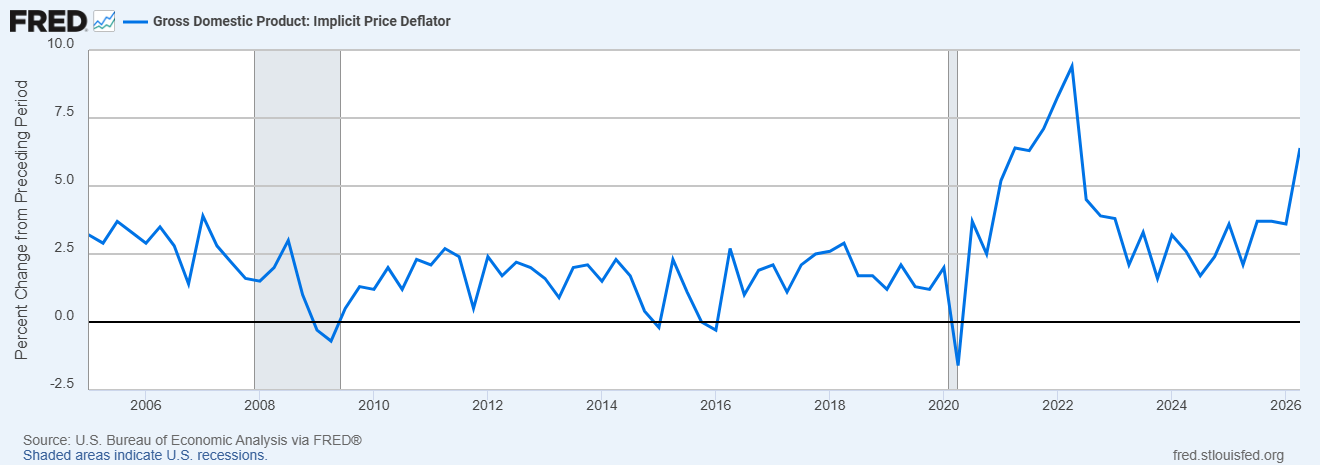
04:44 – Currency crises, Real versus nominal gross domestic product
05:12 – Too big to save
05:19 – Wall Street Crash of 1929, Great Depression
05:27 – Bend rather than break: Community resilience, Continuation of social contracts, Societal collapse
05:54 – Haircut on financial claims
06:02 – 2008 global financial crisis, March 2020 market crash, GDP implicit price deflator in 2008 and 2020
06:12 – Central banks as buyer of last resort, Too big to fail guarantees, Artificially low interest rates
06:38 – Ten-thousand-mile supply chains, Letters of credit (Nate and DJ’s book covering such)
07:26 – Submarine communications cables, Imported surgical gloves, Fertilizer exports from Trinidad and Tobago, *33,248 items in the average U.S. supermarket
07:53 – Relocalized and re-regionalized supply chains
08:09 – Expanding social capital where you live
08:25 – Community and watershed scenario planning
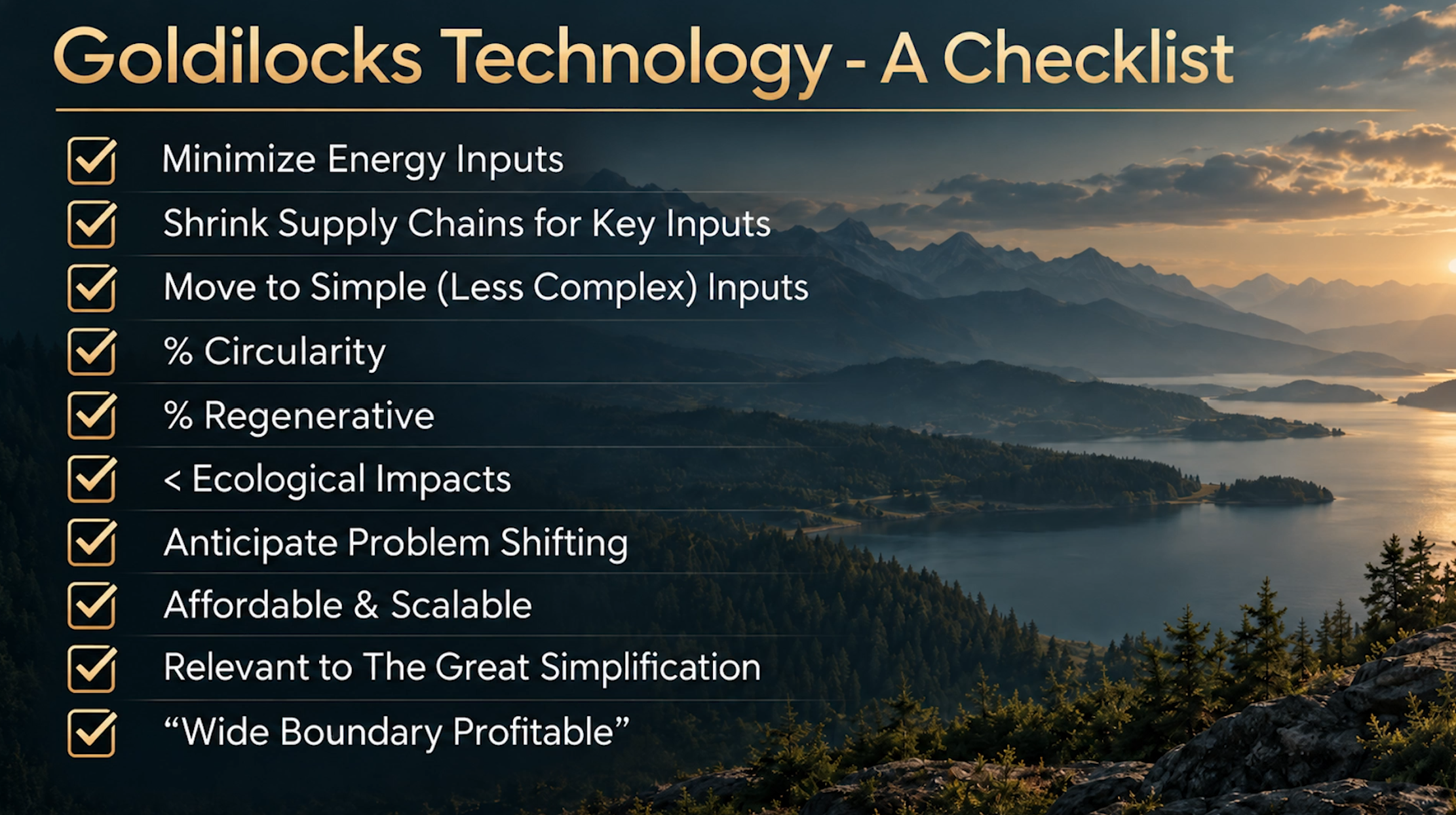
08:42 – Goldilocks technology, Preliminary Checklist
08:52 – Sodium-ion batteries, Lithium-ion batteries
09:02 – Repairability and local maintenance, Just-in-time supply chains
09:09 – Overton window
09:58 – Agency and creativity instead of panic (Frankly on agency)
10:14 – Avoiding World War III, Strategic nuclear exchange (The Great Simplification Ep on nuclear war)
10:36 – Energy descent and Resource conflict
11:03 – Nine nuclear-armed states holding over 12,000 warheads
11:46 – Nuclear disarmament campaigning
12:18 – Grassroots anti-nuclear movements, Nuclear arms reduction treaties, Treaty on the Non-Proliferation of Nuclear Weapons
12:40 – Atomic bombings of Hiroshima and Nagasaki, Nuclear holocaust as a movie trope
13:08 – Nuclear deterrence, Mutual assured destruction
13:18 – Launch-on-warning decision windows
13:26 – Nuclear winter, Nuclear famine
13:44 – Artificial intelligence in nuclear command and control
14:08 – Nuclear close calls averted by individual refusal, Stanislav Petrov
15:12 – Global governance, Game theory, Resource depletion, Global heating
16:26 – The bottlenecks of the 21st century, Midwifing the biosphere
16:58 – Ocean acidification, Species extinction rates
17:28 – The planet will be fine argument
17:50 – Biodiversity loss, Critically endangered great apes
18:04 – Toxic slime making a comeback, Jellyfish blooms
18:34 – Contingency in evolution
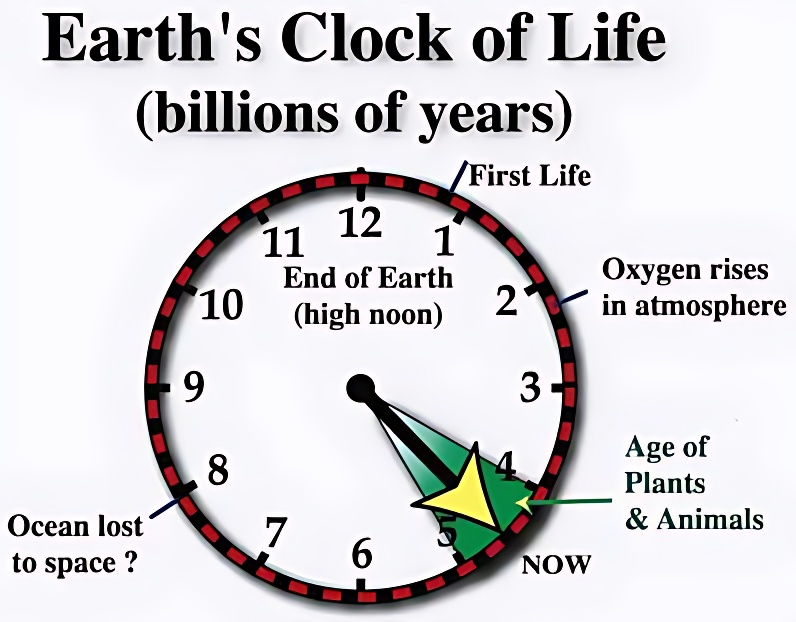
18:44 – Peter Ward (The Great Simplification appearance), Earth’s remaining window for complex life, Earth’s Clock of Life
18:56 – Homo floresiensis, Insular dwarfism
19:12 – Rare Earth hypothesis
19:28 – Anthropic principle, Survivorship bias
20:06 – Ecological restoration, Regenerating living systems
20:19 – Brett KenCairn (The Great Simplification appearance)
20:30 – Re-imbuing a sense of the sacred, Web of life
21:18 – Non-substitutable natural capital (Frankly on protecting the irreversible)
21:33 – Dawn chorus, Unbroken lineage from the last universal common ancestor
21:49 – Indigenous relational worldviews
22:00 – Instrumental psychopathic selection, Greg Elliott (The Great Simplification appearance)
22:14 – Charles Eisenstein, Interbeing (The Great Simplification appearance)
22:24 – Supernormal stimuli, Desertification
22:44 – Ecological grief (The Great Simplification Ep 167)
23:05 – Burning the Carbon Pulse, Global population growth past eight billion
23:40 – Initiation rites, Rite of passage, Vision quest, Bill Plotkin (The Great Simplification appearance)
24:06 – Species-level rite of passage
24:12 – Gratitude, Awe, Reciprocity with the living world
24:24 – Cathedral thinking
25:36 – AI alignment risk (The Great Simplification appearance), Existential risk, Metacrisis
26:12 – Corporations as the original misaligned artificial intelligence
26:30 – Economic superorganism
26:50 – Tragedy of the commons, Multipolar trap
27:04 – Corporate personhood in the United States
27:48 – The more-than-human predicament
28:18 – Meaning of life, Competition, accumulation and conspicuous consumption
29:20 – *Hottest year on record, One of the coolest years of the rest of our lives, Projected warming under current policies
29:34 – Holocene climate stability, Disruption of seasonal rhythms
30:04 – The value-action gap
30:18 – Peak of material wealth and energy privilege
30:48 – Vanessa Andreotti (The Great Simplification appearance), Hospicing Modernity, Tom Murphy (The Great Simplification appearance), Metastatic Modernity
31:14 – *More than 150,000 commercial flights on a single day
31:32 – Regulating the stress response, Increasing community participation and membership
32:20 – Gandalf (referenced quote)